Itinerary
Please note: Field activities vary based on water levels, weather and current research priorities. Wildlife sightings are not guaranteed, and daily plans may shift to accommodate conditions in the field.
Itinerary
Day 1: Arrive in Lima before your journey into the Amazon
Meet our local representative at the airport and settle into your hotel before dinner
Arrive in Lima, where our local representative meets you at the airport and transfers you to our hotel. Our location near the airport provides convenient access for tomorrow’s flight to Iquitos. Enjoy dinner on your own this evening.

Day 2: Cruise into the Amazon headwaters along the Marañon River
Fly across the Andes to Iquitos, a riverside city accessible only by air or water
Travel upstream by private riverboat with dense rainforest lining both banks
Search the shadowed shoreline after dark for caimans, frogs and bats
From Peru’s capital, fly east across the spine of the Andes to Iquitos, a riverside city accessible only by air or water and one of the largest in the Amazon Basin. Continue to Nauta, a small town on the banks of the Marañon River, one of the major tributaries in the Amazon headwaters region. Board your riverboat and begin cruising upstream. From the open-air deck, watch small boats moving between riverfront communities as birds fly overhead. This vast waterway—often called a “river sea”—is flanked by dense rainforest on either bank, and our journey takes us deeper into it with every mile we travel toward its source.
As night falls, head out by skiff into the Nauta Caño area. With spotlights illuminating the banks and your guides’ trained eyes adjusted to the dark, search for caimans, bats and frogs—an introduction to the distinct and vibrant world of the Amazon after sunset.

Days 3 to 4: Search flooded forests for river dolphins, monkeys and sloths
Explore Peru’s largest protected area by skiff along narrow channels and forest waterways
Watch for pink and gray river dolphins, canopy monkeys, sloths and tropical birds
Try traditional piranha fishing while learning how fish support wildlife and local communities
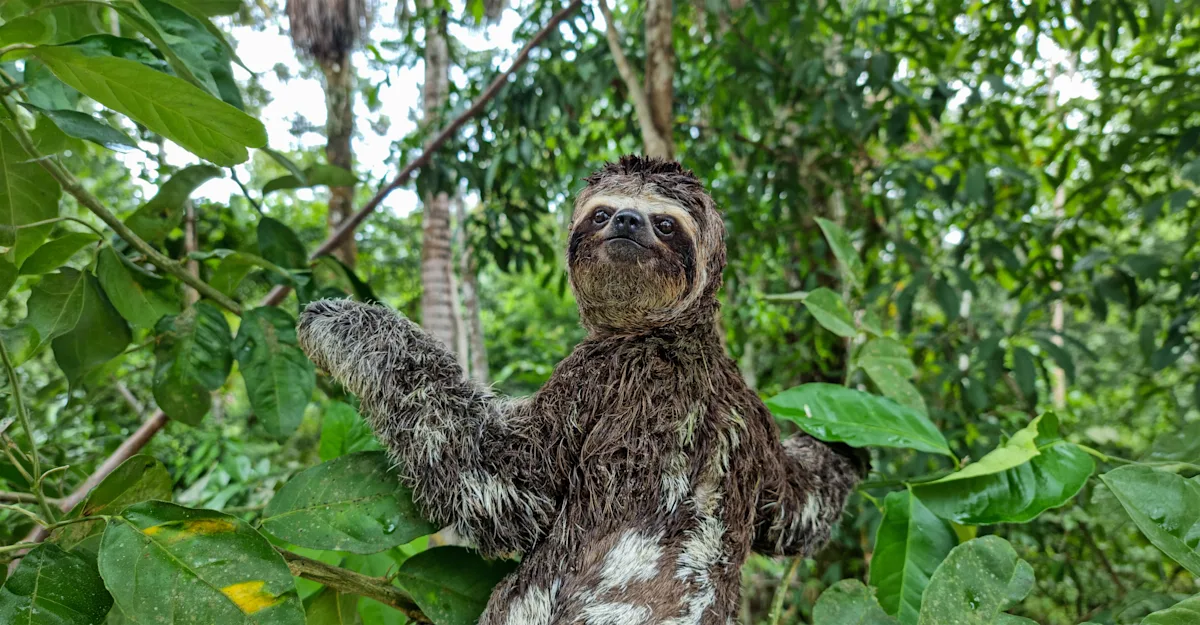
Wake early when the forest is most active and travel by skiff into the Pacaya-Samiria National Reserve. Established in 1982 to protect the exceptional biodiversity of the northern Amazon, this 5-million-acre sanctuary is Peru’s largest protected area—an immense wilderness shaped by water, where rivers, creeks and inundated forest converge. Along narrow channels, river dolphins surface and disappear just as quickly. Giant kapok and strangler fig trees line the banks, sheltering an array of wildlife—monkeys moving through the canopy, sloths folded into branches, birds crossing overhead. Water wends between trunks, reaching spaces where animals feed and shelter beyond the main channel.
In the afternoons, we head out to more remote waterways where you may try your hand at traditional piranha fishing while learning how fish populations are monitored and how they support both the ecosystem and local communities. Return to the riverboat each evening for dinner, discussion and stargazing after dark. On Day 4, it's time to meet your research team, setting the stage for the fieldwork rotations that begin the following day.
Days 5 to 7: Survey dolphins, fish and forest wildlife across the changing Amazon
Record pink and gray river dolphins as indicators of aquatic ecosystem health
Join fish, forest and nocturnal wildlife surveys across rivers, creeks and flooded habitats
Visit an Indigenous Cocama community to learn how changing water levels affect fishing and daily life
Over the next several days, delve into the fieldwork you've come for, as our studies spanning river and rainforest contribute to long-term datasets that track how flooding and drought alter the availability of resources for wildlife. Among our research pursuits, we'll engage in the following tasks:
Survey River Dolphins & Aquatic Life
Travel by skiff on rivers, lakes and creeks, scanning for pink and gray river dolphins as they surface briefly before disappearing again. These species serve as indicators of aquatic ecosystem health, with sightings recorded across habitats and water conditions.
Observe Wildlife in the Forest & Canopy
Work along forest edges and within the interior where visibility is limited and wildlife is detected through subtle cues. Learn to follow calls, movements and feeding signs revealing species that remain hidden, as we build an understanding of how wildlife is distributed across the forest.
Study Fish Populations & Local Food Systems
Take part in fish surveys using gill nets and hook-and-line techniques, examining species that support both ecosystem function and local people's livelihoods. Data collected helps track how fish populations shift with changing water levels and climate conditions, and what longer-term impacts may be.
Conduct Nocturnal Wildlife Surveys
Return to the river after dark as activity shifts with nightfall, capturing species and behaviors missed during daylight surveys. Use spotlights to locate caimans along the banks, as well as frogs, bats and nocturnal birds that also emerge.
Visit a Cocama Community Along the River
Spend time in an Indigenous Cocama community where daily life is framed and influenced by the water and wildlife we've been studying. Learn more about how their culture, traditions and use of natural resources, including fishing, are being affected by climate change and shifting seasonal patterns, with their subsistence lifestyle closely tied to the health of the surrounding ecosystem.
At the close of Day 7, gather for a farewell dinner on board our riverboat as we assess our field research contributions and reflect on the current and future fate of this vital tropical rainforest ecosystem.
Day 8: A final morning of wildlife viewing in the Upper Amazon
Spend a final morning observing wildlife from the riverboat
Visit the Amazon Rescue Center, which rehabilitates and releases Amazonian manatees
Return to Iquitos for your flight to Lima and onward departures
Spend a final morning on the river, with time for one last outing or quiet observation from the deck. By now, the landscape reads differently—subtle movement, distant calls and small shifts along the water’s edge are easier to recognize, given our intimate immersion in this complex, multilayered landscape. Once we reach Nauta, it's time to disembark. Head ashore to explore the small port city’s market and visit the Amazon Rescue Center, which focuses on rehabilitating and releasing Amazonian manatees and other wildlife. Continue to Iquitos once more to meet your flight to Lima and onward international departures.
As you leave the Amazon, you depart with a clearer sense of how this mighty ecosystem functions, having studied and tracked integral elements of it during our fieldwork. It's rewarding to know that your participation has helped sustain research that is vital for tracking crucial environmental change and guiding conservation efforts for years to come.