

















Was Ephesus Greek or Roman? The answer is both… and more.
Ephesus is known as a Greek and Roman city, but it rose from a much older Anatolian landscape, where people had lived for more than 8,000 years. It became one of the great urban centers of the Roman Mediterranean, and later gained significance in early Christian and Byzantine history.
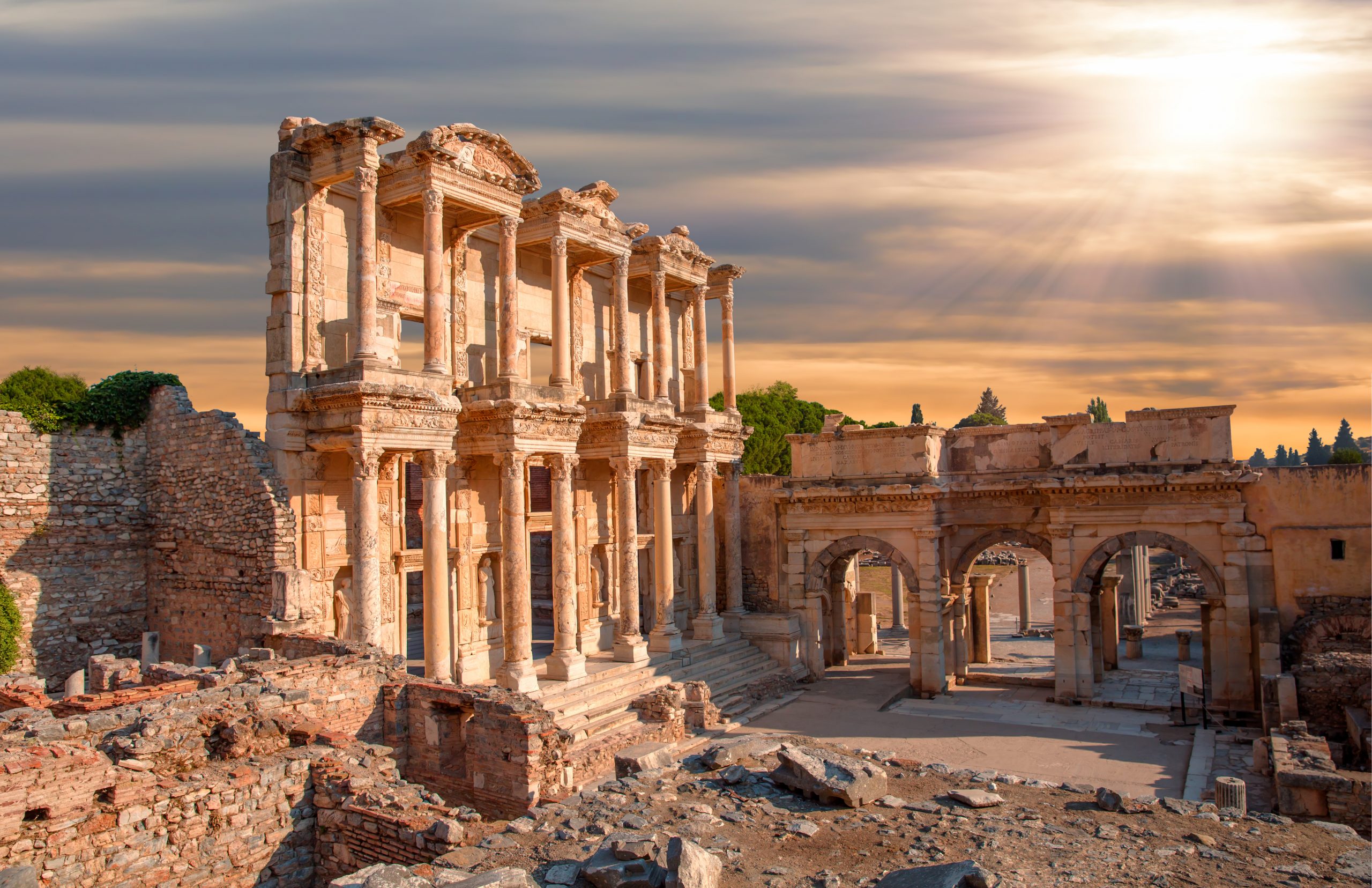
Walk through Ephesus today, and that layered past still rises from the earth: Curetes Street descends toward the Library of Celsus, carved capitals casting shadows over marble and the great theater holding the memory of thousands of voices.
On our Turkey cultural journey, travelers explore one of the Mediterranean’s most revealing ancient cities, where streets, sacred sites, public monuments and domestic spaces preserve more than one civilization’s story.
Ephesus was a harbor city, a pilgrimage center, a provincial capital, a place of learning, a home to wealthy Greek-speaking Roman families and working craftspeople on a landscape shaped by earlier Anatolian traditions. Its history is a record of cultures meeting, adapting and leaving traces in stone.
Celsus Library, Ephesus, Izmir, Turkey.
Who Were the Ephesians?
The Ephesians were a changing urban community shaped by migration, trade, religion, and empires. The oldest known traces of human settlement in the area have been found within a mile of the Greco-Roman city. Human activity in the area dates to the Neolithic period, when settled life was developing in Anatolia.
From around 1000 B.C., groups from Greece migrated to Asia Minor, founding settlements in the region. Around 300 B.C., Lysimachus, one of Alexander the Great’s successors, founded a new planned city of Ephesus and moved people from nearby settlements into it.
Ephesus became associated with the Ionian Greek world, but its sacred life also held older Anatolian roots. For example, the Ephesian Artemis, worshipped in one of the ancient world’s most famous sanctuaries, blended Greek and Anatolian traditions. She was not the Greek huntress familiar from classical myth; her cult drew on older Anatolian mother-goddess traditions and emphasized protection, fertility and sacred power in ways that made Ephesus a major pilgrimage center.
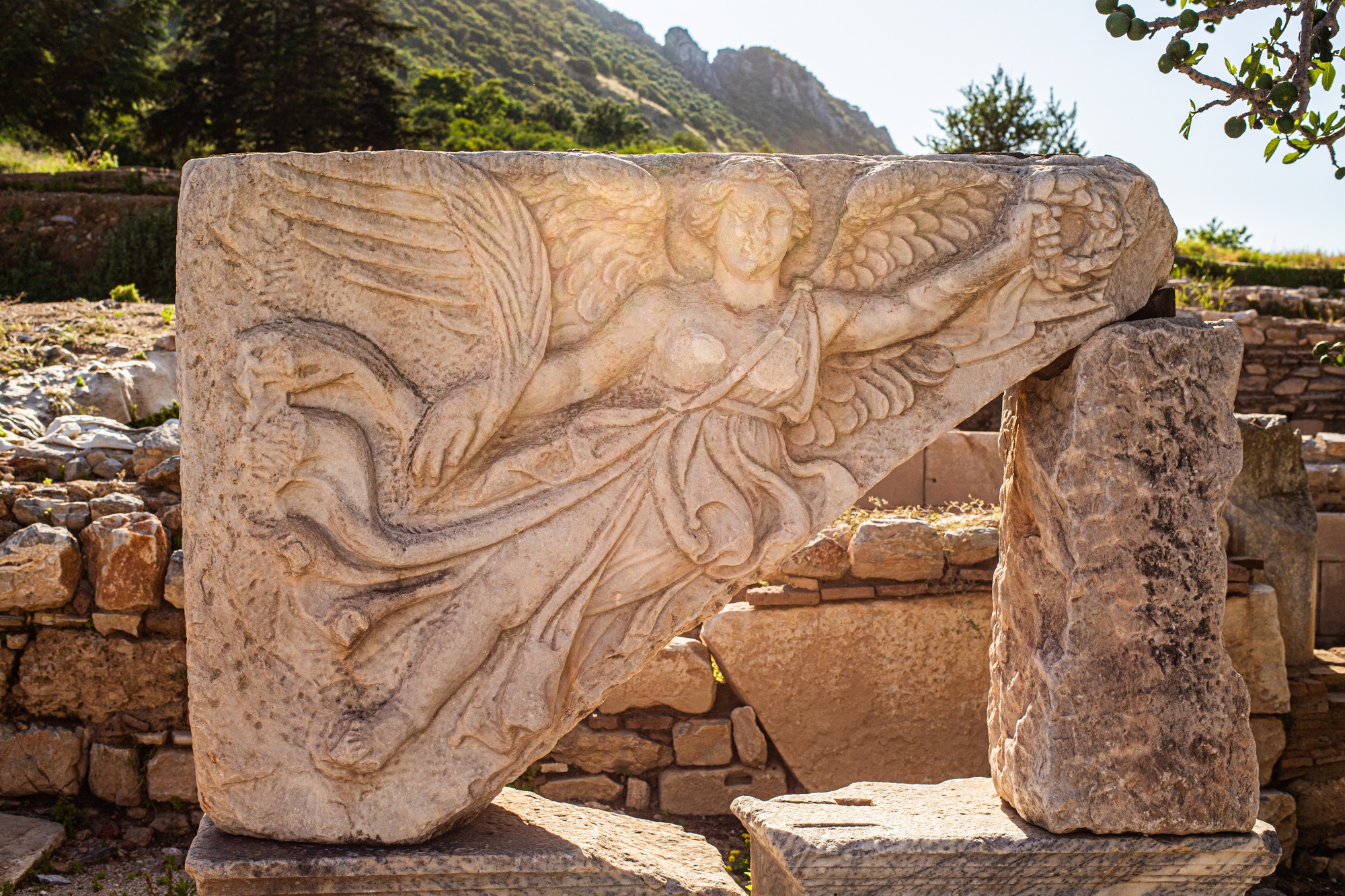
Nike, the Greek Goddess of Victory, Heracles Gate, Ephesus © Nat Hab Staff Tim Martin
By the Roman Imperial period, Ephesus was home to up to 200,000 Greek-speaking Roman residents: officials, merchants, artisans, religious specialists, pilgrims and wealthy households whose terrace houses still preserve mosaics, wall paintings and marble interiors. After the kingdom of Pergamon passed to Rome in 133 B.C., Ephesus eventually became the capital of the Roman province of Asia.
Later, Christian communities reshaped Ephesus’ sacred geography through churches, pilgrimage sites and major church councils. The Church of Mary and the Basilica of St. John on Ayasuluk Hill testify to the city’s importance in early Christianity, while the councils held at Ephesus in the 5th century A.D. made the city part of Christian theological history. Sacred life did not disappear at Ephesus; it changed form.
Many Ephesians were Greek-speaking, Anatolian-rooted and Roman all at once. The Ephesians changed with Ephesus.
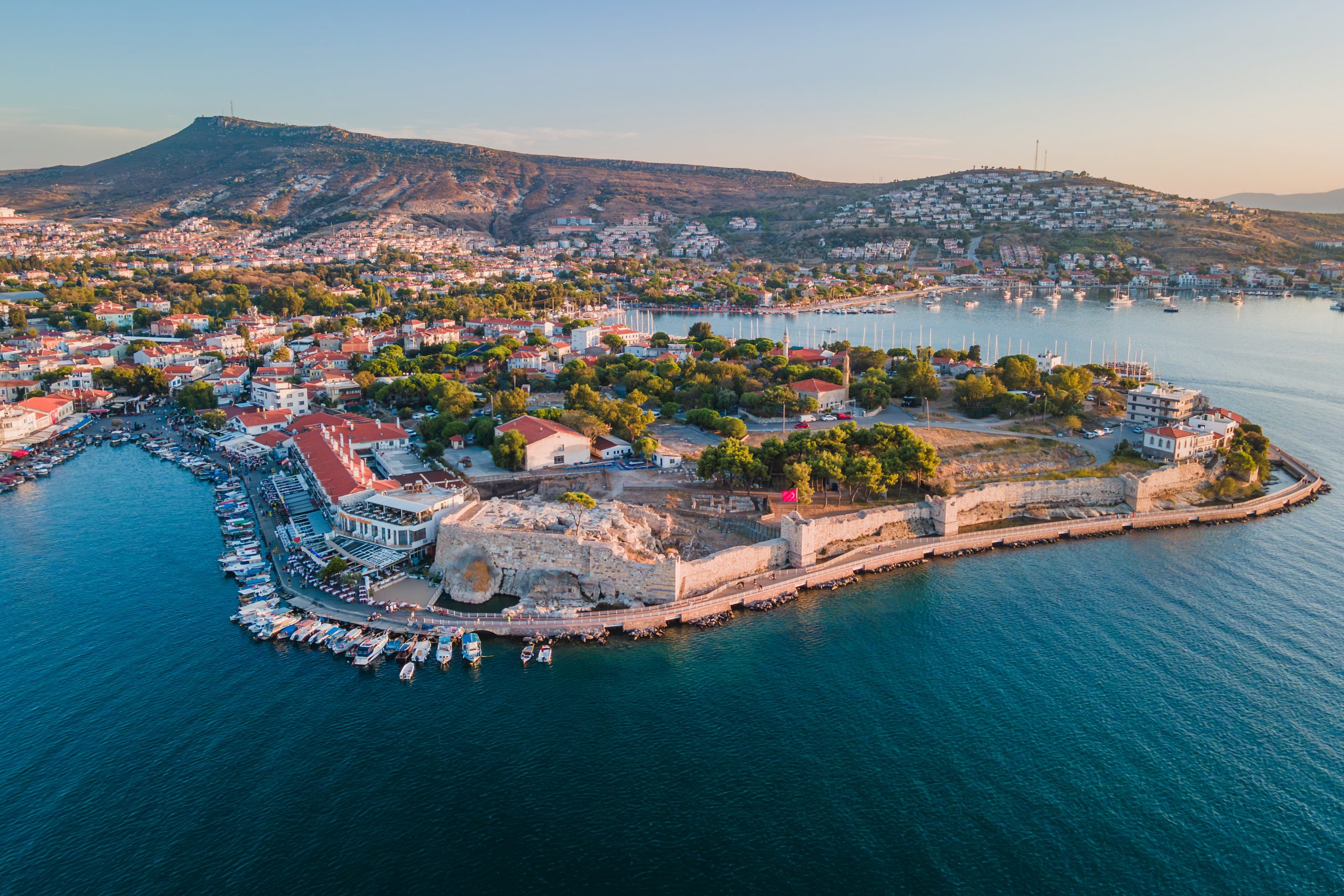
Izmir, Turkey
How Did Ephesus Become a Port City Three Miles Inland?
Life in the region was also shaped by environmental changes. Ephesus is now several miles from the Aegean Sea, but it was once a harbor city built near the mouth of the Kaystros River, known today as the Küçük Menderes. Over centuries, sediment carried by the river altered the estuary and coastline. Channels and harbors shifted and moved. Over centuries, sediment carried by the river altered the estuary and pushed the shoreline westward.
This environmental story explains the city’s wealth and its decline. As a port city, Ephesus connected Anatolia with the Aegean and the wider Mediterranean. Goods, officials, pilgrims, languages and ideas moved through its harbor.
As the harbor silted up, Ephesus gradually lost one of the foundations of its power. Today, it lies about 3 miles inland, but the old harbor city is still discernible in its layout, scale and obvious wealth.
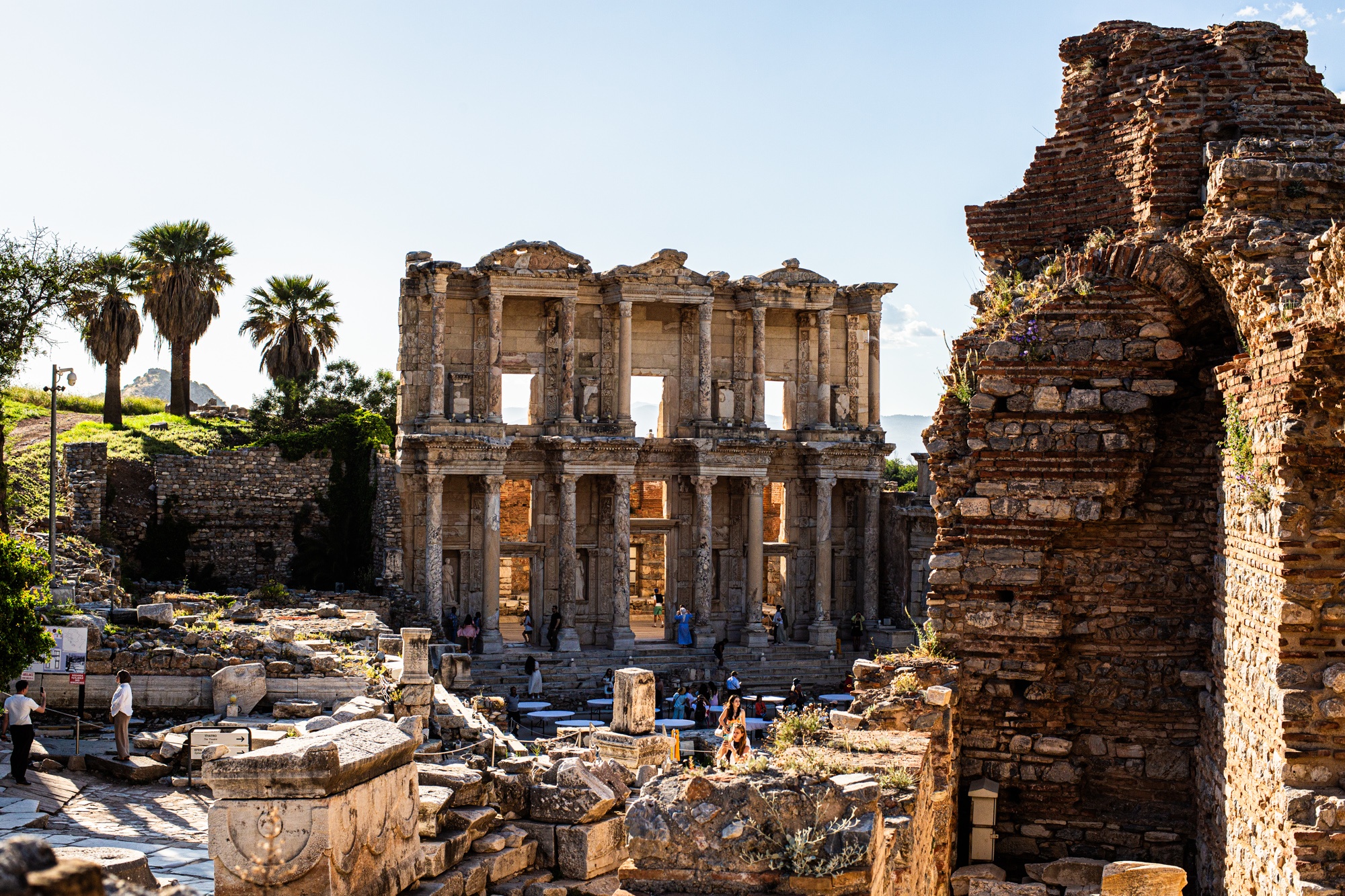
Library of Celsus, Ephesus © Nat Hab Staff Tim Martin
Why Was a Roman Library Built in a Greek-Speaking City?
Commissioned in the early 2nd century A.D. by Gaius Julius Aquila, the Library of Celsus was a monument to both family and community. Aquila built it for his father, Tiberius Julius Celsus Polemaeanus, a Roman senator and former governor of the province of Asia.
Celsus was a remarkable figure: a Greek-speaking provincial elite who rose to one of the highest offices in Imperial Rome. His library stood in Ephesus, a Greek-speaking city within the Roman Empire, where Greek language and learning existed inside Roman political power. The building itself makes that cultural layering visible.
The Library of Celsus was both a public library and a funerary monument. Celsus was buried in a marble sarcophagus in a crypt beneath the floor, while the reading room above held thousands of papyrus scrolls, often estimated at up to 12,000, stored in niches along the walls.
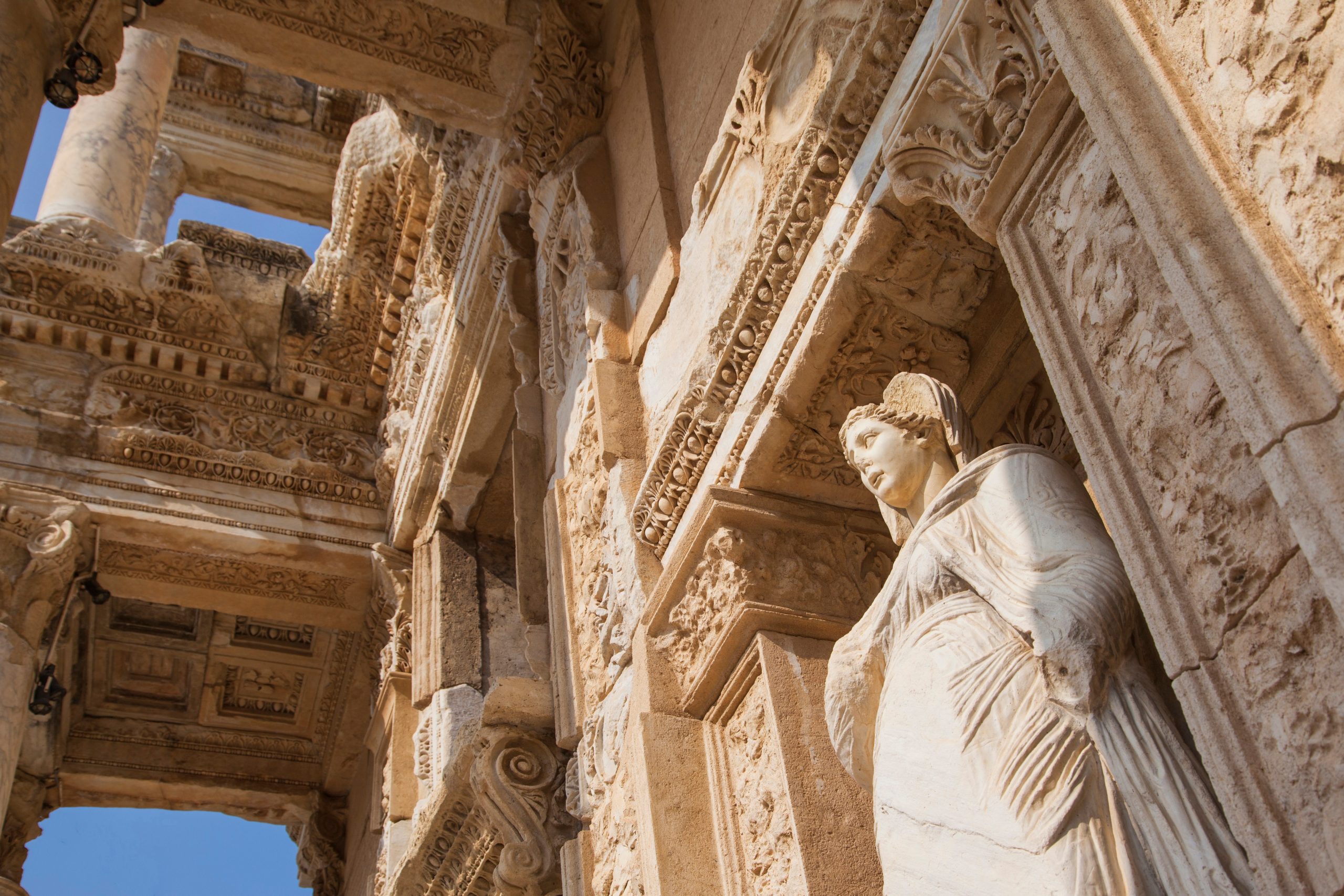
The library appears to have functioned for roughly 150 years before severe earthquake damage around A.D. 270 led to its abandonment. Built to honor one man and serve an entire city, the library still faces a marble square crossed by travelers today. Four allegorical figures occupy niches on its façade: Wisdom, Virtue, Knowledge and Intelligence.
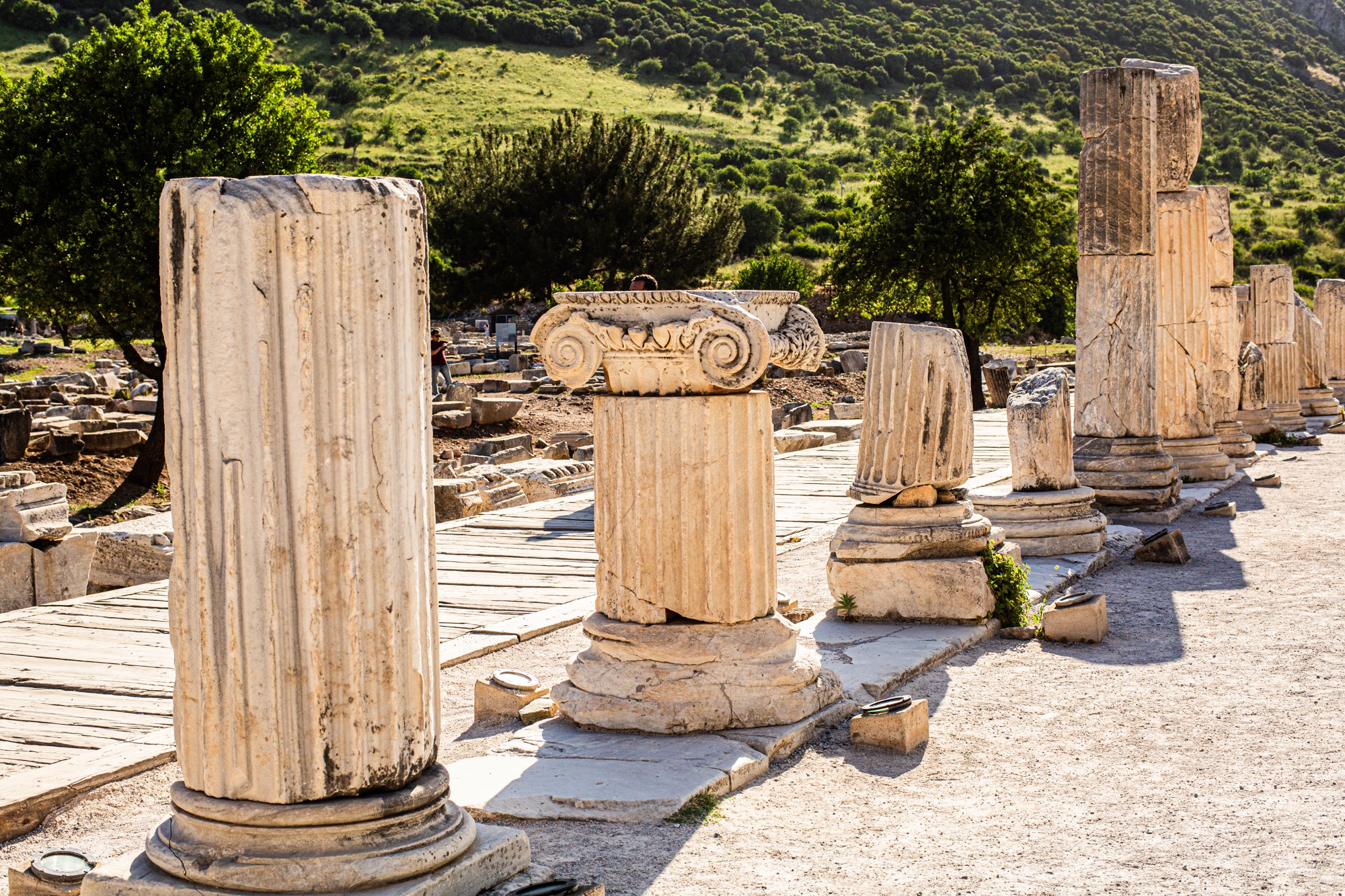
Ephesus ruins © Nat Hab Staff Tim Martin
Why Is Ephesus Important to Early Christianity?
Ephesus was also important in early Christian history. UNESCO recognizes the site as exceptional testimony not only to Hellenistic and Roman Imperial traditions, but also to early Christianity. Ephesus had long been sacred ground.
The Temple of Artemis, one of the Seven Wonders of the Ancient World, drew pilgrims from around the Mediterranean. Later, Christian pilgrimage became associated with places such as the Church of Mary and the Basilica of St. John on Ayasuluk Hill. Church councils held at Ephesus in the 5th century A.D. made the city part of Christian theological history.
Ephesus’ sacred identity did not disappear when political or religious power changed. It was reinterpreted. Across centuries, people came to Ephesus to worship, debate, remember and belong.
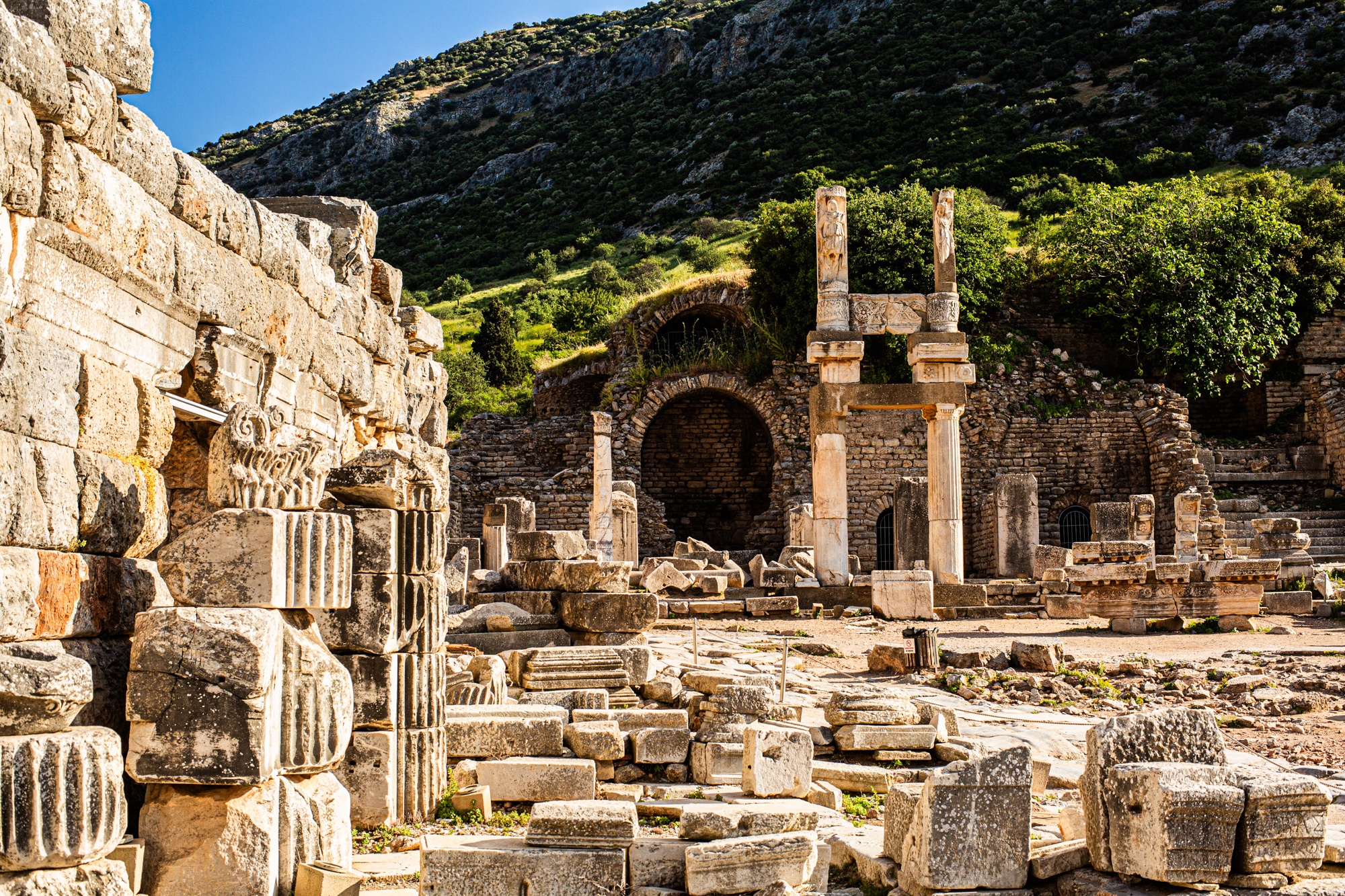
Temple of Domitian, Domitian Square, Ephesus © Nat Hab Staff Tim Martin
What Can Travelers See at Ephesus Today?
Curetes Street helps travelers imagine movement through the city. Originally a sacred processional route, it became an inner-city boulevard lined with monuments, fountains and public buildings. The terrace houses reveal the lives of wealthy Roman residents through mosaics, wall paintings and marble paneling. The Library of Celsus shows civic pride, community benefactors, memory and tributes to civic knowledge and learning. In the great theater, it’s easy to imagine public gatherings, performances, and spectacle on a grand scale.
And it’s all just a hint at what the city was like at its peak. Although archaeological work at Ephesus has continued for more than 130 years, only about 10% to 20% of the ancient city has been excavated.
Anatolian settlement, Greek-speaking life, Roman expansion, Christian pilgrimage, Byzantine continuity all in modern western Turkey; standing before the Library of Celsus or looking across the great theater, the ways Turkey’s ancient cultures crossed and developed come into view. Marble streets, sacred ruins, terraced houses and public monuments reveal a place where people traded, worshipped, studied, governed, performed and remembered.
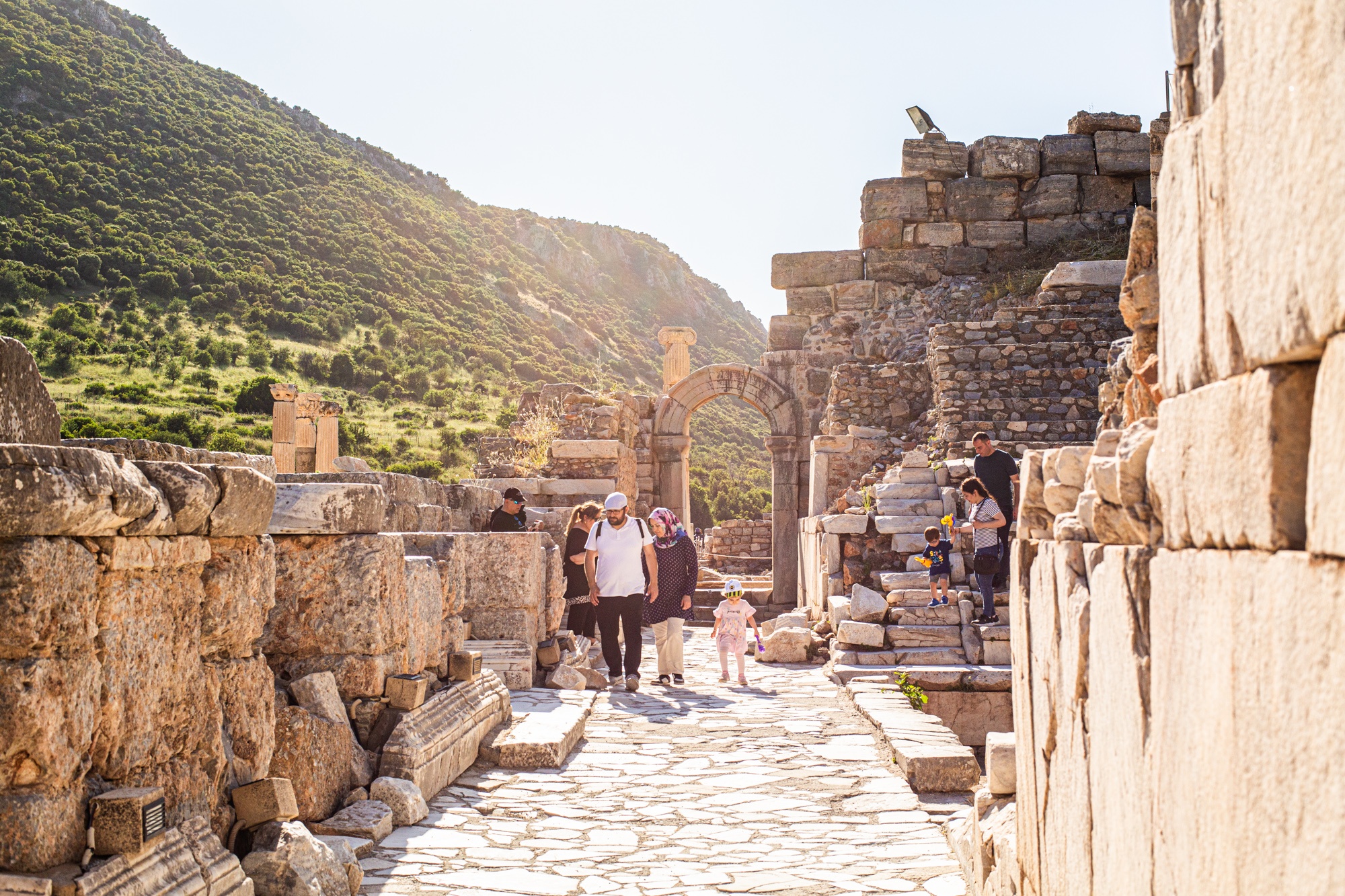
Travelers walk through the ancient ruins of Ephesus © Nat Hab Staff Tim Martin
Discover Terra & Tu Cultural Journeys
As long as humans have lived on the land, nature and culture have been intertwined and mutually dependent. Nat Hab’s Terra & Tu Cultural Journeys delve deep into this connection, exploring the rich relationship between people and place. Conservation, whether of wild habitats or enduring cultural traditions, depends on knowing we are part of a whole.
For travelers drawn to history, architecture and cultural continuity, our Turkey cultural journey offers a rare chance to walk through one of the Mediterranean’s most revealing ancient cities with context. Ephesus is a rediscovered record of human movement, ambition, belief and memory.
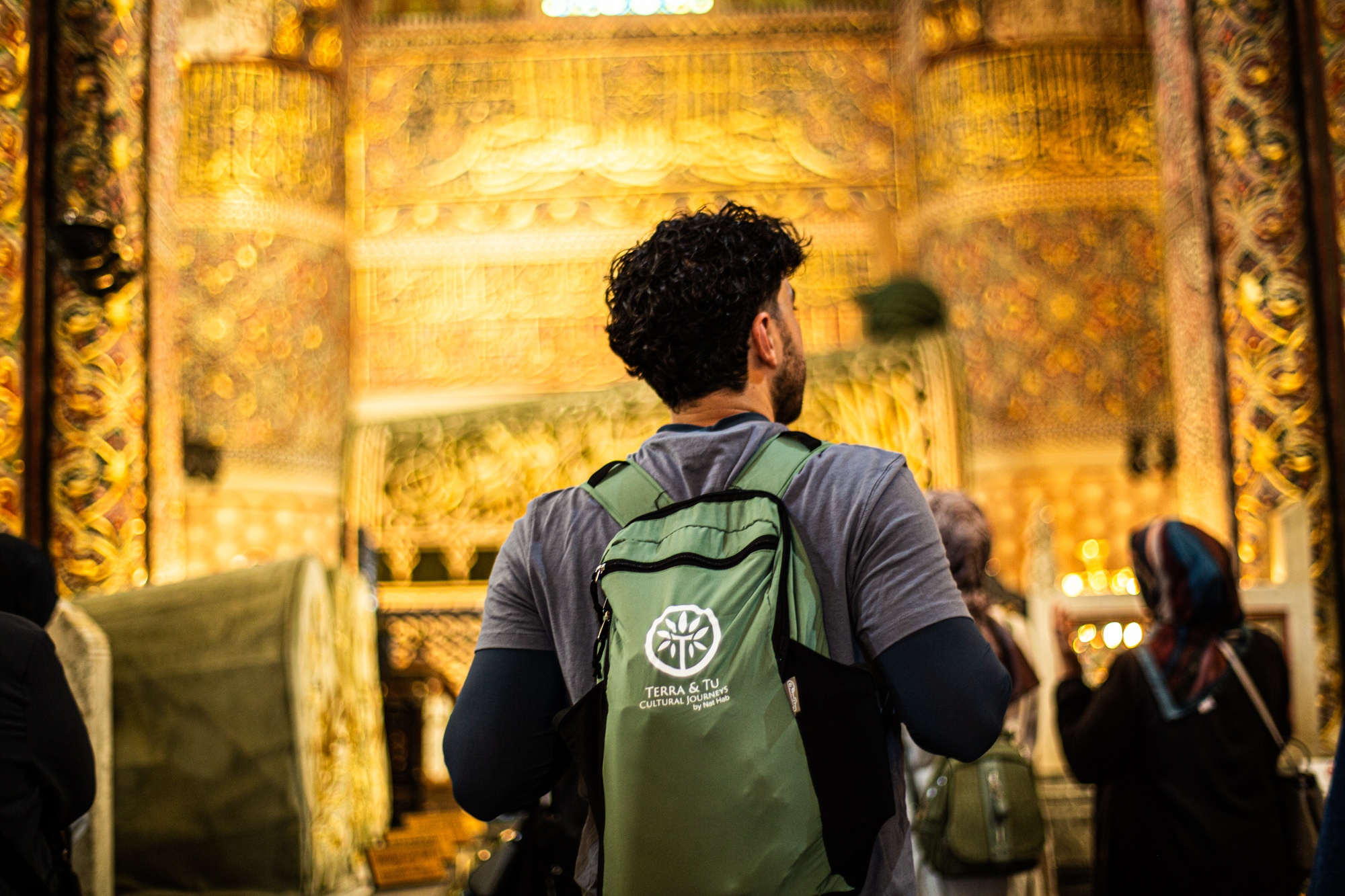
Terra & Tu guest visits the Mevlana Museum in Konya, Turkey © Nat Hab traff Tim Martin