2027 Itinerary
Itinerary
Day 1: Walk through 3,000 years of history in Zadar’s Old Town
Follow the Roman street grid past the forum, ancient walls and medieval churches
Join your Expedition Leader and fellow travelers for a welcome dinner
Arrive in Zadar, where you are met at the airport and transferred to our hotel in the historic Old Town. Zadar, on Croatia’s northern Dalmatian Coast, is one of the most ancient cities on the Adriatic Sea—archaeologists have found traces of a Neolithic settlement here dating to the 9th century BC. Zadar was eventually conquered by the Romans as they advanced to the eastern shore of the Adriatic in the 3rd century BC.
On a walking tour of the Old Town this afternoon, observe how Zadar's streets were laid out on a Roman rectangular grid, with a forum, thermae and water system elements. When the Holy Roman Empire split in the late 3rd century, Zadar became part of the Eastern Roman Empire, known as Byzantium, and remained the capital of Byzantine Dalmatia until the end of World War I. The city's 16th-century Venetian fortifications are part of UNESCO's Venetian Works of Defense World Heritage Site. Highlights include the Roman Forum, ancient city walls and gates, prominent churches and cathedrals, and the Sea Organ, an architectural musical instrument “played” by sea waves. Reconvene this evening for a welcome dinner with our Expedition Leader at our hotel.

Day 2: Hike among Plitvice’s turquoise lakes and waterfalls
Follow boardwalks across 16 lakes linked by streams, cascades and travertine terraces
Look for birds and butterflies in forests that also shelter lynx and brown bears
Walk the salt pans of Nin, where sea salt has been harvested by hand for 1,500 years
Rise early to travel inland to Plitvice Lakes National Park for an all-day discovery of one of the world’s most impressive karst landscapes, designated a UNESCO World Heritage Site for its extraordinary natural features and undisturbed production of travertine. Contained by natural limestone dams, 16 turquoise lakes are linked by crystalline streams, cascading waterfalls and terraced pools—a dynamic environment with a soundscape as enchanting as its visual beauty. On an easy guided hike over boardwalks that lace the park, discover the fascinating features of the karst environment, defined by soluble stone that has formed caves, sinkholes, sinking springs and terraces. The healthy forest habitat that covers three-quarters of the national park supports wildlife, including native trout, birds and butterflies, deer, wild boar—even Eurasian lynx and endangered brown bears live within its bounds, though they are virtually never seen.
On the way back to Zadar, visit the famous Nin Saltworks, where salt has been collected by hand from the pans for 1,500 years. Ecologically produced by the sea, sun and wind, salt from Nin is therapeutic and biodynamic, used for culinary, cosmetic and health purposes. A valued commodity over the centuries, during the Roman Empire it was exchanged ounce for ounce with gold, and soldiers were paid in salt. The Roman term for such compensation was salarium, from which the word “salary” originates. After a 500-year hiatus, Nin Saltworks reopened in 1954, producing salt using traditional methods. On a guided walk along the salt pools, learn how natural salt is made and harvested. Return to Zadar late this afternoon.
Day 3: Hike the Via Dinarica through Croatia’s rugged Velebit Mountains
Follow old shepherd trails through karst fields, beech forest and mountain meadows
Watch for golden eagles above slopes of edelweiss and mountain pine
Continue to Opatija for an evening walk along the Kvarner Bay promenade
Rise early this morning to travel to the wildest part of Croatia where we hike several miles along the Via Dinarica, threading its way through North Velebit National Park. This 1,200-mile trekking route knits together Slovenia, Croatia, Serbia, Bosnia and Herzegovina, Montenegro, Kosovo and Albania, tracing the spine of the Dinaric Alps down the Balkan Peninsula. Combining a network of old shepherd trails, ancient trading paths, strategic war routes and new connections, it weaves through limestone karst fields, meadows, valleys, beech forest and alpine lakes, traversing a slice of wild Europe. Croatia’s Dinaric Alps are among the most rugged and extensive of Europe's mountains. More than 1,000 species of flora thrive here, including edelweiss and European mountain pine. Overhead, we may see golden eagles soaring in the blue sky. En route, survey a vista over the Adriatic that includes the islands of Pag, Rab, Goli, Prvic and Krk. Cultural heritage within the park is a highlight, with remnants of centuries-old dwellings, old cattle pens and dry stone walls.
Continue this afternoon to the Opatija Riviera where our boutique hotel overlooks the Adriatic Sea, backdropped by the green slopes of Mount Ucka. Popular in the 19th century with the Austro-Hungarian elite, the Opatija coast remains a stylish vacation destination. This evening, walk the seafront promenade along Kvarner Bay to a traditional restaurant where we enjoy local specialties, including fresh seafood for dinner.

Day 4: Cruise the Adriatic beneath Cres Island’s griffon-vulture cliffs
Travel by private boat past whitewashed villages and rugged island shores
Look for rare griffon vultures nesting on protected sea cliffs
Drop anchor to swim in clear turquoise coves
Spending time on the sparkling blue Adriatic is a highlight of any visit to this region, and we discover its legendary beauty on a private boat cruise today. From Opatija, sail south toward Croatia's largest island of Cres, viewing sun-soaked scenes of rugged hills that drop to the turquoise sea, whitewashed villages with red-tiled roofs, stacked like blocks, and impossibly clear coves that beckon us to drop anchor and swim. Cres is home to a large colony of rare griffon vultures that nest on steep cliffs directly above the sea. Protected since 1969 in the world’s first reserve for this species, they are among the largest birds on Earth, weighing 15-25 pounds and boasting a wingspan up to 9 feet. Mating pairs produce just one one egg a year, so conserving each bird is crucial. The Cres reserve is also home to other bird species such as the golden eagle, eagle owl, peregrine falcon, keel, raven, shag, blue rock thrush and more. On our return cruise, weave among the scattered islands that dot the bay, reveling in the seagoing culture Croatia is celebrated for.
Day 5: Hunt for truffles with a local guide and his hound
Search the Motovun Forest for one of Istria’s most prized ingredients
Taste regional wines and olive oil over lunch at a family-run winery
Explore Hum, a medieval hill town with fewer than 25 residents
Leaving Kvarner Bay, we cross the Istrian Peninsula to reach the medieval hamlet of Hum, reputedly the smallest town in the world, with fewer than 25 residents. Our route follows the Glagolitic Alley, a road between Roc and Hum along which stone monuments erected in the late 20th century represent letters of the medieval Glagolitic alphabet, an archaic Slavic script that survived in Croatia until the late 19th century. Hum’s size belies its rich thousand-year-old history, although its town walls and fortifications are a reminder of regular battles fought over the centuries.
This morning, visit with a local truffle hunter who tells us all about this coveted culinary treasure and how trained dogs are used to sniff them out. We'll search the Motovun Forest for truffles with our host and his hound, then head to a family-run winery to sample various Istrian wines and olive oil, followed by lunch. Our drive continues this afternoon through a landscape of green hills and white limestone soil planted in vineyards and olive orchards. Natural springs nurture wildflower meadows and peaceful stands of forest. Following narrow roads through old Istrian villages, we ultimately reach our hotel in the medieval hill town of Buzet, with the characteristic red-tiled roofs of this Mediterranean region.

Day 6: Meet Slovenia’s craftmakers and beekeepers before reaching Lake Bled
Walk the medieval lanes of Skofja Loka and visit a local artisan’s studio
Taste honey, liqueur and gingerbread at a family beekeeping farm
Arrive at Lake Bled, crowned by its island church dating to 1142
Depart Croatia this morning and cross the border into Slovenia, where our first stop is Skofja Loka, Slovenia’s best-preserved medieval town, with a rich heritage of handicrafts. The first records of Skofja Loka date to 1248, when it was a busy market hub. Originally, it was enclosed by stone walls and could only be entered through one of five gated towers. Today, the walls are long gone, but a hilltop castle still overlooks its narrow alleyways and winding streets, surrounded by mountains. We’ll take a guided walking tour of the picturesque town center, stopping to meet a local craftsmaker in a small studio, followed by lunch.
This afternoon, visit a family farm to learn about the long practice of apiculture in Slovenia. The country is considered the heart and soul of beekeeping in Europe, and one of the apiaries on the farm is over 90 years old. Our hosts teach us about the life of bees and how honey is produced and extracted. Slovenia is renowned for the quality of its honey, which we will taste in different forms, including pollen (when in season), honey liqueur and homemade gingerbread. Late this afternoon, arrive in Bled, its fairytale setting offering Slovenia's most famous view. In the middle of Lake Bled lies Bled Island, crowned by the Church of the Assumption of Mary, the subject of countless idyllic photographs. The church on the island dates to 1142, but its current facade reflects its Baroque renovation in the 17th century. This evening, enjoy dinner at a local restaurant overlooking the picturesque lake.

Day 7: Visit a mountain family at their summer herding hut
Hike across the forested Pokljuka Plateau past peat bogs and alpine pastures
Share time with local hosts in the slopeside hamlet of Zajamniki
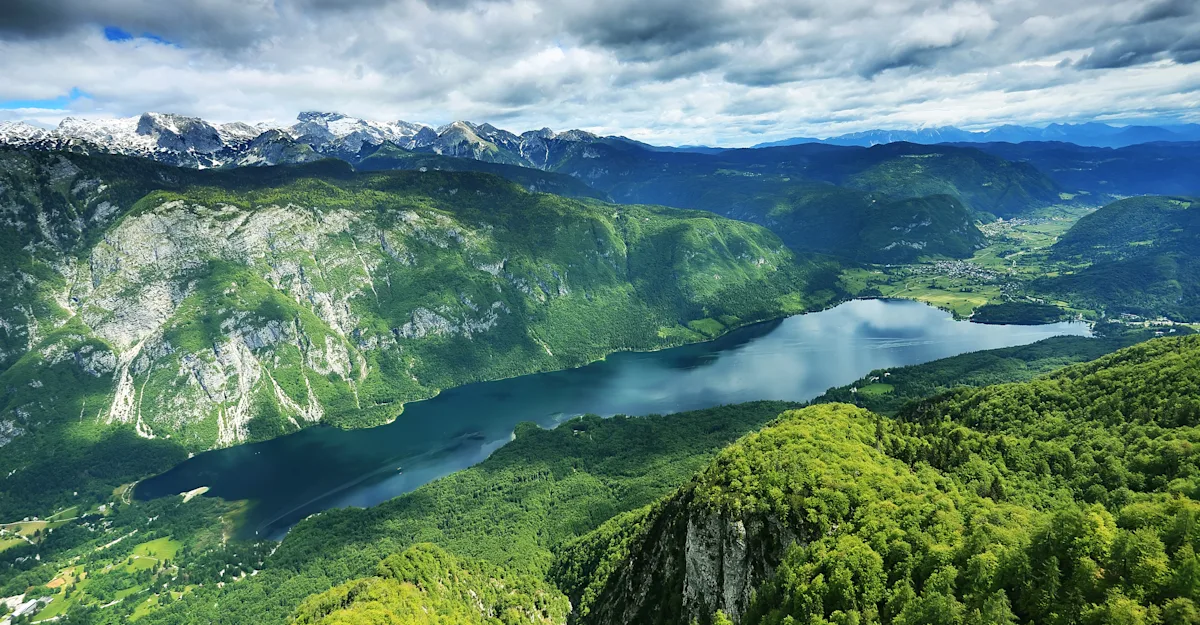
Take in views of the jagged Julian Alps above Lake Bohinj
Some sublime subalpine hiking is in store today atop the forested Pokljuka Plateau. This rounded karst mountain in Triglav National Park was carved by the Pokljuka Glacier, leaving many peat bogs that provide habitat for varied plants and animals. The plateau is little traveled but exceptionally scenic, covered in pine, beech and Norway spruce and punctuated by hidden precipices and sinkholes, grassy pastures and scattered villages. Birds are abundant, as well as butterflies.
Midway along our route, we stop for lunch in the tiny slopeside hamlet of Zajamniki—a "planina," or summer mountain pasture area where Slovenian farmers allow their cattle to roam while they reside in wooden huts for the season. In the shadow of the Triglav massif high above Lake Bohinj, we visit a family-owned mountain cottage, enjoying a visit with our hosts and learning about their traditional lifestyle. The alpine cattle-rearing culture of the mountains around Bohinj has been placed on UNESCO's current Tenative List of World Heritage, including local cheesemaking. Once we reach the end point of our hike, we're rewarded with a striking view of the jagged alpine peaks surrounding us. Later this afternoon, return to Lake Bled with time to wander the waterfront and enjoy the photogenic setting.
Day 8: Rise above Lake Bohinj into the Julian Alps
Hike through Mostnica Gorge beside rapids and waterfalls
Taste Mohant, a pungent alpine cheese made in the region since the 13th century
Ride a cable car and chairlift to high trails below Mount Vogel
This morning, take a hike through Mostnica Gorge, a narrow chasm cut by a clear, gushing mountain river that tumbles down the ravine in a series of rapids and waterfalls. Afterward, stop for an artisan cheese tasting in a nearby village famous for its cheese production, which dates to the 13th century. The region's acclaimed cheeses have been made over centuries by mountain farmers who graze their cattle in summer on the lush, grassy slopes above Lake Bohinj. One heralded variety, Mohant—a unique soft cheese with a pungent smell and distinctive taste, created by the alpine herbs the cows graze on—has European Protected Designation of Origin (or PDO) status.
Lake Bohinj is the crown jewel in the Julian Alps, and it's never far from view as we explore Triglav National Park this afternoon. Slovenia' only national park, it takes its name from 9,369-foot Triglav, the highest point in Slovenia. The park is part of the Julian Alps Biosphere Reserve, the first such area of UNESCO protected ecological status in Slovenia. Ride a cable car to the top of the Vogel ski area to access a hiking wonderland, with grand views of the snow-crusted peaks and sparkling lake far below. Ascending the ski slopes on a final chairlift through a dwarf pine forest, we reach a panoramic plateau below the summit of Mount Vogel, where there's time to wander alpine trails or simply enjoy the vista of the from the meadows at the top of the lift. From the top, walk back down to the cable car (or ride the lift if you prefer), then descend to the valley far below. We cap off our Balkan sojourn with a farewell dinner in Bled this evening.
Day 9: Depart Slovenia after a journey from the Adriatic to the Alps
Transfer from Lake Bled to Ljubljana to connect with homeward flights
Our trip comes to an end this morning as we depart the mountains and transfer to the airport in Slovenia’s nearby capital of Ljubljana.