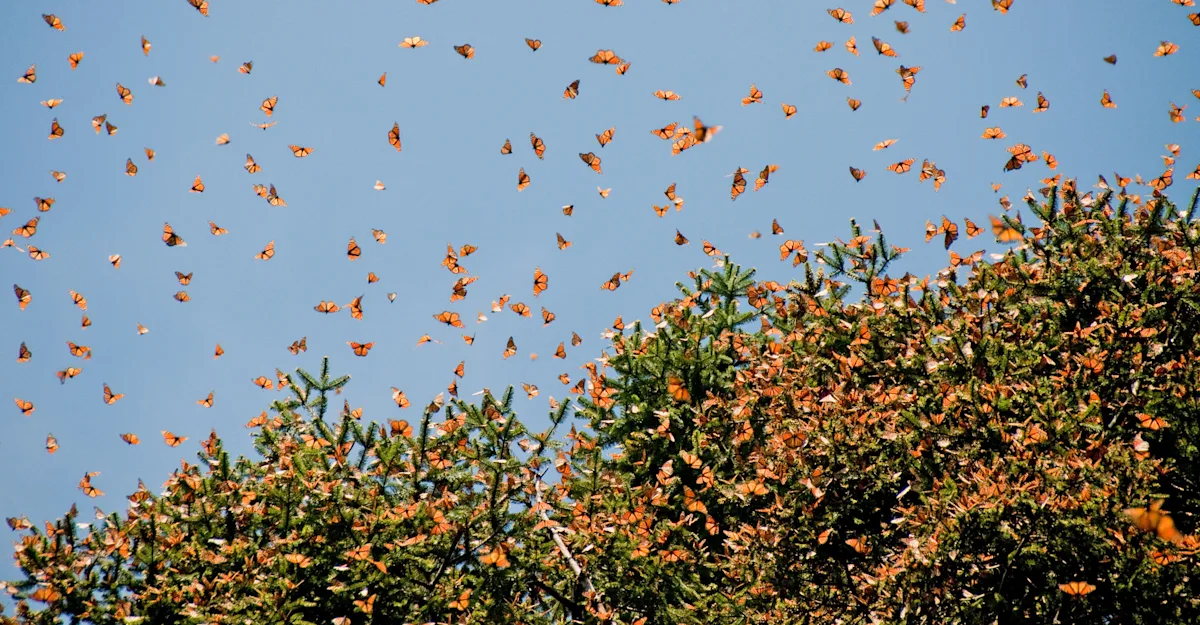
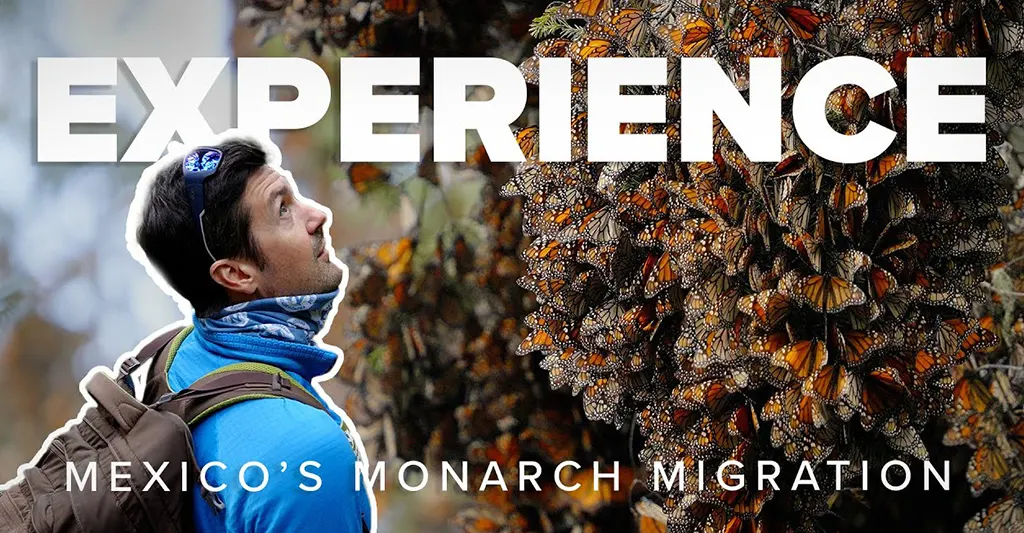
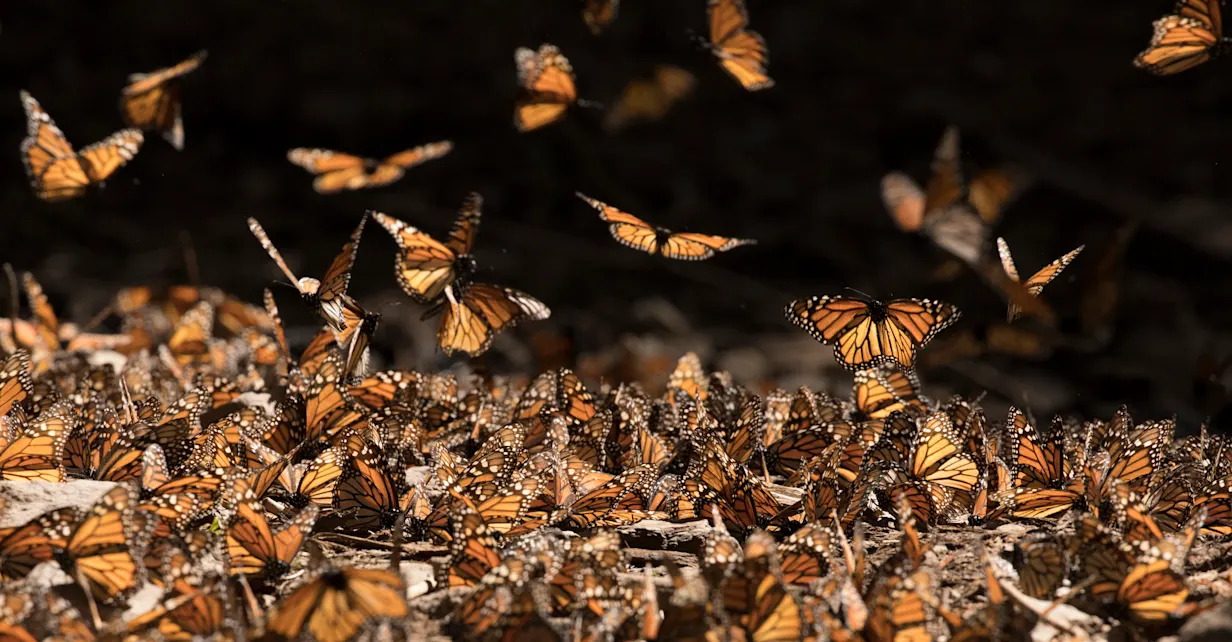
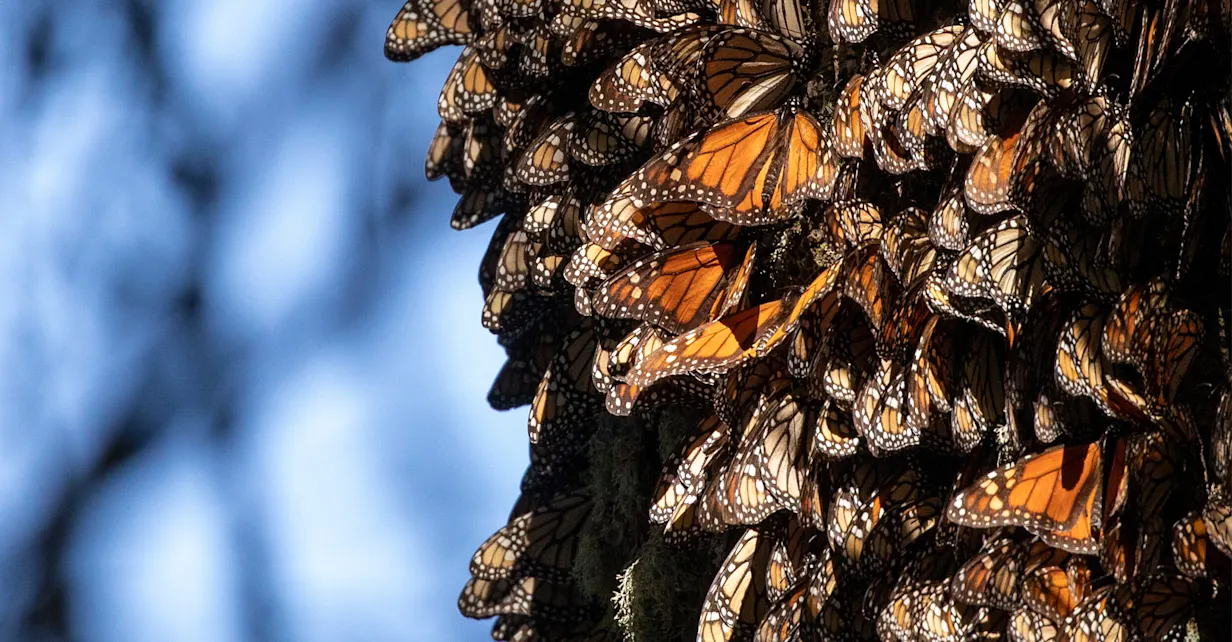
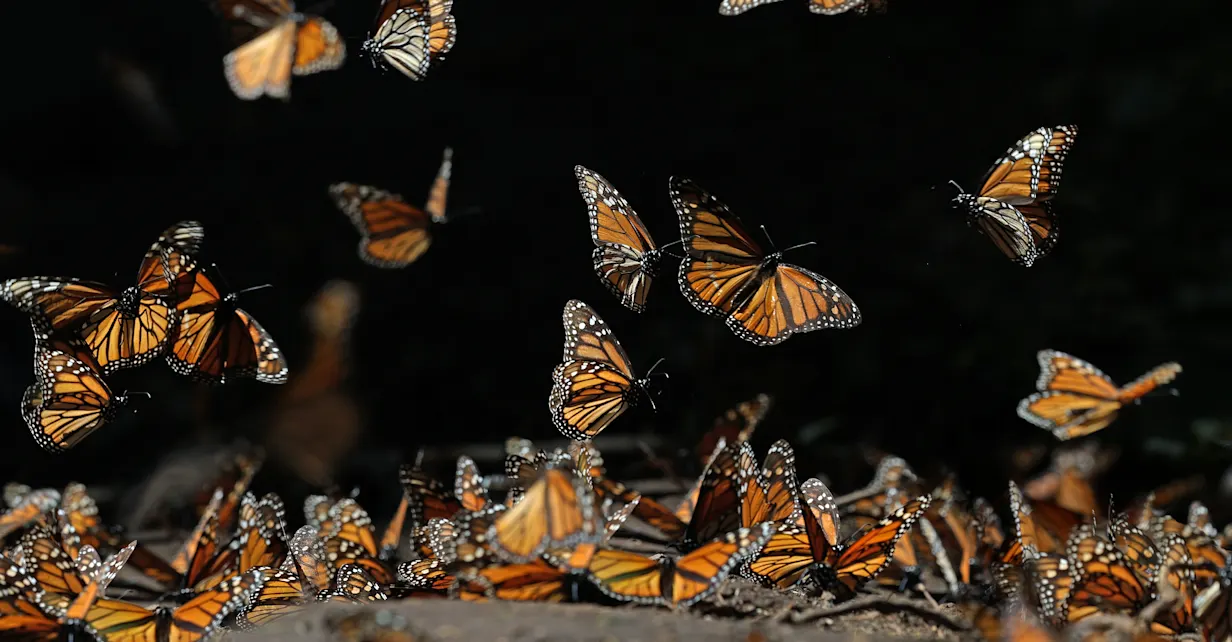
I remember my first time going to Mexico to see the monarch butterflies. I remember walking up the trail and going up these small little concrete steps. And the steps gradually turned to a dirt path. That dirt path meandered through the oyamel firs, beautiful towering trees all around me, where inside it opened up into this incredible amphitheater teeming with monarch butterflies. And it was pure magnificence. And when I looked up and saw these monarchs, I felt like I had just discovered something that I knew somehow deep inside me would be important for the rest of my life. About one hundred miles outside of Mexico City is a small town called Anganguello. Anganguello used to be a silver mining town, and it was that way for many, many decades. If you're gonna go deeper and deeper into the earth, it takes more and more money, more and more technology, and essentially the town was running out of that money. Butterfly ecotourism kind of showed up not too far after that and provided this really magical sense of income flying in from the heavens to deliver a better way to make money. One of the things I find most fascinating about the Monarch is it looks like a dainty little butterfly that is fragile, if you touch it, it's gonna break. In a lot of ways it couldn't be further from the truth. These things are hardy. They fly thousands of miles and arrive unscathed. Once the migration starts in late summer, early fall, they fly three thousand miles down Mexico. They overwinter for four and a half for five months. And then it takes about three or four generations to leapfrog back up to repopulate the rest of North America. And it's unfortunately been steadily declining since the nineties. One of the biggest issues historically has been deforestation. And you can imagine why that's a concern is the butterflies are roosting, they're sitting quasi hibernating on trees. If those trees are not there, that's a problem. Where are they gonna go? The conservation community realized that these forests were in danger. And in order for this yearly migration to happen, these monarchs come back to the exact same trees every year and the forest is disappearing. So we've got to act. WWF, we are working here in the Monarch Reserve to restore the forest through the reforestation because these forests are the most important forest for the overwintering of the Monarch here in Mexico. I think the most important challenge here is change the mind of the people. The owner of the forest are the key to preserve it. We're talking about tens of thousands of people around these Monarch Biosphere Reserves. If you don't get them involved, they're going be resentful. Why are you telling me I can't cut down my trees? But if you get them involved, it completely turns it around and all of a sudden they're the biggest proponents for it. They're the ones making sure the trees don't get cut down. Now that tourism has moved in because of the Monarch Butterfly, there are just so many jobs. It ranges from working at hotels to cooking dinners and lunches to operating souvenir stands and the ticket booths here, the Caballeros that own horses, taking people on horseback up to the colonies. There are hundreds, if not thousands of people employed directly due to tourism for the monarch butterflies. The point is that the people discover the value of their own forest, not only for the monarch, for themselves, because if they use in a very sustainable way the forest, they can have better quality of life. This, the Hiro, is an example of that. It's a boom of tourism. They make a lot of money locally, but what do they do the rest of the Well, taking care of trees, planting trees. This is the tree nursery that we're looking at. Got some pines and some furs here in the distance. This is part of a vast reforestation effort from World Wildlife Fund. Tree nursery is the most important project in the Mona Reserve. We have currently a very disturbed forest. If we recover the forest, we are going to have more businesses for the people, more places where the Monarch can to establish colonies. A lot of positive things that we are rich if we recover the forest. Because of the conservation work done by WWF and the local people, the forest is regrowing and deforestation has slowed significantly. It's still a problem, but the Monarch Forest is now relatively stable. And what we need to do now is protect them better in North America. It all comes down to making sure they have enough habitat to support the food sources they need to survive. Food sources as caterpillars, which is milkweed, and food sources like nectar. As natural prairies and fields are converted into agriculture or development, that habitat that once was a great home to just a bunch of random weeds, milkweeds amongst them, is now disappearing and turning into parking lots and agricultural fields. And so we're really concerned that if that food resource continues to decrease, it's a bad thing for the monarchs, of course. So we now need to take the same conservation spirit and energy from down here in Mexico and use it to protect the monarch's route back through North America. The overall monarch population has been declining and they were recently listed as an endangered species by the IUCN. But I have every bit of faith that if we do the things that we now know from the research, the from the tourism, from the biology, from the generating global support and love of modern butterfly, they will absolutely rebound. We just have to give nature a chance.