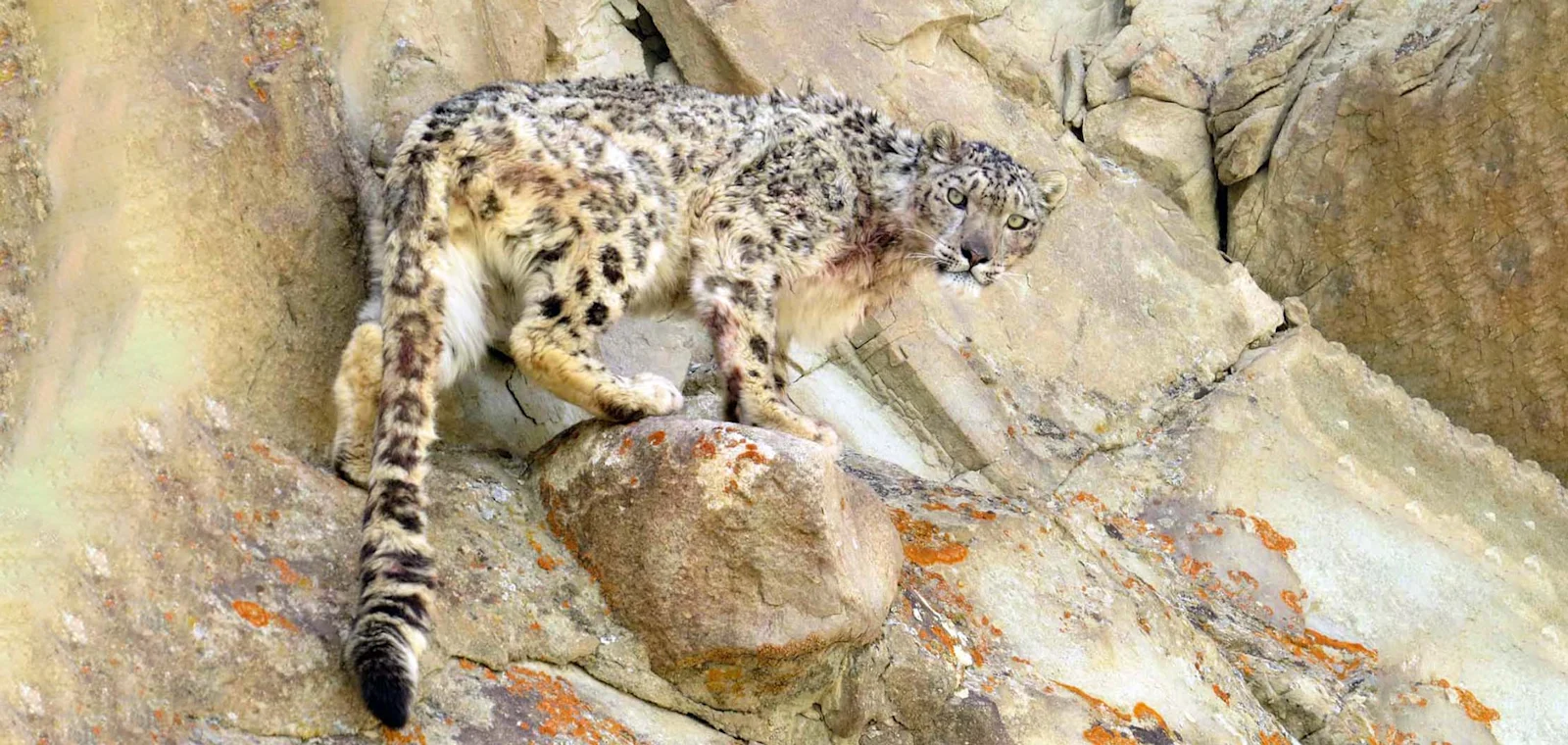
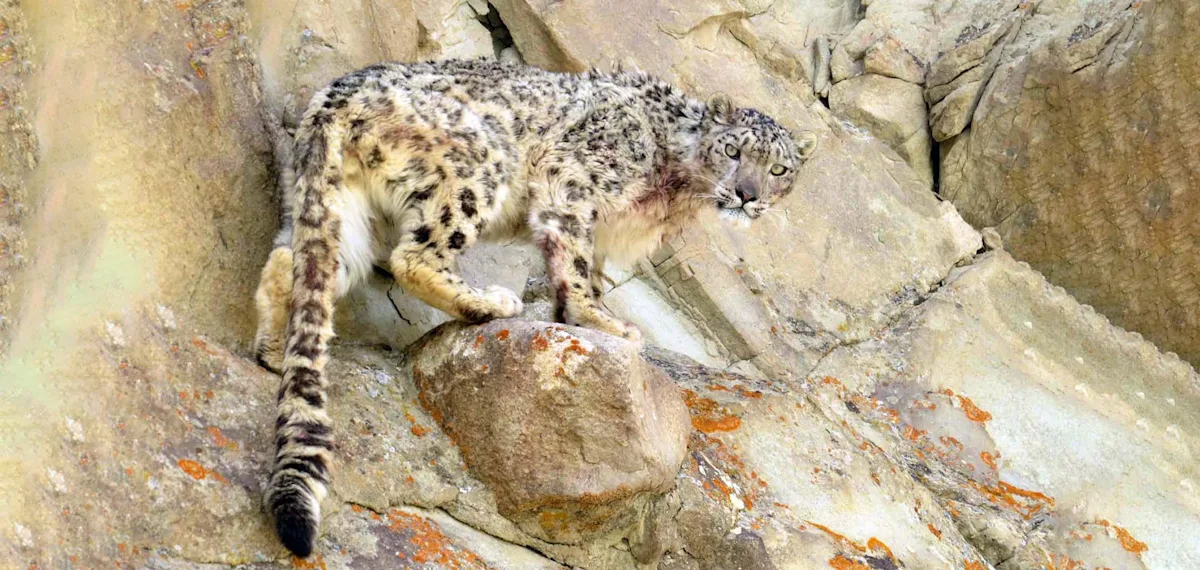
Video: The Somewhat Noble Call of a Snow Leopard

We’re all familiar with this movie scene: a bald eagle soars overhead in a wild, Western-type, wide-open landscape, and we hear the iconic, piercing, strong screech of America’s most majestic bird.
What you might not realize is that whenever you watch a regal bald eagle glide across the big (or small) screen and you hear its familiar call, what you’re really listening to is the shriek of a red-tailed hawk. For such a powerful bird, the bald eagle emits surprisingly weak-sounding cries: usually a series of high-pitched whistling or chirping notes., opens in new tab Some have even described bald eagle noises as “little, cackling laughs.”
Hollywood dubs over the voices of bald eagles with that of red-tailed hawks in order to beef up the symbol of America.
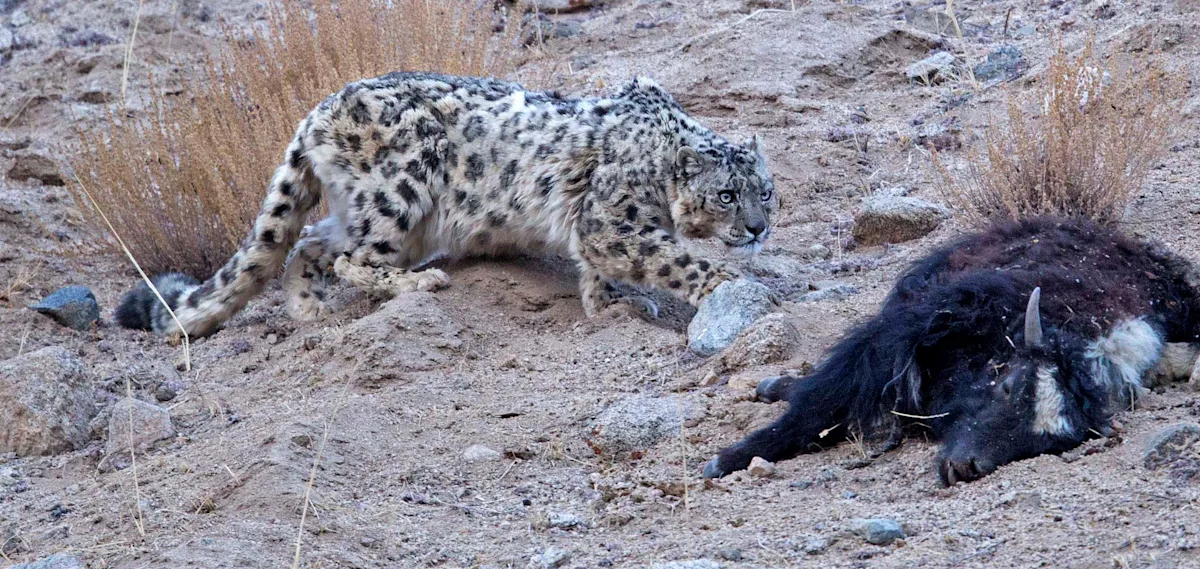
That’s why the rare film below caught my attention. It captures the call of a snow leopard in the wild—and it might not be what you’d expect.
Combination of challenges
The International Union for Conservation of Nature and Natural Resources (IUCN) categorizes snow leopards, opens in new tab as “vulnerable” with a decreasing population on its Red List of Threatened Species., opens in new tab The number of wild snow leopards left is estimated to be between 2,710 and 3,386 individuals. The big cats are under threat from climate change, civil unrest and wars, commercial and residential development, disease and invasive species, hunting and trapping, livestock farming and ranching, mining and quarrying, and poaching.
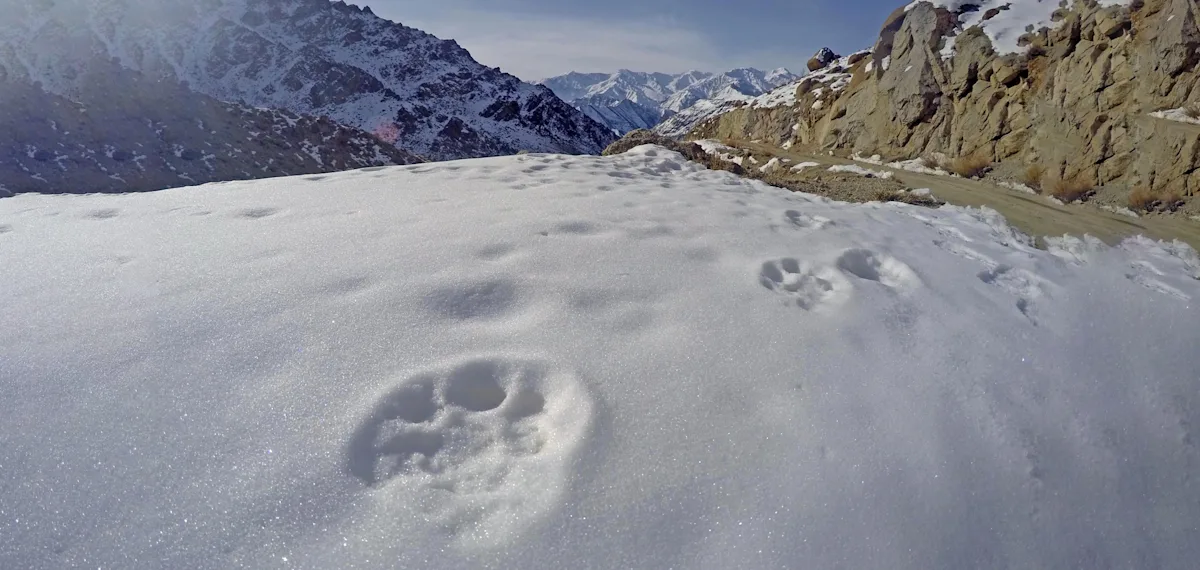
Combine all those challenges with the fact that the snow leopards’ remote ranges and solitary lifestyles make them elusive subjects in the wild, and you’ll understand just how unusual and special the footage below is. It was captured by a remote camera set up along the natural trails of the snow leopards’ habitat in the Karakoram Mountains in Northern Pakistan.
According to The White Lion Foundation, opens in new tab (TWLF), a wildlife charity in the United Kingdom that was responsible for releasing the film, the adult male that’s shown is using his voice to establish his territory and to let females know that he is in the area.
Calls of the wild
The White Lion Foundation has partnered with local villagers in Pakistan and the Baltistan Wildlife Conservation and Development Organization in efforts to monitor and protect the snow leopard population. TWLF is also building leopard-proof corrals to keep rural communities’ flocks and herds safe at night from big-cat attacks.
Watching this video can’t help but make us all thankful that advanced camera technology and AI have made it possible to now enjoy the natural beauty of snow leopards without disturbing them in their natural habitats.
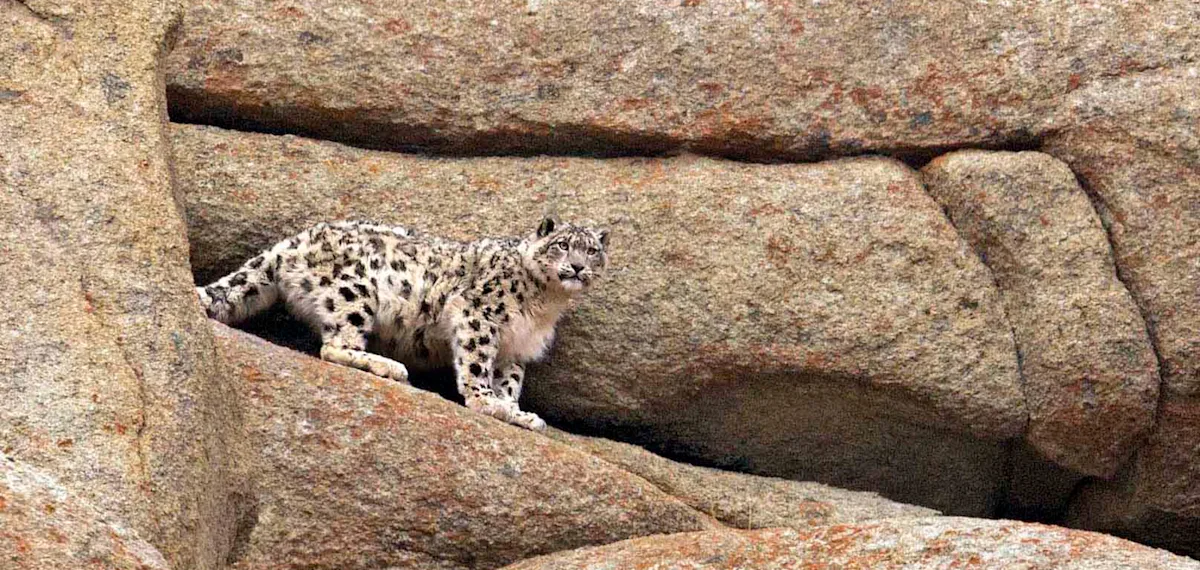
And much as with the bald eagle, you may have imagined hearing a snow leopard call to be akin to experiencing a deep, rumbling roar from a lion or the throaty snarl from a tiger, but the truth is that the vocalizations of this young, male snow leopard sound more like—as Amanda Kooser from CNET so appropriately put it—the infamous “Wilhelm Scream” from Hollywood movies.
Here’s to finding your true places and natural habitats,
Candy