Video Encounters with Mystifying Greenland Sharks

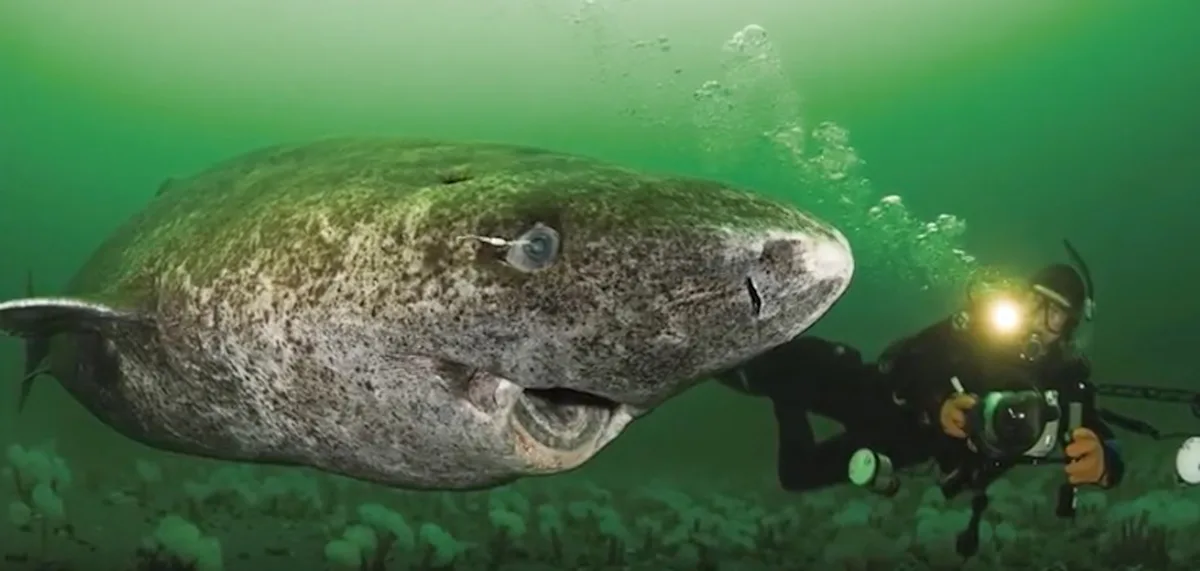
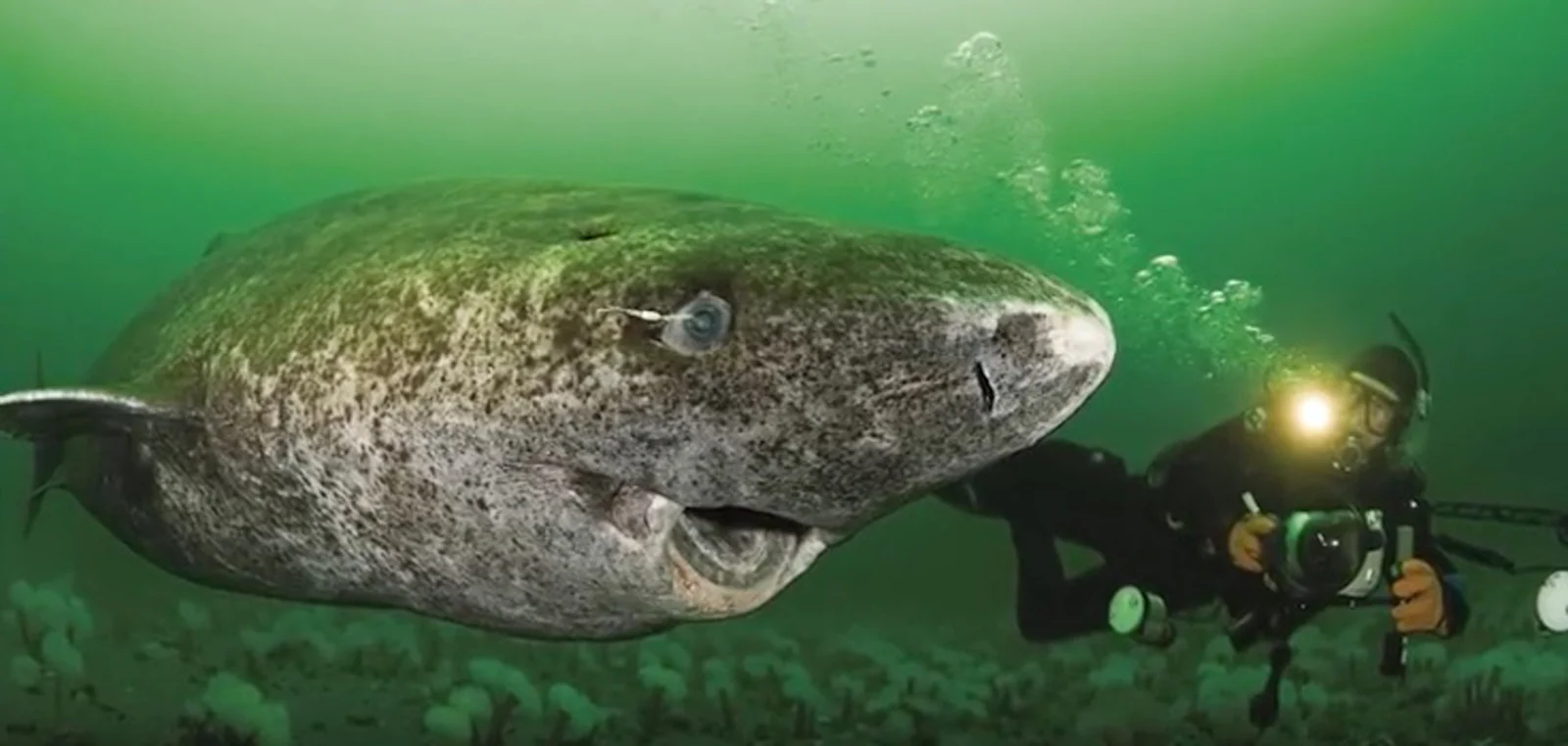
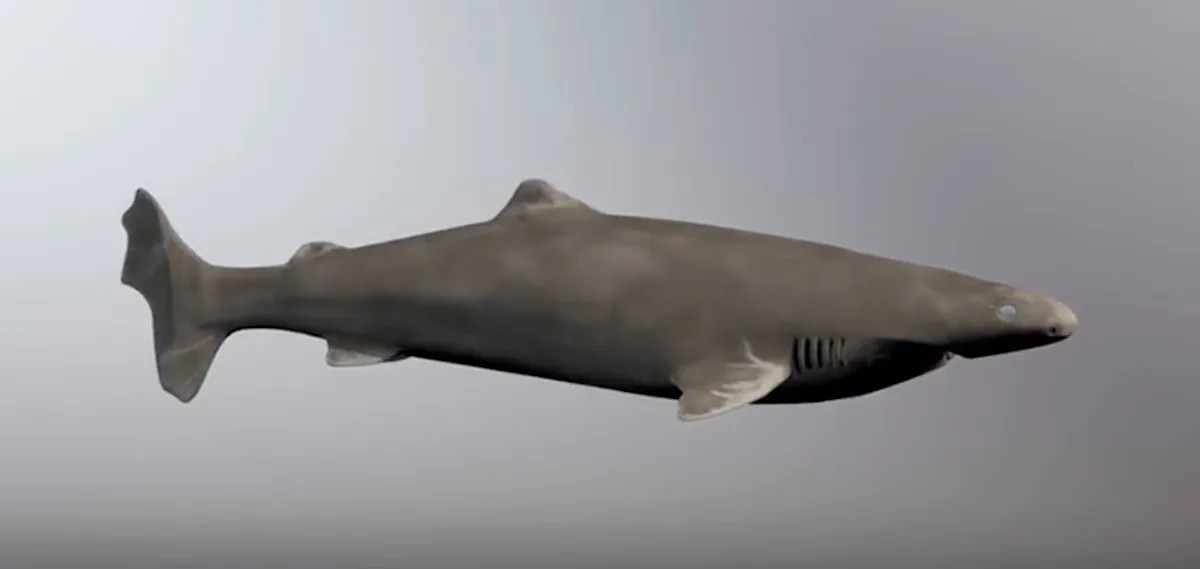
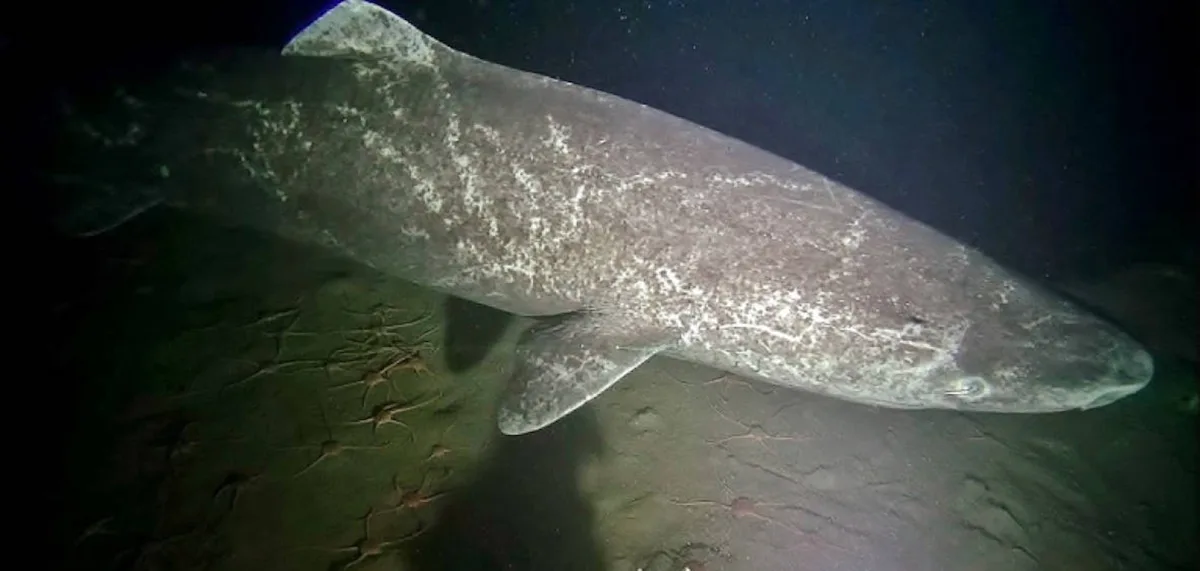
Deepwater, mythic and prehistoric creatures, Greenland sharks inhabit the Atlantic Ocean, from Canada to Norway and off the coast of Scotland.When it comes to legends, some have suggested a Greenland shark may actually be the Loch Ness Monster., opens in new tab As for its prehistoric characterization, this fish can live up to 500 years or more. The first video shown below puts that astounding fact into perspective.
Produced in 2017 by Wonder World, the short film, titled Oldest Shark in the World—512-Year-Old Greenland Shark, explores the fish’s longevity. One of the sharks depicted is estimated to have been born as early as 1505, make it older than William Shakespeare. To put that concept in context, the producer offers a timetable of events (which I’ve condensed here) that occurred during the last 513 years, or within the life span of this shark:
1508—European settlers arrive on the American mainland, at the Isthmus of Panama.
Circa 1592—Compound microscope developed by Zacherias Jansson of Denmark, which led to the study of microorganisms.
1608—Hans Lippershey invents the telescope; Galileo Galilei makes astronomical observations.
1652—European settlers arrive at the Cape of Good Hope, South Africa.
1690—The first newspaper in the United States is published in Boston.
1752—Ben Franklin [invents] the lightning rod.
Circa 1800—The Industrial Revolution begins in Western Europe.
1816—Chemist Joseph Nicephore Niepce develops the first photographic negative in France.
1850—Human population: 1 billion.
Circa 1870—The first environmental problems develop; the modern nature conservation movement begins.
1876—Alexander Graham Bell invents the telephone.
Circa 1900—Humans begin to generate a potentially unstable climate. Temperatures, nudged up by emissions of greenhouse gases, rise sharply.
1901-1909—The golden age of nature conservation in the U.S.; President Theodore Roosevelt creates the U.S. Forest Service.
1920–1945—Global-scale wars.
1950–2000—Air transportation leads to global travel on an unprecedented scale.
1961—The first human in space.
1969—First humans on a celestial body other than Earth; Americans reach the moon.
1975—Human population: 4 billion.
1981—IBM introduces its first personal computer.
1995—Internet electronically connects the globe.
1999—Human population: 6 billion.
In the second video below, you’ll see underwater cinematographer Adam Ravetch swim with these gentle giants in a rare and unusual encounter. In the third, very short, minute-long video, you’ll get a glimpse of a Greenland shark captured by a remote, underwater camera off Nunavut’s shores in the eastern Canadian Arctic. Watching this soundless piece of footage is like pulling back a curtain to peer into an inscrutable, long-ago world.
As Adam Ravetch says in the second video, Greenland sharks are a “fabulous piece of the puzzle of the Arctic ecosystem.” They “live so deep, [that] nobody really comes in contact” with them.
I hope these videos will make you feel as if you have.
Here’s to finding your true places and natural habitats,
Candy