Ten Facts about Polar Bears

Polar bears were hunted from the 1600s right through the mid-1970s. Though hunting is now regulated, current polar bear populations face a new challenge: climate change. Sea ice is melting earlier and forming later each year, leaving polar bears less time to hunt.
There are currently between 20,000 and 25,000 polar bears worldwide, and the species is now listed as threatened under the Endangered Species Act. WWF’s strategy to save the polar bear from extinction focuses on supporting field research, educating the public and reducing threats to the species, its habitat and its prey.
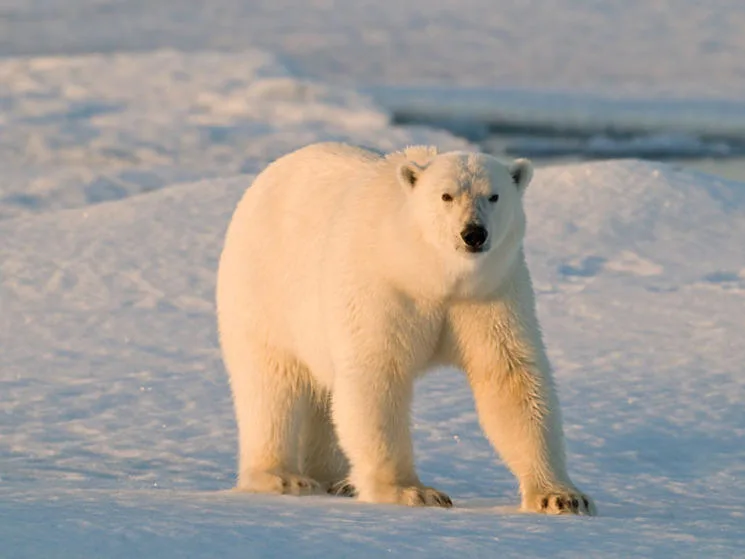
10. The polar bear’s coat is so well camouflaged in Arctic environments that it can sometimes pass as a snow drift. Interestingly, the polar bear’s coat has no white pigment—in fact, a polar bear’s skin is black, and its hairs are hollow.
9. Polar bears are excellent swimmers and can sustain a pace of 6.2 miles per hour by using their front paws like oars while their hind legs are held flat like a rudder.
8. Sixty percent of the 19 polar bear sub-populations are in Canada.
7. The polar bear is the most carnivorous member of the bear family, feeding mainly on a diet of ice seals.
6. When born, a polar bear cub weighs about the size of a guinea pig.
5. A polar bear’s stomach can hold the food equivalent of 15 percent to 20 percent of its own body weight.
4. Polar bears like to keep themselves clean, as it probably helps the insulating properties of their fur. After feeding, they will usually wash themselves by taking a swim or rolling in the snow. They also roll in the snow to cool off—despite the harsh conditions of their environment, polar bears overheat easily.
3. Less than 2 percent of a polar bear’s attempted hunts are successful.
2. The most common method of hunting by polar bears involves the bear locating an active breathing hole using its keen sense of smell (i.e. a place where the seals are currently surfacing to take in air).
1. If current warming trends continue unabated, scientists believe that polar bears will be vulnerable to extinction within the next century.