As Climate Change Threatens Their Survival, Polar Bears Discover New Food Source

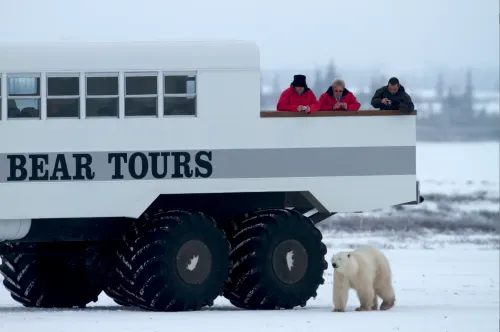
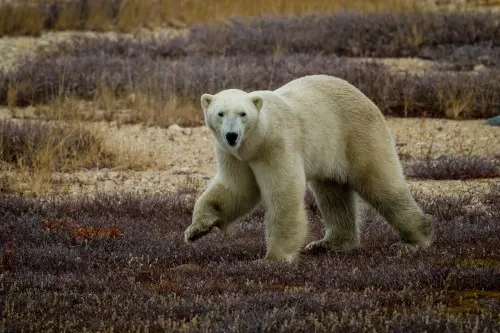
The arctic sea ice is melting earlier than ever before because of global climate change. Polar bears now have less time to hunt for seals, threatening their survival. This is sending the bears to the shore of Churchill, Manitoba earlier than they have historically returned, where they are now finding a newfound food source – snow geese.
The New York Times, opens in new tab calls this a climate change twist. The polar bears are now arriving to shore in the middle of the breeding season of 75,000 pairs of snow geese – giving the bears a significant new food substitute.
Dr. Linda Gormezano is an expert in non-invasive research of predator behavior. In studying the shifting feeding habits of polar bears, she trained a Dutch shepherd to locate polar bear scat. These scat samples were collected and studied for multiple years. The results of the study showed that global climate change was in fact changing the feeding habits of polar bears. Along with a substantial quantity of snow geese, the bears are now also eating geese eggs, caribou, berries, and anything else they can get their paws on.
The large goose presence around Churchill is the result of a recent population explosion of snow geese. The population has soared to 15 million geese from just 1.5 million in the 1960s. Many of these geese stop to nest in Churchill on their northern migration.
Dr. Robert Rockwell is the head of the Hudson Bay Project – an environmental monitoring project outside of Churchill. He has witnessed the snow geese population explode over the last several decades. Dr. Rockwell explains that the population upsurge is due to developmental pressures that have drained marshes in southern states such as Louisiana and Texas, where snow geese winter.
These southern marshes and their scant food supply once limited the snow geese population from growing. With the loss of this habitat though, the geese were forced to move north into the Midwest for food. There they found a surplus of rich agricultural products such as corn, soybeans, and wheat. While the snow geese population was once limited by their scarce winter food sources, the Midwest provided the geese with the fuel to greatly expand their population.

While the large snow geese population is providing food for polar bears, opens in new tab, they are also degrading the fragile tundra environment of the arctic coast around Churchill. Like cattle or sheep, snow geese graze extensively– eating and even uprooting plants. Due to their large population, overgrazing has resulted in acres of the rich tundra becoming barren and muddy ground. These eating habits have pushed the geese twenty miles inland from the coast as they continue to destroy the environment. Unfortunately, the polar bears do not feed on enough geese to stop this environmental degradation from continuing.
While these geese are providing a supplemental food source for the polar bears, Steven Amstrup, Polar Bears International’s chief scientist, doubts the geese will become a major food source for the bears. Even with the addition of geese to the Polar bear diet, Amstrup states that the condition of polar bears in the arctic continues to deteriorate.
See polar bears in the wild on our unbelievable Tundra Lodge Adventure!