




Jaguar sightings in Brazil’s Pantanal have increased markedly in recent years, transforming this vast wetland into one of the best places on Earth to observe South America’s largest big cat in the wild. Our short film offers a window into this remarkable conservation success—and invites you into a landscape where jaguars, giant otters, capybaras and caimans share a shifting mosaic of river channels, flooded grasslands and gallery forests.
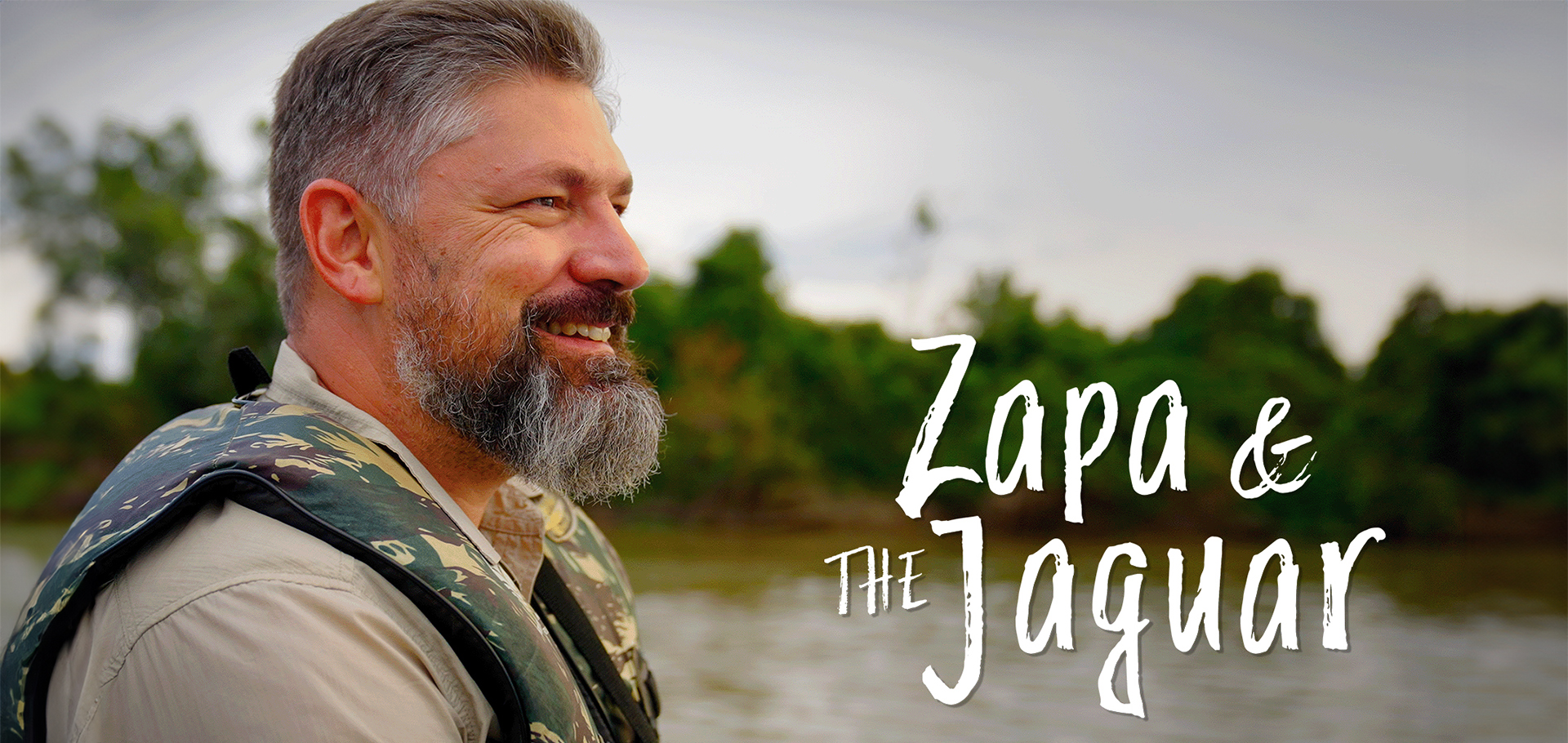
At the center of the story is naturalist guide Cassiano “Zapa” Zaniboni, a South America Expedition Leader who has spent decades exploring the Pantanal. When he first began guiding here, jaguar encounters were rare—brief glimpses that might happen only a few times a season, if at all. Today, those same waterways tell a different story.
A Living Wetland: Why the Pantanal Is Prime Jaguar Habitat
The Pantanal is the world’s largest seasonal floodplain, spanning an area roughly the size of England. Each year, rains transform the region into a vast inland sea. As waters recede, they leave behind nutrient-rich grasslands and dense riverbanks that support one of the highest concentrations of wildlife in the Americas.
This dynamic cycle creates ideal hunting conditions for jaguars. Along the Cuiabá River near Porto Jofre—widely considered the jaguar heartland—these powerful cats patrol the banks in search of prey. Unlike their more elusive rainforest counterparts, Pantanal jaguars are often active during the day, offering rare opportunities for observation.
On boat excursions, travelers may watch a jaguar move with quiet focus along the shoreline, muscles shifting beneath its rosette-marked coat. At times, the hunt unfolds in full view—a sudden burst of motion, a splash of water and the astonishing strength required to subdue a caiman.
From Scarcity to Stability: The Jaguar’s Return
Zapa has witnessed this transformation firsthand. Early in his career, jaguars were difficult to find due to habitat loss, conflict with ranchers and historical hunting pressure. Sightings were unpredictable, and most travelers left the Pantanal without seeing one.
Today, consistent conservation efforts have reshaped that reality. Local landowners, conservation groups and ecotourism operators have worked together to protect habitat and reduce human-wildlife conflict. Jaguars, once seen as a threat to livestock, are now recognized as a vital part of the ecosystem—and a draw for travelers from around the world.
The result is one of the most reliable places anywhere to see jaguars in the wild.

Zapa leading a nature expedition in Brazil © Mandy Scott
Meet Zapa: A Life Shaped by the Pantanal
Cassiano “Zapa” Zaniboni has been guiding Nat Hab travelers since 2010, but his connection to the Pantanal runs far deeper. Raised in Brazil, he developed an early fascination with wildlife that eventually led him to these wetlands, where he built a career interpreting the rhythms of this complex ecosystem.
In our film, Zapa shares how his understanding of jaguars has evolved—from rare sightings to intimate knowledge of their behavior, territories and personalities. His perspective reflects years spent on the water, reading subtle signs: a fresh track in the mud, the alarm call of a capybara, the stillness that settles before a predator appears.
Zapa & The Jaguar brings together personal storytelling and field experience, offering a close look at both the man and the animal that define this landscape.

© Cassiano (Zapa) Zaparoli
Why Seeing Jaguars in the Wild Matters
Travel to the Pantanal directly supports conservation. When travelers visit, they contribute to a local economy that depends on intact ecosystems. This shifts incentives—encouraging landowners to protect habitat rather than convert it.
Your presence helps reinforce a simple but powerful idea: jaguars are worth more alive than gone.
Experience the Pantanal for Yourself
On Nat Hab’s Brazil wildlife expeditions, expert guides lead small-group outings by boat through the river systems of Porto Jofre, where jaguar sightings are most frequent. Along the way, you may also encounter:
—Giant river otters fishing cooperatively
—Hyacinth macaws nesting in palm trees
—Jabiru storks stalking through shallow wetlands
—Capybaras grazing along the banks
For photographers, specialized Brazil photo expeditions offer extended time in prime locations, with guidance on capturing wildlife behavior in changing light conditions.
Many travelers choose to extend their journey to Iguazu Falls, where thundering cascades and subtropical forest provide a striking contrast to the Pantanal’s open wetlands.
A Lasting Connection to the Wild
Watching a jaguar step silently from the forest edge into view is a moment that stays with you. It sharpens your awareness of how ecosystems function—and how fragile they can be without protection.
Zapa’s story, and the resurgence of jaguars in the Pantanal, remind us that conservation success is possible when people, wildlife and place are given the chance to coexist.