Halloween 2025: Bat Hearing

If I asked you to name a “Halloween animal,” the first answer you’d probably give me is bat. Bats are associated with Halloween because of their nocturnal natures and their presence at Celtic Samhain, opens in new tab (pronounced saw-wen and meaning “summer’s end”) festivals of the ninth century, which attracted them with the bonfires lit to ward off spirits. During these celebrations, which marked the beginning of winter, the division between the living and the dead was believed to blur, and bats became linked with the wandering spirits. Their relationship was further cemented by folklore and literature, such as author Bram Stoker’s 1897 book Dracula,, opens in new tab which tied them to darkness, death and vampires.
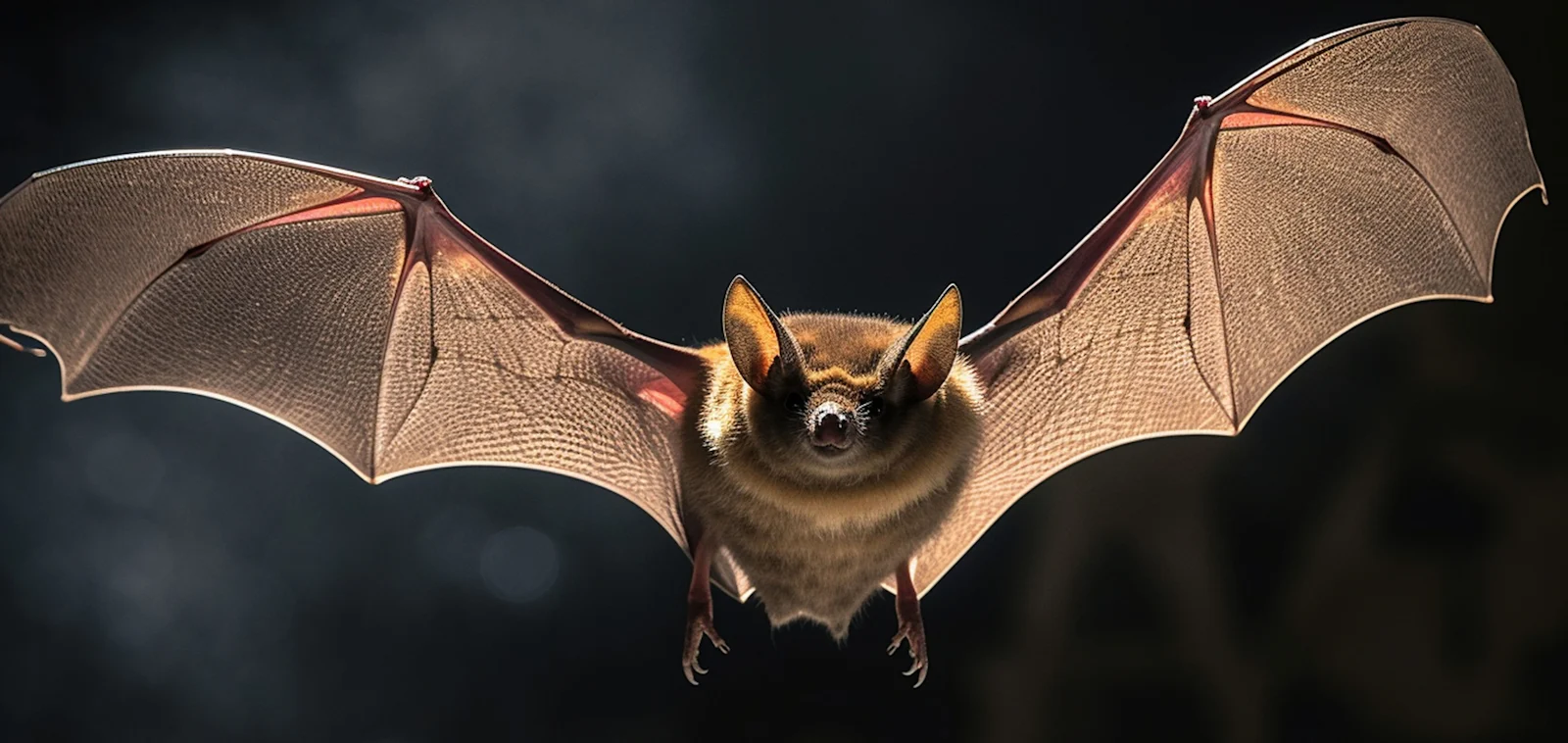
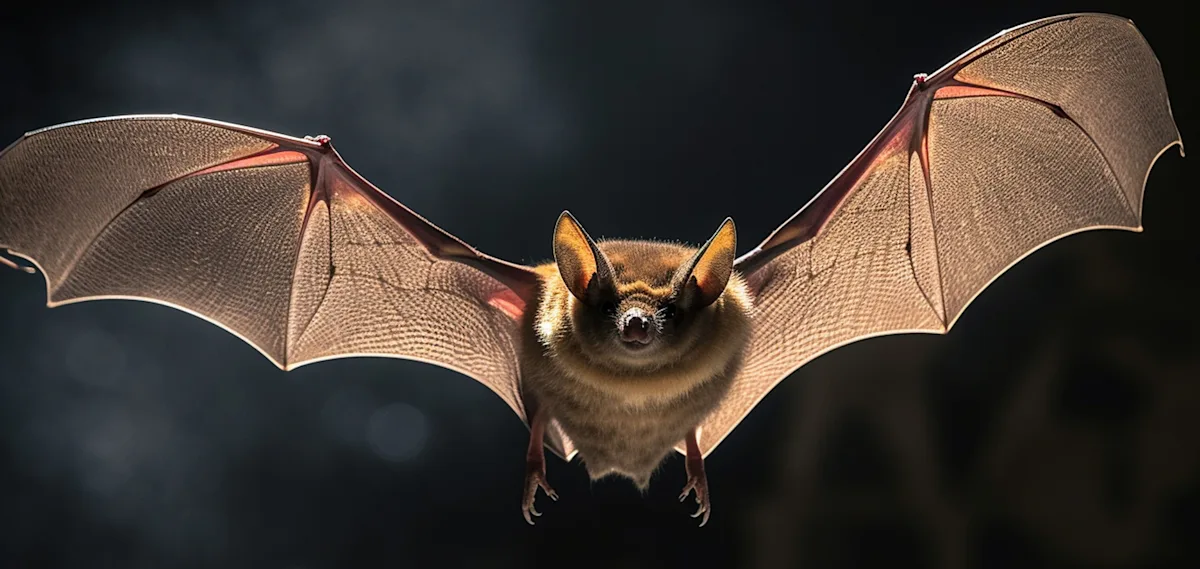
In more modern times, we’ve come to appreciate bats for their amazing attributes. They control pests, serve as pollinators and seed dispersers, and contribute to ecosystem health through the nutrient-rich fertilizer in their guano. They are the only mammals capable of true flight (other mammals manage to travel through the air by gliding from great heights or leaping from the depths). They also have extraordinary hearing, primarily for echolocation, allowing them to navigate and hunt in darkness by interpreting high-frequency sound echoes.
Recently, we’ve been learning even more about how and what bats hear. And it’s even more thrilling than we thought.
Solving the “cocktail party” mystery of bat echolocation
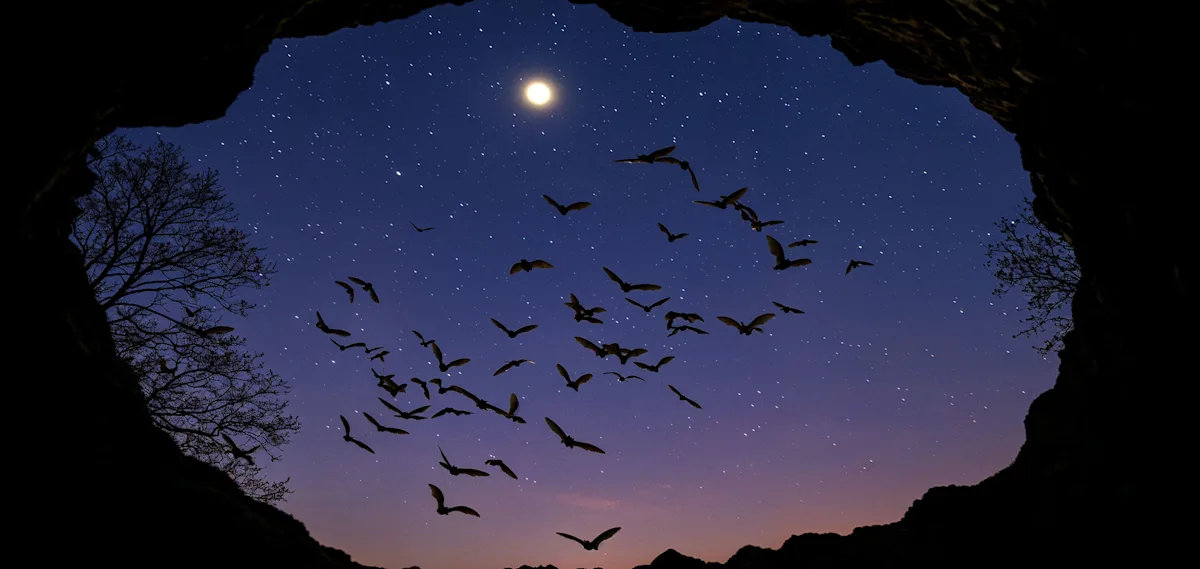
Thousands of bats erupting out of a cave and flapping into the night—sometimes in densities so high that they appear liquid—astounds anyone lucky enough to witness this phenomenon. But with so many moving bats in one place, why don’t they run into each other?
Why bats don’t fatally crash every night when they squeeze out of caves to forage has long been a scientific mystery. Many bats perceive their world mostly through echolocation: they emit a call and listen for the reflected echo, which in turn allows them to “see” what’s around them. But if many bats are echolocating at the same time—such as when a whole colony emerges from a cave in a few minutes—then the calls of others should drown out the important echoic information that bats need. Scientists call this loss of acoustic information “jamming,” and they expect that bats should collide because of it. And yet, aerial accidents outside caves are extremely rare.
For decades, scientists have tried to figure out how bats solve this “cocktail party” nightmare, in which ambient chatter deafens a bat to the sounds it needs to hear. For example, researchers have examined how bats echolocate in groups. In the laboratory, they observed that individual bats in a small group each echolocated at a slightly different frequency, which, in theory, should reduce jamming. Was this also the solution to the cocktail party mystery?
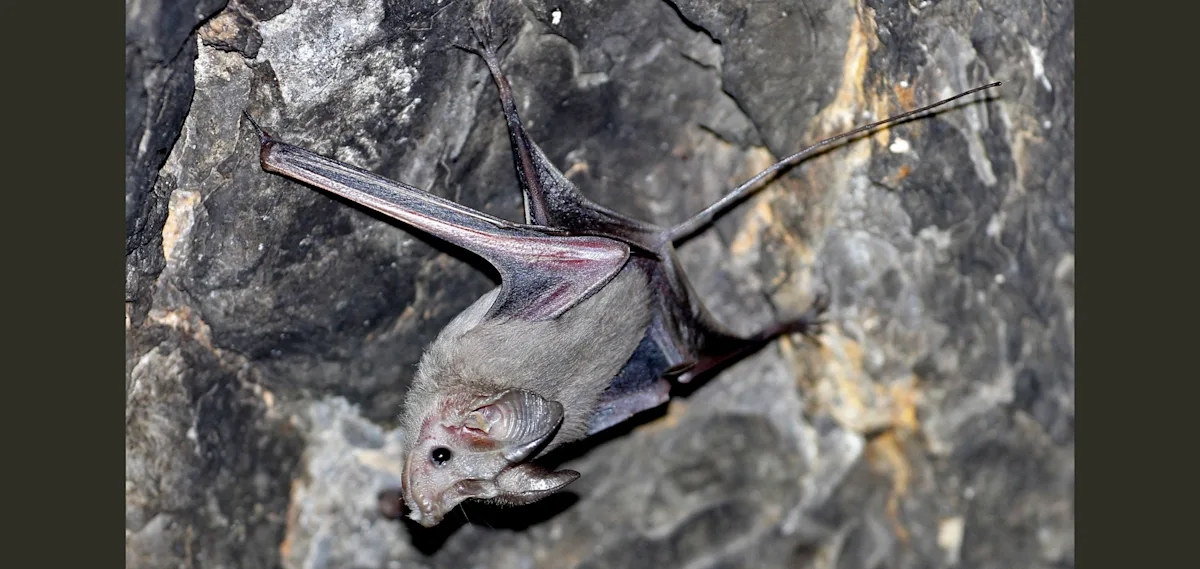
To find out, researchers from Germany’s Max Planck Institute of Animal Behavior and Israel’s Tel Aviv University collected data from wild bats flooding out of a cave opening at dusk and flying through the landscape to forage. They used a combination of high-resolution tracking, sensorimotor computer modeling and ultrasonic recording, all of which allowed the scientists to step into the bats’ sensory world.
The team studied greater mouse-tailed bats, opens in new tab in Israel’s Hula Valley. Over two years, they tagged tens of bats with lightweight trackers that recorded the animals’ locations every second. Some of these tags also included ultrasonic microphones that recorded the auditory scene from the individual bat’s perspective.
One caveat: the tagged bats were released outside the cave and into the emerging colony, meaning that real data was missing at the cave opening when density is highest. The team filled in this gap with a computational model that simulated emergence. The model incorporated information collected by microphones and the trackers to recreate the full behavioral sequence starting from the entrance of the cave and ending after bats had flown 1.24 miles through the valley.
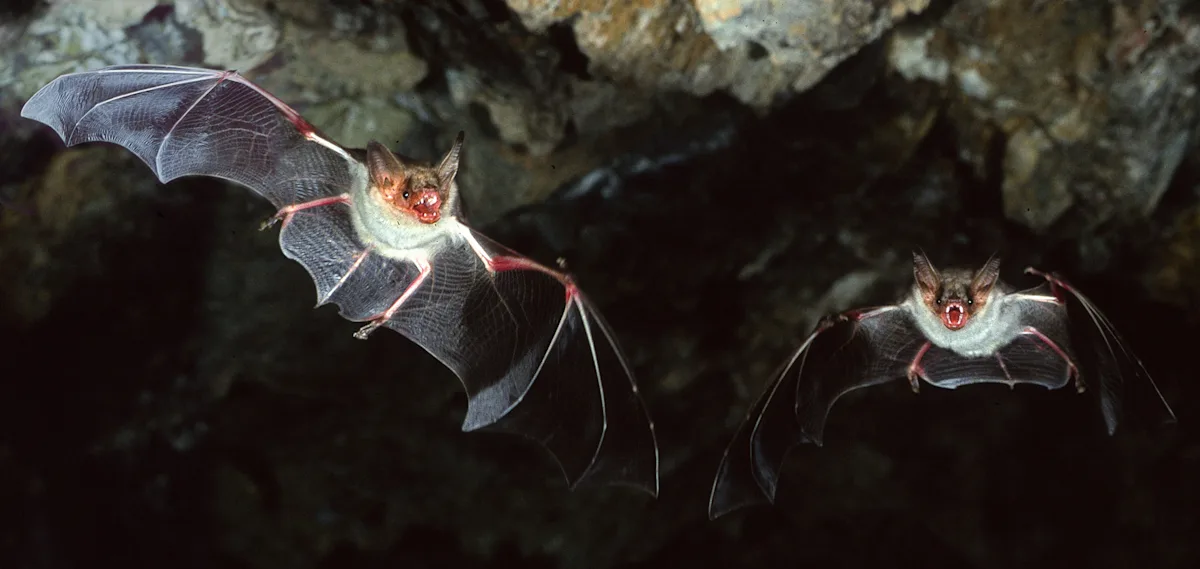
The picture that ultimately emerged was remarkable. When exiting the cave, bats experience a cacophony of calls, with 94% of echolocations being jammed. Yet, within five seconds of leaving the cave, the bats significantly reduced the echolocation jamming. They also made two important behavioral changes: first, they fanned out from the dense colony core while maintaining the group structure; and second, they emitted shorter and weaker calls at higher frequency.
The researchers suspected that bats would reduce jamming by quickly dispersing from the cave. But why did the bats change their echolocations to a higher frequency? Wouldn’t more calling only increase the problem of jamming and therefore collision risk? To understand that result, the authors of the study, published in the journal Proceedings of the National Academy of Sciences, opens in new tab in March 2025, had to approach the scene from a bat’s point of view.
If you’re a bat flying through a cluttered space, say the researchers, the most important object you need to know about is the bat directly in front of you. So, you should echolocate in such a way that gives you the most detailed information about only that bat. You might miss most of the information available because of jamming, but it doesn’t matter because you only need enough detail to avoid crashing into that bat. In other words, bats change the way they echolocate to gain detailed information about their nearest neighbors—a strategy that ultimately helps them to successfully maneuver and avoid collisions.

The authors of this study emphasize that this unexpected result for how bats solve the cocktail party dilemma was made possible by studying bats in their natural environments performing the relevant task. While lab and theoretical studies allow us to imagine possibilities, only by putting ourselves into the “shoes” of animals—at least, as close as possible—will we be able to understand the challenges they face and what they do to solve them.
Using a bat echolocation map for navigation
Once bats get out of their caves and begin their nighttime forays, the magic of these mammals continues.
Would you be able to instantly recognize your location and find your way home from any random point within a two-mile radius in complete darkness, with only a flashlight to guide you? In essence, that’s what bats do, with a directed, local beam of sound—the animal’s echolocation—to guide the way. While bats have long been known for their use of echolocation to avoid obstacles and orient themselves, a research team from the University of Konstanz and the Max Planck Institute of Animal Behavior in Germany and the Hebrew University of Jerusalem and Tel Aviv University in Israel has now shown that bats can identify their location even after being displaced and use echolocation to perform map-based navigation over long distances.
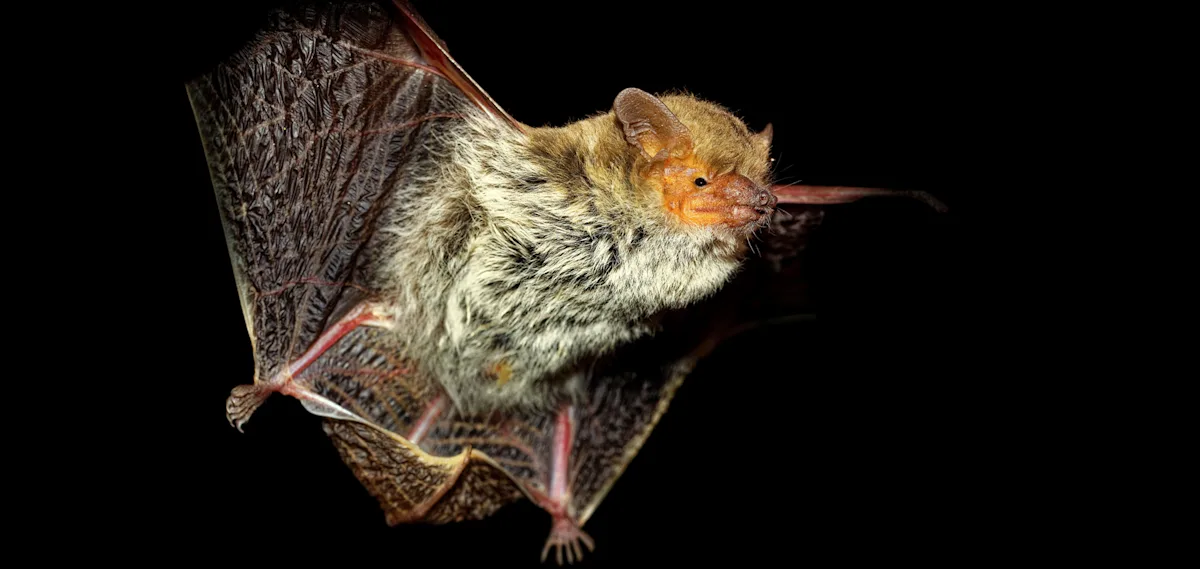
In their research, the German and Israeli team conducted experiments with Kuhl’s pipistrelle, opens in new tab (Pipistrellus kuhlii) bats in Israel’s Hula Valley. Over several nights, the researchers tracked 76 bats near their roosts and relocated them to various points within a two-mile radius, but still within their home range. Each bat was tagged with an innovative, lightweight, reverse GPS tracking system called ATLAS, which provided high-resolution, real-time tracking.
Some bats were fitted solely with the ATLAS system, while others were additionally manipulated to assess how their echolocation, magnetic sense, sense of smell and vision influenced their ability to navigate back to their roosts. Remarkably, even with echolocation alone, 95% of the bats returned to their roosts within minutes, demonstrating that bats can conduct mile-scale navigation using only this highly directional and relatively local mode of sensing. Surprisingly, however, it was also shown that, when available, bats improve their navigation using vision. Even with such small eyes, noted the scientists, bats can rely on vision under certain conditions.
Along with the field experiments, the team created a detailed map of the entire valley to visualize what each bat experienced during flight and understand how they used acoustic information to navigate. The model revealed that bats tend to fly near environmental features with higher “echoic entropy”—areas that provide richer acoustic information. During the localization phase, bats conduct a meandering flight that, at a certain point, changes to a directional flight toward their destination, suggesting that they already know where they are. Bats fly near environmental features that hold more acoustic information, such as roads or trees, using them as acoustic landmarks to make navigation decisions.

In the conclusion of the study, published in the journal Science, opens in new tab in October 2024, the authors state that Kuhl’s pipistrelles can navigate over several miles using echolocation alone. However, when vision is available, they enhance their navigation performance by combining both senses. After being displaced, these small bats first identify their new location using environmental features with distinctive acoustic cues as landmarks and then fly home. This behavior suggests they possess an acoustic mental map of their home range.
Eavesdropping to identify edible bat prey
One of the main reasons bats leave their caves, of course, is to find food and water. To source their food, some predators eavesdrop on calls emitted by prey. Fringe-lipped bats,, opens in new tab which range from Panama to Brazil, are some of the most skilled eavesdroppers in the world: they are attuned to the sexual advertisement calls of more than a dozen frog and toad species that live in their habitat. If a fringe-lipped bat hears a call, it will fly toward the sound within seconds. However, just as some incoming calls on your cell phone originate from scammers, not every frog or toad call guarantees a safe and healthy meal; if a frog is too large or emits a toxin, the prey can pose a danger to the bat.
According to scientists at the Smithsonian Tropical Research Institute (STRI), fringe-lipped bats have adapted to this risk by developing their own caller ID; if they hear a call from an unpalatable frog or toad, they save their energy and time by not responding. But frog and toad calls do not come with automatic spam warnings like phone calls do; and until now, scientists did not know where the fringe-lipped bat’s ability to distinguish between palatable and unpalatable frogs came from.
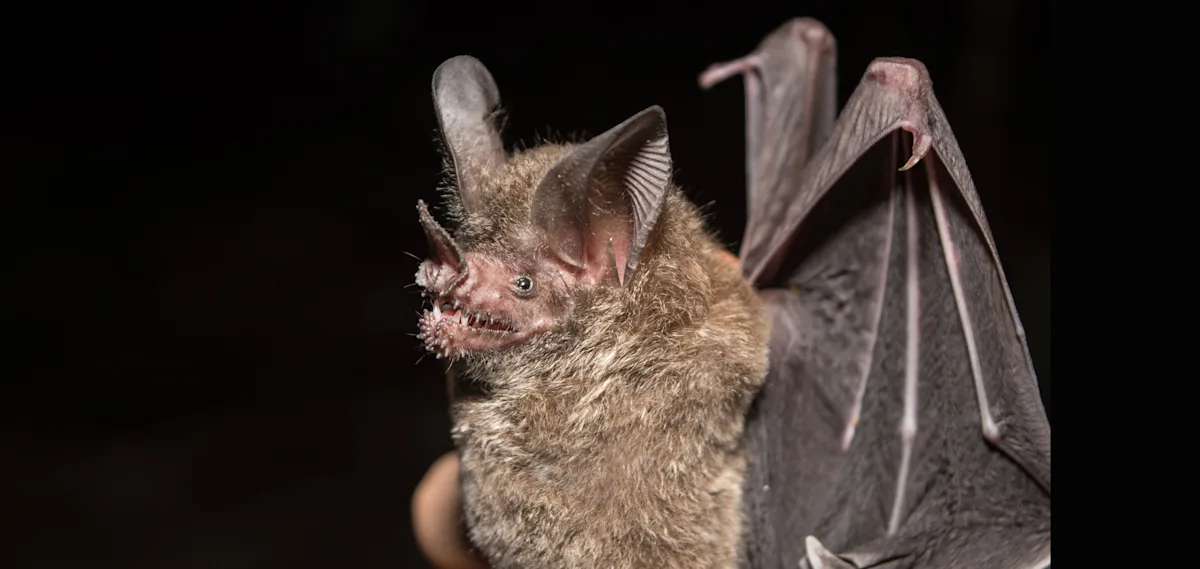
So, the STRI team tested how individual, wild-caught, adult and juvenile fringe-lipped bats respond to mating call recordings of 15 local frog and toad species. These species included frogs known to be palatable, toxic or too large to handle. First, the team confirmed previous studies showing that adult bats responded more strongly to palatable versus unpalatable frogs and toads. Yet, as the team discovered, juvenile bats did not make the same distinctions. On average, juvenile bats did not respond differently to frogs and toads based on their palatability.
Looking more closely, the researchers found that juvenile bats could identify larger prey by their calls, just like adults can, but they could not distinguish the toxic species. This indicates that juveniles tend to respond to body size early on, but they learn to identify toxic species over time. Like human children, then, young bats need time and experience to hone their discrimination skills.
This study, published in the journal Proceedings of the Royal Society B, opens in new tab in April 2025, is the first to explicitly compare eavesdropping responses of generalist predators at different ages. But it is likely that this strategy is widespread across the animal kingdom and fringe-lipped bats are not the only predators that need to learn how to distinguish palatable prey. Because the study highlights the critical role of experience in early life in shaping predatory behaviors in the wild, the scientists hope it will inspire other examinations of how early experience modulates predator-foraging decisions.
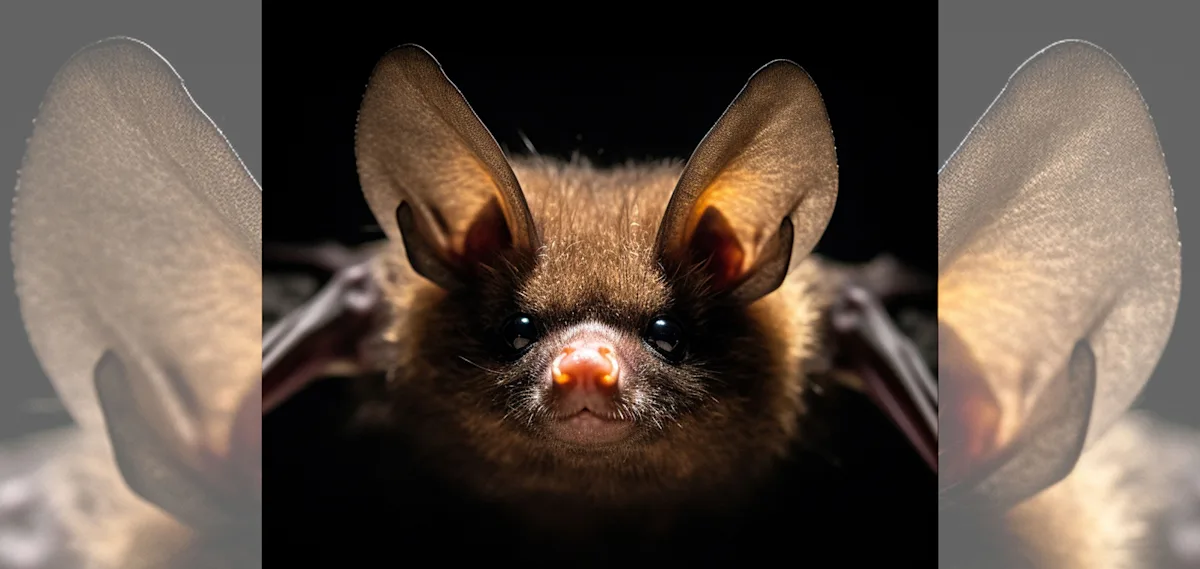
Preparing a plan B when a bat can’t hear
Now that we know how astonishing bat hearing is, what happens when a bat can’t hear? It seems that these hearing-dependent animals employ a remarkable compensation strategy, and they adapt immediately and robustly, say researchers at Maryland’s Johns Hopkins University in an article published in the journal Current Biology, opens in new tab in December 2024. They suggest for the first time that bats’ brains are hardwired with an ability to launch a plan B in times of diminished hearing. While humans and other mammals also have these adaptive circuits that they can use to help make decisions and navigate their environments, what’s striking here is that the bats act very fast; almost automatically.
All animals adjust in various ways as a response to sensory deprivation. People at a loud bar might lean in to better hear what someone is saying. A dog might tilt its head toward a muted sound. So, the Johns Hopkins University researchers wondered how a hearing-dependent, echolocating bat might accommodate when a key auditory region in its brain was turned off.
The scientists trained bats to fly from a platform, down a corridor and through a window to get a treat. They then had the same bats repeat the task but with a critical auditory pathway in the midbrain temporarily blocked. Disabling this brain region isn’t like plugging your ears; it prevents most auditory signals from reaching the deep brain. The drug-induced technique used is reversible and lasts about 90 minutes. With their hearing blocked, the bats were able to navigate the course extremely well, even on the first try. They weren’t as agile and ran into things, but every tested bat compensated immediately and effectively.
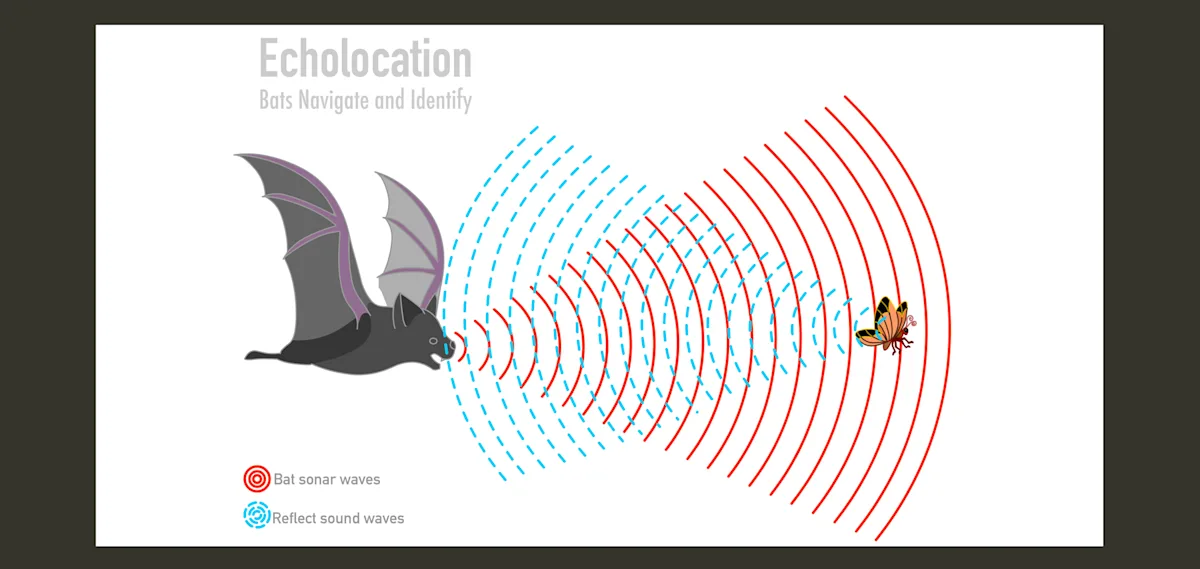
It was discovered that these bats changed their flight path and vocalizations. They flew lower, oriented themselves along walls and increased both the length and number of their calls, which boosted the power of the echo signals they use for navigation (see video below). Since echolocation acts like strobes, they were basically taking more snapshots to help them get the missing information. The bats also broadened the bandwidth on these calls. These adaptations were interesting, stated the scientists, because previously they had only seen them when bats are compensating for external noise. In this case, however, the bats were dealing with an internal-processing deficit.
The fact that the bats could hear at all with this region of their brains disabled was shocking. The researchers believe that the bats either relied on an unknown auditory pathway or that unaffected neurons might support hearing in unknown ways, suggesting that there might be multiple routes for sound to travel to the auditory cortex.
Although the team repeated the experiments, the compensation skills of the bats didn’t improve over time. This means the adaptation behaviors the bats employed weren’t learned; they were innate, latent and hardwired into the bats’ brain circuitry, highlighting how robust the brain is to external noise and manipulation. Next, the scientists would like to determine to what degree the findings apply to humans and other animals.
Appreciating bats for their spectacular senses
Appropriately, October is Bat Appreciation Month., opens in new tab Today, unfortunately, these phenomenal, flying mammals are at risk from artificial illumination, chemical use, climate change,, opens in new tab diseases such as white-nose syndrome,, opens in new tab habitat loss and human disturbance.
Hopefully, though, bats will become less “scary” every year as old traditions fade and we learn to appreciate more fully the curious creatures who can see with their ears.
Have a happy Halloween,
Candy