The Great Gray Whale in Me

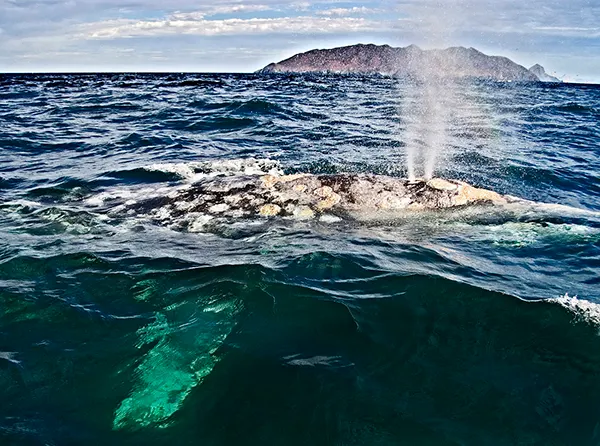
Whenever I write about a specific nature or travel topic, I try to think about the extent to which my experience with it has shaped my own life. In the case of the mystical, magical, majestic gray whale, opens in new tab, I can only answer by saying, “profoundly.”
Growing up as a water baby on the coast of California, I still recall the first time I saw a giant gray whale breach. We were sailing out to Anacapa Island in the Channel Islands on my uncle’s 32-foot double mast. I couldn’t have been more than eight years old, but I already knew I loved the ocean, and after seeing that whale breach I was also hooked on the creatures of the ocean.
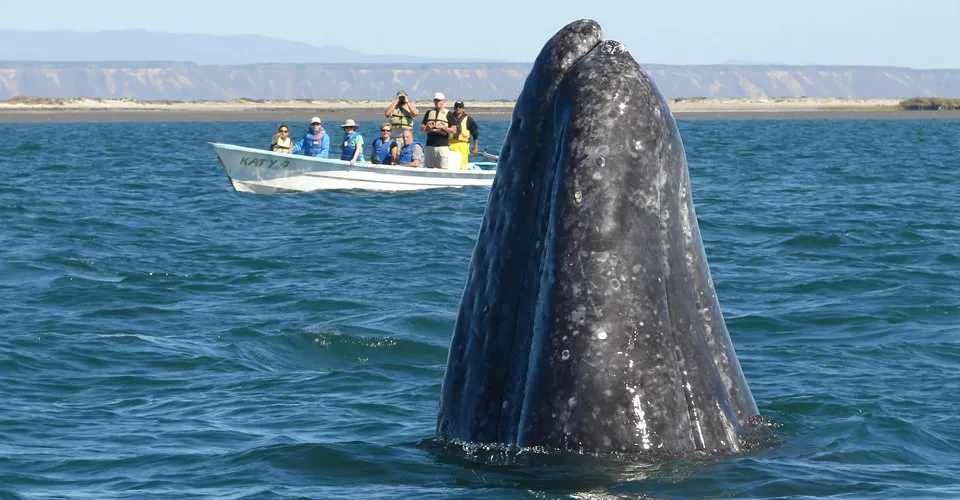
The years that followed would include whale (and dolphin) spotting as a teenager while sitting on my surfboard, which I had plenty of time to do because I was crap at surfing. Later in college, I would often sit on the beach cliffs at sunset watching the waves roll in, and I would never cease to be amazed when I saw the distant spray from a whale’s blowhole or the silhouette of an arch breaking the surface of the water. And I can’t tell you how unimpressed a first date was when I took her out on a whale-watching trip rather than the more traditional option of going out for a nice dinner or a drink (I suppose her getting seasick didn’t help!).
Life moves on. I traveled the world. I moved inland toward my other love—the Rocky Mountains. I dedicated my life to preserving this beautiful blue marble we call home, along with all of its inhabitants. And even though I haven’t thought about the coastal creature encounters of my youth in a while, these whale watching experiences profoundly shaped me, from my character to my chosen profession(s).
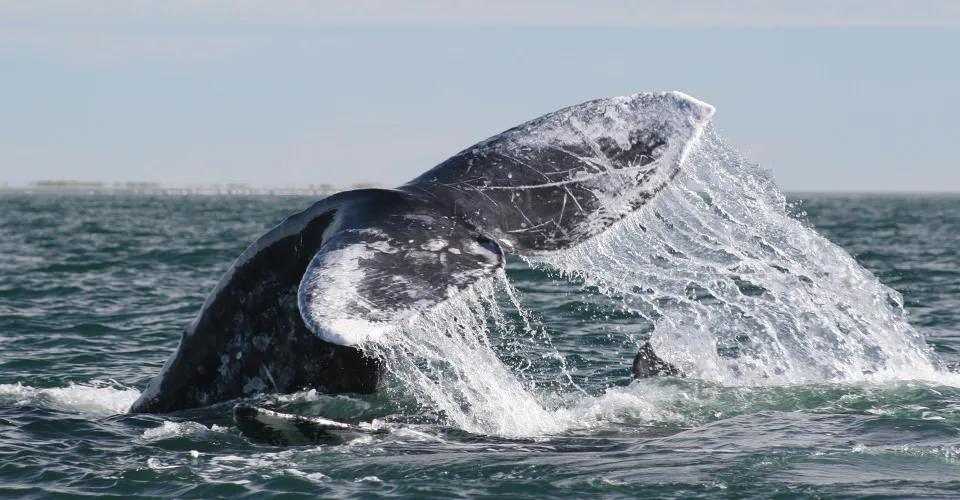
Recently, I came across an article about a critically endangered Western Gray Whale that had just broken the record for longest known mammal migration in the world (14,000 miles in 172 days!), and it made me think two things.
First, “Wow!”
And second, how is it that we can live in a world where a population of the ocean’s friendliest gentle giant remains so critically endangered? Granted, the eastern population that migrates from Alaska to their breeding and nursing grounds in Baja California is stable, but the western population that migrates from Russian waters is down to about 150 individuals worldwide.
I don’t know the answer, but I do know that organizations such as the World Wildlife Fund (WWF) are making incredible efforts to preserve this gentle giant.
You too can learn more about these amazing mammals and see the great gray whales up close and personal in the protected waters of San Ignacio Lagoon on Mexico’s Baja Peninsula. Coming within arm’s reach of friendly gray whale mothers and calves is a remarkable experience, one that I hope influences your life as profoundly as these whales have shaped mine.