



Itinerary
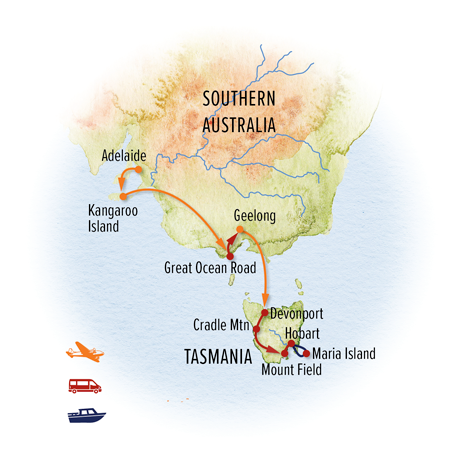
Arrive in Adelaide, capital of the state of South Australia, and the homeland of the Aboriginal Kaurna peoples. Wedged between the Mount Lofty Ranges and Gulf St. Vincent, Adelaide is very photogenic. Guests who arrive early can practice wildlife portrait and landscape photography while exploring local parks alive with Australian birds. Expect to see cockatoos, lorikeets and magpies as your first Australian wildlife subjects. Downtown, you'll find historic buildings and churches that offer a range of photo opportunities.
Those who arrive early can join our Expedition Leader for an optional guided tour of Adelaide Botanic Garden departing at 3 pm. Just a 5-minute drive from our hotel, the gardens are a vibrant oasis in the heart of the city. Highlights include the Palm House, Bicentennial Conservatory and the Amazon Waterlily Pavilion, but the star subject is the famous flying foxes. These large fruit bats aren’t actually related to foxes, but their faces bear an uncanny resemblance to the canine. Their wingspan can span 3 feet, and they’re vital pollinators that are also very photogenic.
This evening, gather with your Photo Expedition Leader for a welcome dinner and introduction to our photographic journey through Kangaroo Island, Tasmania and the Great Ocean Road.
Transfer to the airport this morning for our short chartered flight to Kangaroo Island, with 300 miles of coastline surrounded by turquoise ocean. Australia’s third-largest island is renowned for its pristine beaches and abundant wildlife that’s been naturally protected by the island's isolation. We focus on wildlife photography, training our lenses on kangaroos, wallabies, echidnas, New Zealand fur seals, Australian sea lions, and one of Australia’s largest koala populations.
On arrival, head to Cygnet Park Sanctuary, an inspiring private rewilding project that has reestablished habitat for a host of species, including the rare glossy-black cockatoo, plus crimson rosellas, galahs and corellas. With long lenses ready, we’ll hope to spot these birds, and we’ll have our first photo session with koalas—the sanctuary holds a substantial population.
Following a seafood barbecue lunch at a private bush camp, continue to Stokes Bay to explore a range of habitats, from broom-bush low scrub, casuarina woodland and redgum forest to rocky shoreline and sandy beach. Each setting offers a chance to capture varied wildlife portraits. Along the way, observe and hear about how native plants have adapted to recent bushfires—nearly 50% of Kangaroo Island was burned in 2020, and the recovery since has been impressive. Exploring the Bay of Shoals and Reeves Point, look for more avian subjects including black swans, cormorants, crested and Caspian terns, and a host of bush birds like superb fairy-wrens, crescent honeyeaters, rainbow and purple-crowned lorikeets, their brilliant plumage adding vibrant color to your compositions. By late afternoon, continue to the community of American River where our boutique hotel overlooking the bay awaits.
Kangaroo Island’s dramatic southern shoreline is on display in Flinders Chase National Park where we focus on coastal landscape photography. At Admiral’s Arch, millennia of geological history are on display, where the erosive forces of water and wind have sculpted a large natural rock arch with a view onto the often tempestuous Southern Ocean. A colony of long-nosed fur seals lives nearby, and we may catch them emerging from the water to congregate on the rocks. Be on the lookout for the striking silhouettes of Australasian gannets plunging into the waves and Pacific gulls cruising the coastline, and frame Cape du Couedic lighthouse for a classic image. Next, we walk among the Remarkable Rocks—a set of precariously perched boulders atop a seaside granite dome—whose massive shapes offer opportunities for abstract compositions.
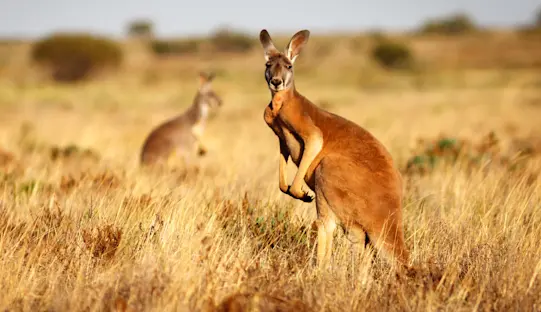
Continue to Grassdale, a pioneer farm adjacent to the Cape Bouguer Wilderness. Learn about the island’s agricultural heritage as we follow a narrow track through the bush that opens onto lush pastures popular with Kangaroo Island kangaroos—a unique subspecies endemic to the island. They are content to share their domain with us as we photograph them in the dwindling light, as they become more active at dusk. Keep an eye out, too, for tammar wallabies and nocturnal possums.
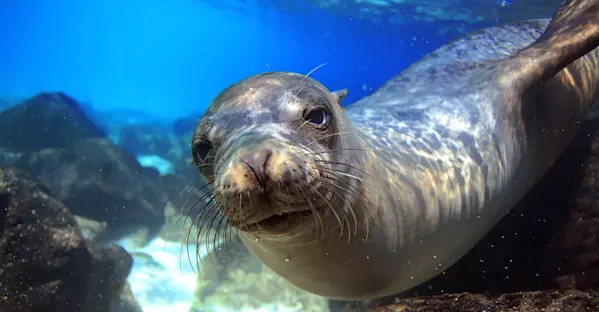
Early risers have the option to join our Expedition Leader for a short sunrise walk to the shoreline in pursuit of iconic pelican silhouettes. Then we head for Seal Bay with a bush breakfast en route, allowing us to be first on the beach for extended time with endangered Australian sea lions. Kangaroo Island has one of Australia’s largest sea lion colonies, with a population of about 800. On a private guided tour with a park interpreter, we look for action shots of pups tumbling in the surf and zoom in on old bulls whose faces are etched with scars from territorial battles. Use a wide-angle lens to compose scenic images of the colony against the backdrop of dunes and crashing waves. Return to our hotel for lunch and some time to work on images – downloads, processing, and discussion among the group and guides on tips and techniques.
This afternoon, we visit Baudin Conservation Park to learn more about the elusive glossy-black cockatoo. Frame portraits of tammar wallabies against the dappled forest floor, look for eagles soaring overhead, and scout for whales offshore—we also regularly see bottle-nosed dolphins in the cove below. Later, we’re joined at our hotel by the world’s foremost expert on the short-beaked echidna—an ancient egg-laying mammal that once roamed with dinosaurs, and a coveted wildlife subject for us to seek. Her overview provides us with fascinating details about this unique creatures that resembles a hedgehog yet is most closely related to the platypus.
From Kingscote Airport on Kangaroo Island, fly to Warrnambool by private chartered plane and continue by road to Tower Hill Wildlife Reserve. Formed by volcanic eruptions 30,000 years ago, Tower Hill lies within Dhauwurd Wurrung country and has a rich Indigenous culture along with thriving wildlife. Here, we’ll frame close-ups of emus striding through lush grasslands, eastern gray kangaroos, swamp wallabies, echidnas, long-necked turtles and more.
Then, our journey begins down the Great Ocean Road, with a stop at the Bay of Islands Coastal Park to shoot its dramatic rock stacks. More varied landscape photography awaits at London Bridge—now known as London Arch after the "bridge" connecting the rock formation to the mainland collapsed in 1990, leaving a stand-alone arch. After dinner in the seaside village of Port Campbell, return to the limestone coast to photograph a colony of thousands of short-tailed shearwaters, which nest atop a towering sea stack. On most summer nights they make a predictable return, offering a chance for stunning video and images.
Begin the day with a sunrise shoot at the famous Twelve Apostles—a group of limestone sea stacks that rise from the Southern Ocean off Port Campbell National Park. Eroded from mainland cliffs in a process that began 10–20 million years ago, these structures were originally caves, then arches that collapsed to become isolated 150-foot-high rock towers. Below, the marine park is filled with vibrant colors from sponge gardens, reef fish, corals and kelp forests.
Along our coastal drive, capture more dramatic limestone formations before entering coastal heathland and the towering eucalyptus forests of Great Otway National Park. Here, opportunities await for panoramic shots to encompass the dramatic scenery, or macrophotography, as we focus on intricate details like the fronds of giant tree ferns and emerald-green moss on bark. Capture the streaming light as it flows through the branches while also looking for birds and wildlife: we might spy Otway black snail, eastern yellow robin, king parrot and crimson rosella, long-nosed potoroos foraging in the leaf litter, ring-tailed possums, swamp wallabies and gray kangaroos. Returning to the coast, scout for Australian fur seals that haul out on a small rocky island in a marine reserve.
A picnic lunch is in store at scenic Melba Gully, surrounded by temperate rainforest and plenty of wildlife. We then head into the forest for a guided walk at Mait’s Rest, followed by a visit to Wildlife Wonders Sanctuary, established by the Conservation Ecology Center in Cape Otway, to learn about regional species on a guided walk with a local conservationist. Exploring lush tree fern gullies and eucalypt woodland near the coast, look for bandicoots, potoroos, pademelons and other local fauna that are just waking up to start an active night of feeding and foraging. Back at our hotel, a sunset dinner overlooking the water is a special highlight.
Rise early to follow the final scenic stretch of the Great Ocean Road to Geelong, where we board our private chartered flight to the island state of Tasmania, 150 miles south across the Bass Strait. Upon arrival, visit a local arboretum to look for wild platypus in the water features. Watch for bubbles that betray their movements, and adjust your focus for sharp images of their broad bills breaking the water’s surface.
A legacy of wilderness appreciation is intrinsic to Tasmania, the birthplace of the world’s first environmental political party. The island of Tasmania, or lutruwita, is home to the Aboriginal palawa peoples who have lived here for more than 60,000 years, before the British Empire arrived to form a penal colony in 1803.
Continue to our lodge on the edge of Cradle Mountain National Park, where we settle in before an evening outing to photograph the abundant nocturnal wildlife around the premises—we often spot wallabies, possums, pademelons and our first sightings of wombats. And while we are extremely unlikely to see them, endangered Tasmanian devils and quolls also inhabit these forests. Astrophotography is a highlight here, too, with spectacular stars and a prominent view of the Southern Cross on a clear night.

Mornings offer golden light and the chance to capture Cradle Mountain’s ragged profile reflected in the still waters of Dove Lake. Adjust exposure for the dramatic contrast of jagged peaks against the shimmering blue of the alpine lake. On guided hikes, anticipate encounters with wombats trundling through button grass moors and echidnas rooting for insects beneath ancient King Billy pines in moss-covered forests.
Later, we'll tour a nearby conservation sanctuary working to protect and sustain the endangered Tasmanian devil. Our visit offers a rare opportunity to photograph and learn about this elusive nocturnal species. The sanctuary is involved with breeding, release and re-introduction of Tasmanian devils, in addition to field monitoring of wild populations and orphan rehabilitation. It also houses the closely related spotted-tail and eastern quolls, offering a trifecta of Australia’s three largest carnivorous marsupials. One evening, we'll take a night walk back into the national park to look for wild Tasmanian devils, quolls, wombats and possums.
This morning, head to Marakoopa Cave in Mole Creek Karst National Park for a private tour of this dramatic limestone cavern. This immense structure contains two underground streams, large vaulted chambers, expanses of glittering flowstone and impressive stalagmites, plus a sparkling display of bioluminescent glowworms. Our Photo Expedition Leaders offer helpful tips for shooting inside the darkened cavern to showcase its natural features. Emerging into daylight, continue south through the wild Central Plateau, where golden moorlands and glacial tarns create endless landscape subjects.
Continue to our secluded accommodation in the remote Derwent Valley, where we settle in for the next two nights. As dusk falls, enjoy the tranquil surroundings and, when skies are clear, take advantage of excellent conditions for night sky photography.
Wake early to explore the peaceful landscape around our lodge as the soft morning light filters through the trees. Listen for the distinctive call of kookaburras, and compose shots of the shifting hues of dawn over the valley. Devote the rest of the morning to photographing wild platypus in the various ponds and rivers nearby. This 100-million-year-old semiaquatic mammal has a duck-like bill, webbed feet and fur, and along with the echidna, it is one of just two egg-laying mammal species on the planet.
This afternoon, head to Mount Field National Park, established in 1916. We spend the day shooting landscape images among the tallest flowering trees in the world and numerous waterfalls, including 150-foot-high Russell Falls. Practice long exposures to soften the rushing water, contrasting the blurred motion with the sharply detailed ferns and moss-covered boulders.
Depart this morning for Bonorong Wildlife Sanctuary for a final immersion among Australia’s unique creatures. On a private tour of this facility dedicated to wildlife rescue and conservation, get close-up photos of animals that are locally extinct in other parts of Australia, including the eastern quoll and Tasmanian bettong. Over the last 200 years, Australia has recorded the world’s fastest rate of mammal extinctions, and other species are increasingly at risk of joining this trend. For the creatures that are now making their last stand in Tasmania, Bonorong is determined to do all it can to prevent them from disappearing. By capturing images of these wildlife, your photographs can help tell this critical conservation story.
After a private lunch at the sanctuary with our hosts, continue a short distance to Hobart, Tasmania’s capital at the mouth of the Derwent River. Once we check into our hotel on the historic waterfront, the rest of the afternoon is free to pursue your own photography in town.
Drive north from Hobart this morning to reach the private chartered boat that will take us to Maria Island National Park. Photograph ruins of a penal colony, part of Tasmania’s convict past, now protected as a UNESCO World Heritage Site. Capture images of wind-whipped sandstone cliffs, limestone rocks embedded with fossils, and beaches that reveal an array of tidal-zone marine life. Maria Island is also a paradise for bird photographers. We may spot 11 of Tasmania’s 12 endemic bird species here, including the forty-spotted pardalote, one of Australia’s most endangered birds, and the Cape Barren goose. Long a refuge for diverse wildlife, the island is an especially good place to look for wombats—we will probably have the opportunity to photograph them at close range. After our final photo extravaganza on Maria Island, return to Hobart where a farewell dinner awaits.
Our southern Australia photo safari concludes in Hobart this morning. Anticipate the excitement of reviewing, editing and sharing your best shots as you preserve this adventure in exhilarating images. A transfer to the airport is included for flights to the mainland and beyond, including the option to extend your time down under by joining Nat Hab’s New Zealand Nature Explorer (select departures match up; check dates for details).
Interested in extending your trip? Link it up with another adventure!
New Zealand North Island Pre-Trip Extension
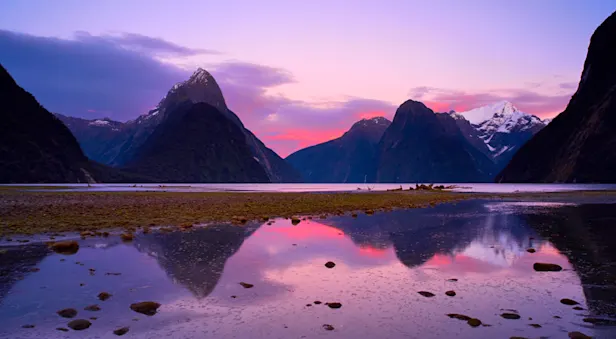
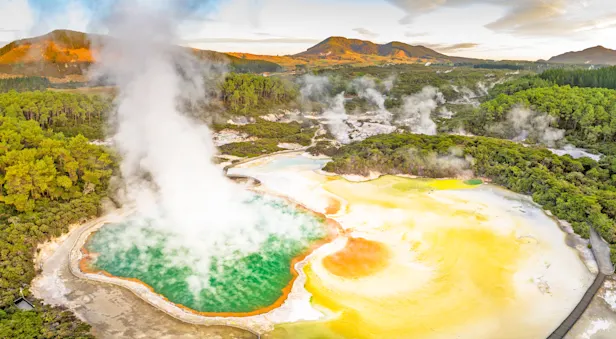
The ideal complement to your South Island adventure, this sampler of North Island highlights includes Rotorua and the Coromandel Peninsula—explore mist-clad mountains, pristine beaches, waterfalls, geysers, mineral springs and Maori culture.