



Itinerary
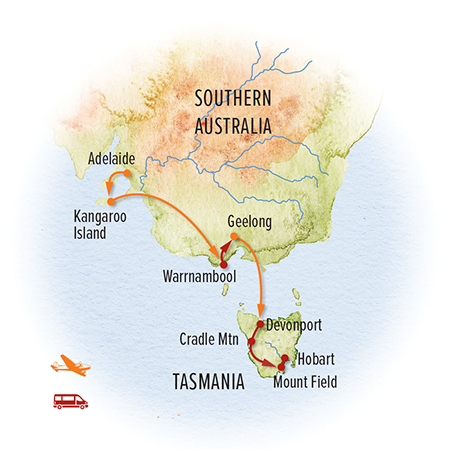
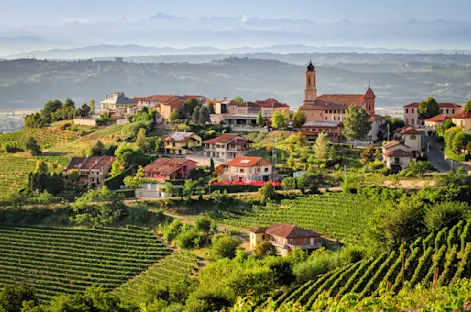
Arrive in Adelaide, capital of the state of South Australia. Wedged between the Mount Lofty Ranges and Gulf St. Vincent, this is the homeland of the Indigenous Kaurna peoples. Adelaide, established by British settlers in 1836 as a convict-free colony, has become a gateway to South Australia’s burgeoning wine country. Dotted with historic buildings and lush parks, the “City of Churches” is recognizable for its multitude of spires that rise from downtown, representing diverse faiths within a city founded on a commitment to religious freedom and civil liberties. This evening, gather with our Expedition Leaders for a welcome dinner and introduction to our route through Kangaroo Island, Tasmania and Australia's most southerly coast.
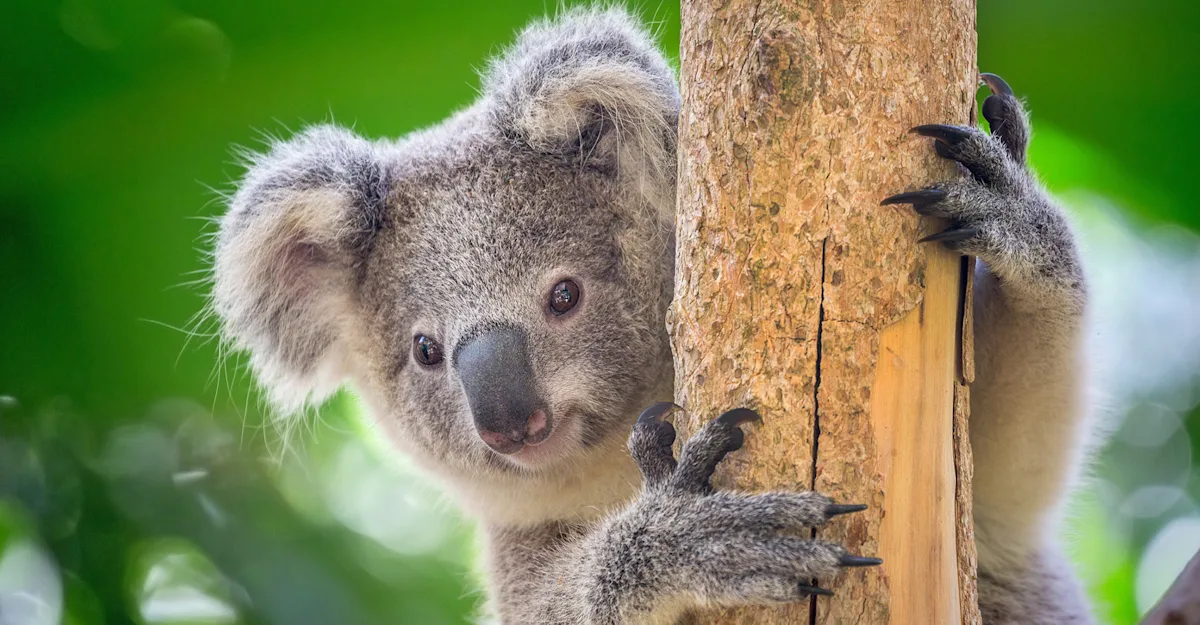
Transfer to the airport this morning for our short chartered flight to Kangaroo Island. With more than 300 miles of coastline surrounded by turquoise ocean, Australia’s third-largest island is renowned for its pristine beaches, local wines and abundant wildlife that the island's isolation has naturally protected. “KI,” as it's known by locals, lies less than 10 miles off the mainland, but its offshore status helps sustain considerable numbers of native Australian species, including kangaroos, wallabies, echidnas, goannas, New Zealand fur seals, Australian sea lions, and one of Australia’s largest koala populations. On arrival, we head to Cygnet Park Sanctuary, a private rewilding project that has reestablished a host of native plants and wildlife species, including abundant koalas and the rare glossy-black cockatoo, plus crimson rosellas, galahs and corellas. We’ll get an overview of the park’s habitat restoration program and glossy-black cockatoo recovery project. After a seafood barbecue lunch, we head to Stokes Bay to explore a range of habitats, from broom-bush low scrub, casuarina woodland and red gum forest to rocky shoreline and sandy beach. Exploring the Bay of Shoals and Reeves Point, look for black swans, cormorants, crested and Caspian terns, and a host of bush birds like superb fairy-wrens, crescent honeyeaters, rainbow and purple-crowned lorikeets. By late afternoon, continue to the community of American River where our boutique hotel overlooking the bay awaits. Dinners here are a gourmet treat, prepared by our talented resident owner/chef—we feel like we're dining in a private home.
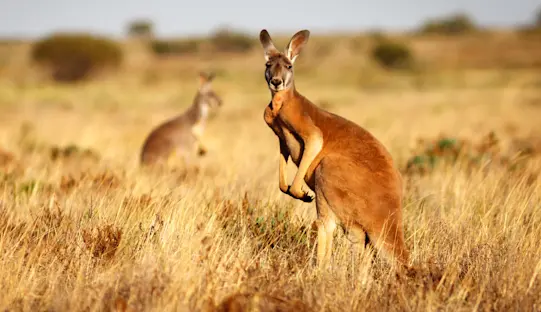
Our itinerary is flexible over the next two days to take in a broad sampler of Kangaroo Island’s best wildlife spots and striking coastal landscapes. There’s plenty of wildlife right around our hotel on the eastern side of the island, with koalas often dozing in eucalyptus trees nearby, lots of birdlife including pelicans on the shoreline, and dolphins and southern right whales in the bay beyond. But it’s the remote western reaches of the island that are wildest, and we focus much of our exploration there. On the drive, keep an eye out for wildlife as we go: we often spot tammar wallabies, koalas, Kangaroo Island kangaroos—a subspecies unique to the island—and echidnas right along the road.
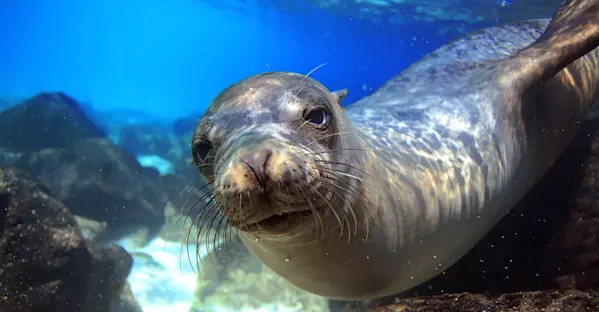
At Seal Bay, observe and learn about Australian sea lions. an endangered species nearly hunted to extinction in the 19th century. Today, about 800 of them thrive here, one of Australia’s largest sea lion colonies. On a private guided tour with a park interpreter, watch pups nursing or playing in the surf, see old bulls scarred by territorial disputes.
Kangaroo Island’s dramatic southern shoreline is on display in Flinders Chase National Park. At Admiral’s Arch, witness millennia of geological history, where the erosive forces of water and wind have sculpted a large natural rock arch with a view onto the often-tempestuous Southern Ocean. A colony of long-nosed fur seals lives nearby, congregating on the rocks. Seabirds flourish here, and we may see terns, Australasian gannets, shearwaters, Pacific gulls, and possibly some southern emu-wrens. A highlight is a walk through the Remarkable Rocks—a set of precariously perched boulders atop a seaside granite dome whose massive shapes are formed by 500 million years of exposure to the elements.
Continuing our deep delve into the ecology of the island, witness how habitats are rebounding from the bushfires that burned almost half of Kangaroo Island in 2020, and visit Baudin Conservation Park to learn about the rare glossy-black cockatoo.—we often see wedge-tailed eagles here, too. A highlight is a meeting with the world’s foremost expert on the short-beaked echidna—an ancient egg-laying mammal that once roamed with dinosaurs. Her research overview provides us with fascinating details about this unique creature that resembles a hedgehog yet is most closely related to the platypus.
Fly from Kangaroo Island to Warrnambool by private chartered plane and continue by road to Tower Hill Wildlife Reserve. Formed by volcanic eruptions 30,000 years ago, Tower Hill lies within Dhauwurd Wurrung country and has a rich Indigenous culture. It is also home to some of Australia's best-loved wildlife living inside the large crater of this dormant volcano. On a guided hike, learn about the geologic history and ancient lava flows, wetlands, bushland, birdlife and Aboriginal heritage of the area. As we walk, look for koalas, emus, eastern gray kangaroos, swamp wallabies, echidnas, long-necked turtles, black swans and golden whistlers, all of which are plentiful here.
We then start our journey down the Great Ocean Road, stopping at the Bay of Islands Coastal Park with its dramatic rock stacks, and on to Port Campbell National Park to view London Bridge—now known as London Arch after the "bridge" connecting the rock formation to the mainland collapsed in 1990, leaving a stand-alone arch. After dinner in the seaside village of Port Campbell, we return to the limestone coast where a colony of thousands of short-tailed shearwaters nests atop a towering sea stack. On most summer nights, they return en masse to their nests at twilight, a phenomenon we witness with awe.
Continuing along the Great Ocean Road, we stop to witness the many impressive geological features along this stunning stretch of coast. Early this morning, take in the Twelve Apostles, limestone sea stacks that rise from the Southern Ocean off Port Campbell National Park. Eroded from mainland cliffs in a process that began 10–20 million years ago, these structures were originally caves, then arches that collapsed to become isolated 150-foot-high rock towers. The marine park below harbors colorful sponge gardens, reef fish, soft corals and kelp forests. On a hike at Loch Ard Gorge, hear the vivid history of the many shipwrecks off these rugged shores.
Along our coastal drive, witness more dramatic limestone formations before entering coastal heathland and the towering eucalyptus forests of Great Otway National Park. Here in the homeland of the Gadubanud people, we take a walk in temperate rainforest among giant tree ferns and a blanket of moss while learning about the ancient Myrtle beech trees that date back to Gondwanaland. Along our path, we'll hope to spot the endemic carnivorous Otway black snail, eastern yellow robin, king parrot and crimson rosella, along with secretive long-nosed potoroos foraging in the leaf litter, ring-tailed possums, swamp wallabies and gray kangaroos. Returning to the coast, look for Australian fur seals that haul out on a small rocky island in a marine reserve. We sometimes see terns, cormorants and shorebirds on the beach or rock shelves, too.
A picnic lunch is in store at scenic Melba Gully, surrounded by temperate rainforest and plenty of wildlife. We then head into the forest for a guided walk at Mait’s Rest, followed by a visit to Wildlife Wonders Sanctuary, established by the Conservation Ecology Center in Cape Otway, to learn about regional species on a guided walk with a local conservationist. Exploring lush tree fern gullies and eucalypt woodland near the coast, look for bandicoots, potoroos, pademelons and other local fauna that are just waking up to start an active night of feeding and foraging. Back at our hotel, a sunset dinner overlooking the water is a special highlight.

Rise early to drive the final scenic stretch of the Great Ocean Road to Geelong, where we board our private chartered flight to the island state of Tasmania, 150 miles south across the Bass Strait. After landing in Devonport, stop at a nearby arboretum to look for platypus, then continue to the interior of this island that covers more than 26,000 square miles, 42% of which is protected in national parks and UNESCO World Heritage Sites. A legacy of wilderness appreciation is intrinsic to Tasmania, the birthplace of the world’s first environmental political party. The island of Tasmania, or lutruwita, is home to the Aboriginal palawa peoples who have lived here for more than 60,000 years, before the British Empire arrived to form a penal colony in 1803. Continue to our lodge on the edge of Cradle Mountain National Park, where we settle in before an evening outing to seek out the abundant wildlife around the premises— we often spot wallabies, echidnas, pademelons and wombats that come out around dusk. And while we’re extremely unlikely to see one, Tasmanian devils and quolls also inhabit the forest.
The day launches early as we enter Cradle Mountain-Lake St. Clair National Park, part of the Tasmanian Wilderness World Heritage Area. This UNESCO-protected realm covers 3.7 million acres, one-fifth of Tasmania’s landmass. The park’s imposing peaks, lakes and glacier-sculpted valleys comprise some of Australia’s most stunning landscapes. 5,069-foot Cradle Mountain is surrounded by diverse habitats of grassland, temperate rainforest and ancient plants that date to the supercontinent of Gondwana, including the King Billy pine, deciduous beech and pandani, the world’s tallest heath plant. Choose among varied hike options, depending upon how long or how far you’d like to explore—options may include waterfalls, walks at Ronny Creek, or a hike to Dove Lake, gleaming sapphire-blue beneath Cradle Mountain’s jagged profile. Wildlife abounds in the park, and we seek it out on walks at dawn and dusk. Wombats, a cuddly cousin to the koala, are prevalent here, although no koalas exist in the wild in Tasmania.
On one afternoon, tour a nearby conservation sanctuary working to protect and sustain the Tasmanian devil. Our visit offers a rare opportunity to see and learn about these mysterious, hard-to-find nocturnal species that are endangered in the wild. The sanctuary is involved with breeding, release and re-introduction of Tasmanian devils, in addition to field monitoring of wild populations and orphan rehabilitation. It also houses the closely related spotted-tail and eastern quolls, offering a trifecta of Tasmania’s three largest carnivorous marsupials. If our timing is right, we may even witness a feeding.
This morning, head to Marakoopa Cave in Mole Creek Karst National Park for a private tour of this dramatic limestone cavern. This immense structure contains two underground streams, large vaulted chambers, expanses of glittering flowstone and dramatic stalagmites, plus a sparkling display of bioluminescent glowworms. From here, it's a half-day’s drive to southern Tasmania. En route, we stop at the Central Plateau Conservation Area, a wild realm of subalpine moorlands and countless tarns. In the isolated heart of Tasmania away from major roads, the region is known for its wilderness hiking and world-class trout fishing. We stop to admire the view of Great Lake and look for echidnas, plus yellow-tailed black cockatoos and Tasmanian wedge-tailed eagles, among other birdlife.
Continue to Mt. Field Retreat for the next two nights, located in the Upper Derwent Valley on the boundary of Mt. Field National Park. This prime setting gives us easy access via private trails to night walks in the park, which is teeming with nocturnal species, including echidna, wallabies and pademelon. We'll also witness the wonder of glow worms in the forest, sparkling like twinkle lights among the trees. After dinner, enjoy some superb stargazing, if skies are clear.
Wake early and wander the environs around our lodge, looking for wildlife. After breakfast, take a private kayaking tour on the Derwent River, paddling in search of wild platypus. This 100-million-year-old semi-aquatic mammal has a duck-like bill, webbed feet and fur, and along with the echidna, it is one of just two egg-laying mammal species on the planet.
This afternoon, we head to Mount Field National Park, Tasmania’s oldest, along with Freycinet, established in 1916. Yet the park has been a nature reserve since 1885, when early European settlers were awestruck by its waterfalls and natural beauty. The region had already been occupied for millennia, however, as the homelands of the Big River nation of Tasmanian Aboriginal peoples. They knew this place when it was buried in glacial ice, and later as rainforests and eucalypt forests flourished. Cave sites, ochre mines, hand-stenciled art, rock engravings and stone tool quarries provide a glimpse of their extraordinary lives here. We spend the day walking in their ancient footsteps among the tallest flowering trees in the world, and exploring the coastal rainforest. In summer, the high country can be a blaze of color with blooming waratahs, boronias and heath. Weather will determine our activities in the park, but we’re sure to conclude the day with a sense of wonder at the many treasures it holds. Back at our lodge, more wildlife watching awaits this evening, as well as a chance to look for more constellations in the dark night sky.
Depart this morning for Bonorong Wildlife Sanctuary for a last chance to spend time with more of Australia’s unique creatures. On a private tour of this conservation-focused facility dedicated to wildlife rescue, come face to face with animals that became extinct long ago in other parts of Australia. Get a peek at rarely seen species such as the eastern quoll and Tasmanian bettong, and many more. Over the last 200 years, Australia has recorded the world’s fastest rate of mammal extinctions, and other species are increasingly at risk of joining this trend. For the creatures that are now making their last stand in Tasmania, Bonorong is determined to do all it can to prevent them from disappearing.
After a private lunch with our hosts at the sanctuary, continue a short distance to Hobart, Tasmania’s capital at the mouth of the Derwent River. Once we check into our hotel on the historic waterfront, the rest of the afternoon is free to do some exploring on your own. Home of the Muwinina people for centuries before Dutch explorer Abel Tasman arrived in 1642, Hobart is one of Australia's oldest European-settled cities. Reconvene this evening for a farewell dinner.
Our southern Australia nature safari comes to a close in Hobart this morning. A transfer to the airport is included for flights to the mainland and beyond, including the option to extend your time down under by joining Nat Hab’s New Zealand Nature Explorer (select departures match up; check dates for details).