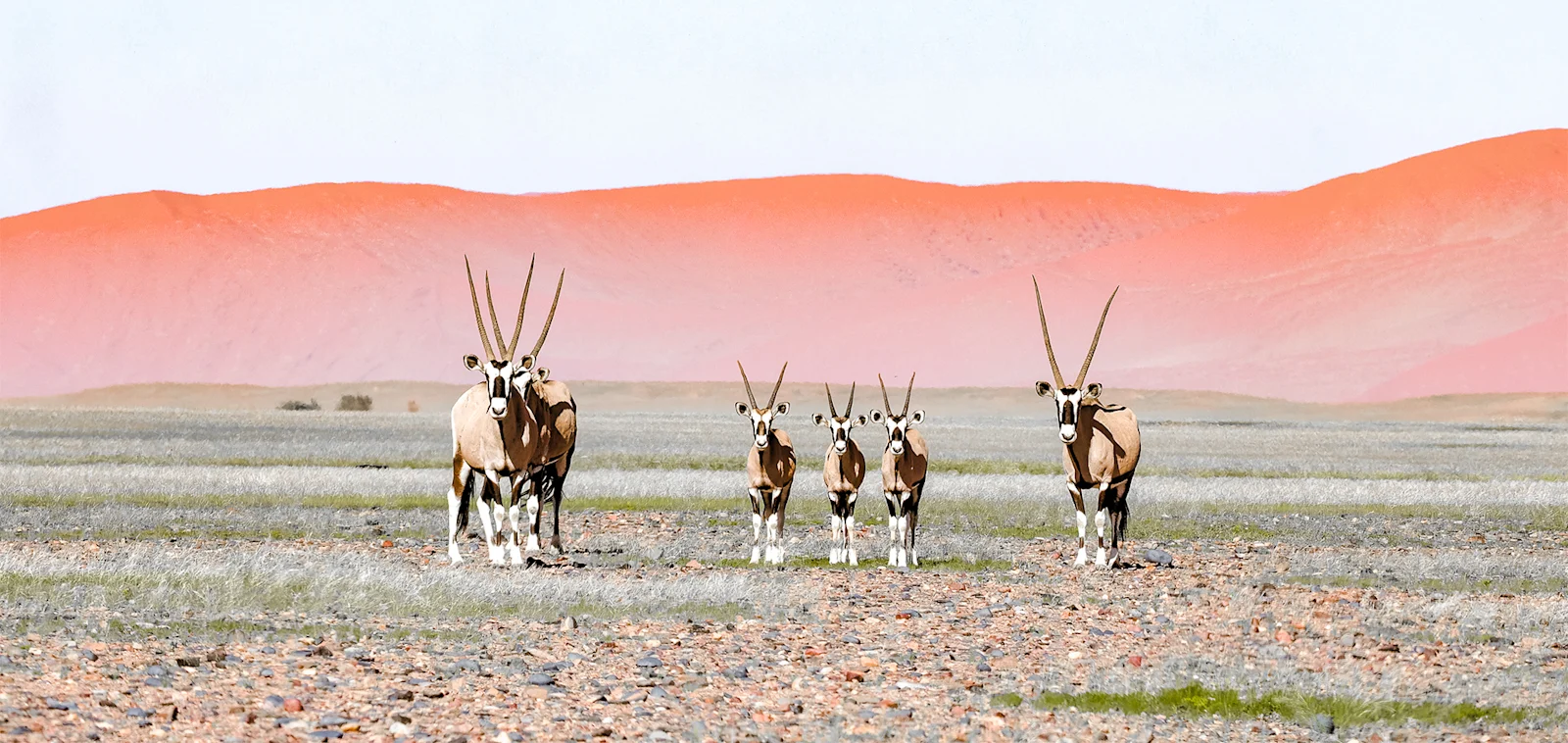
Through the Lens: Wildlife and Wilderness on Nat Hab’s Epic Botswana & Namibia Safari

If you’re passionate about wildlife photography or simply want to sharpen your skills, Nat Hab’s Epic Botswana & Namibia Safari offers an extraordinary chance to do so. With expert naturalist guides and exclusive access to private reserves, guests enjoy rare opportunities for photography—from remote desert landscapes to predator-rich wetlands.
On this immersive adventure, private charter flights and varied terrain—from dunes to deltas—offer shifting backdrops for dynamic image-making. Bush walks, off-road drives and night excursions reveal scenes not possible in national parks, giving photographers and nature travelers alike a deeper connection to place.
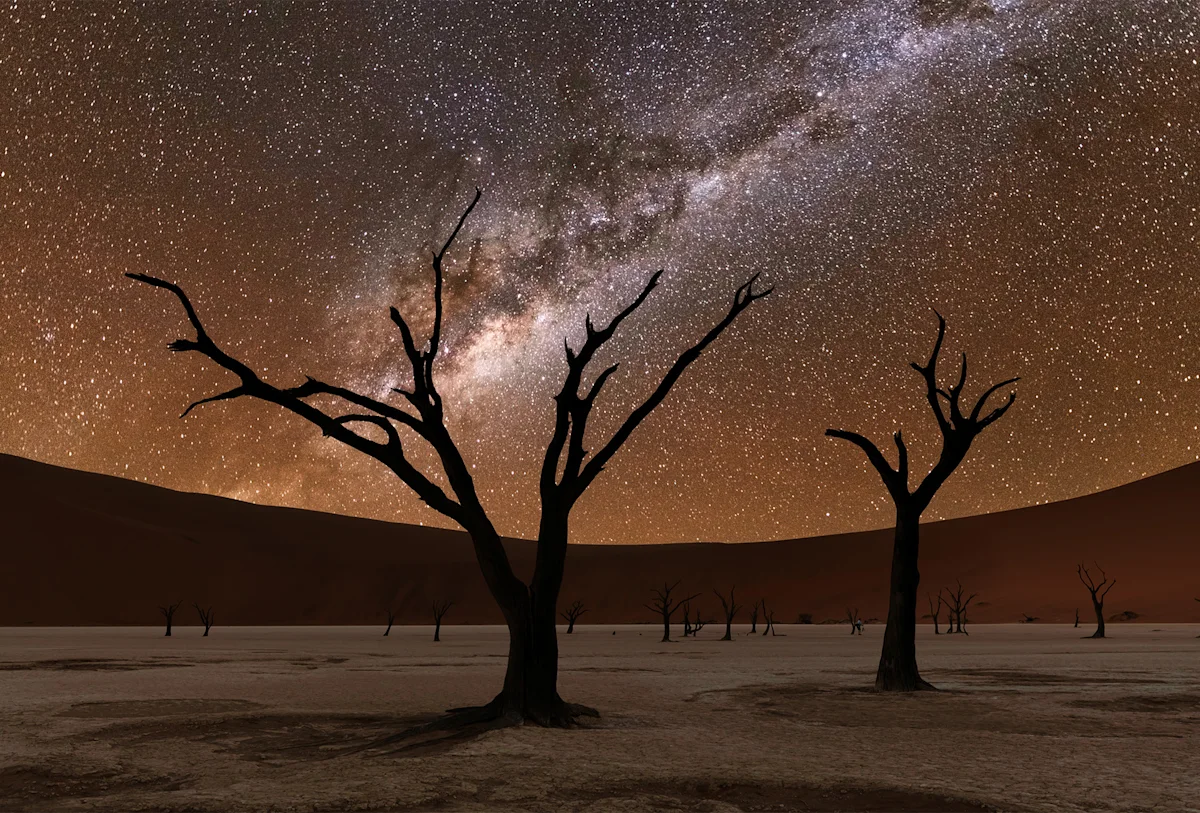
Sossusvlei: Desert Light and Dark Skies
In Namibia’s Kulala Wilderness Reserve, the vast Namib Sand Sea, opens in new tab stretches across the horizon, home to some of the tallest dunes on Earth. The red ridges of Sossusvlei—formed over millions of years—glow gold and rose at sunrise, shifting to rust and ochre by midday. This ever-changing light, framed by cobalt skies, makes for dramatic landscape photography.
At night, Sossusvlei becomes one of the best places on Earth for astrophotography. The dry desert air and minimal light pollution create ideal conditions for capturing stars, constellations and the Milky Way in brilliant detail.
Photo Tips:
—Use a wide-angle lens (12–35mm) with a fast aperture (f/2.8 or wider)
—Start with ISO 3200–6400 and a shutter speed of 10–25 seconds
—Open the aperture fully to gather more light and reduce noise
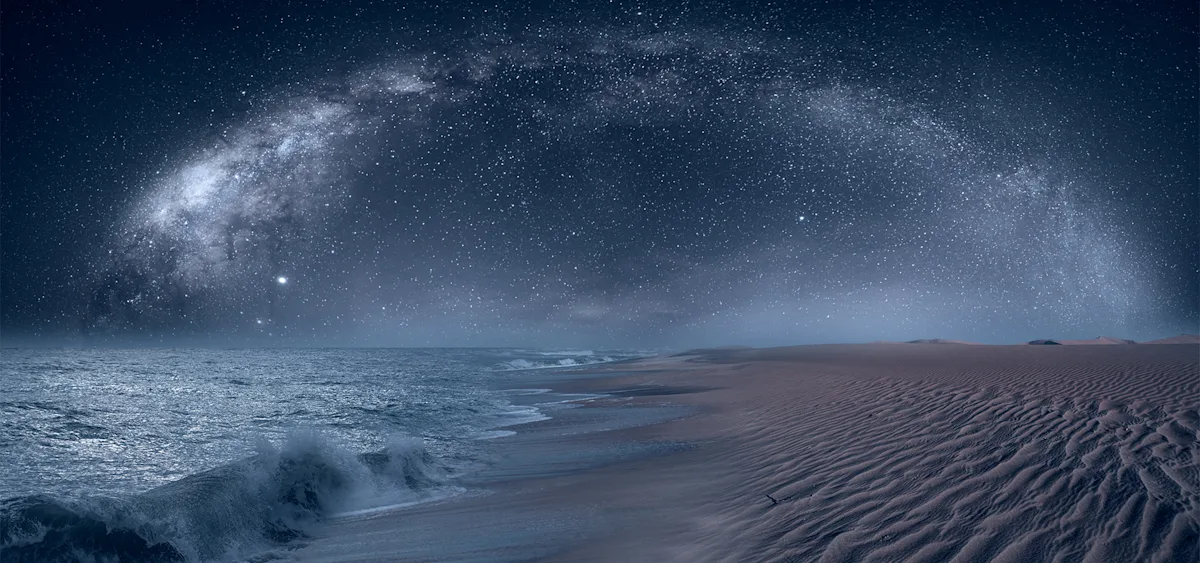
Skeleton Coast: Remote Wilderness and Desert Wildlife
Traveling north, we explore the Palmwag Concession on Namibia’s Skeleton Coast—a remote wilderness of mountains, dunes and dry riverbeds. This harsh but beautiful ecosystem is home to desert-adapted elephants, oryx, giraffe, lion and the elusive brown hyena. You may also spot black-backed jackals, bat-eared foxes and endemic birds unique to the region.
One highlight is a trip to the coast itself, where shifting fog, rocky shores and a colony of Cape fur seals offer dramatic contrasts to the inland desert scenes.
Linyanti: Elephants, Predators and Savannah Light
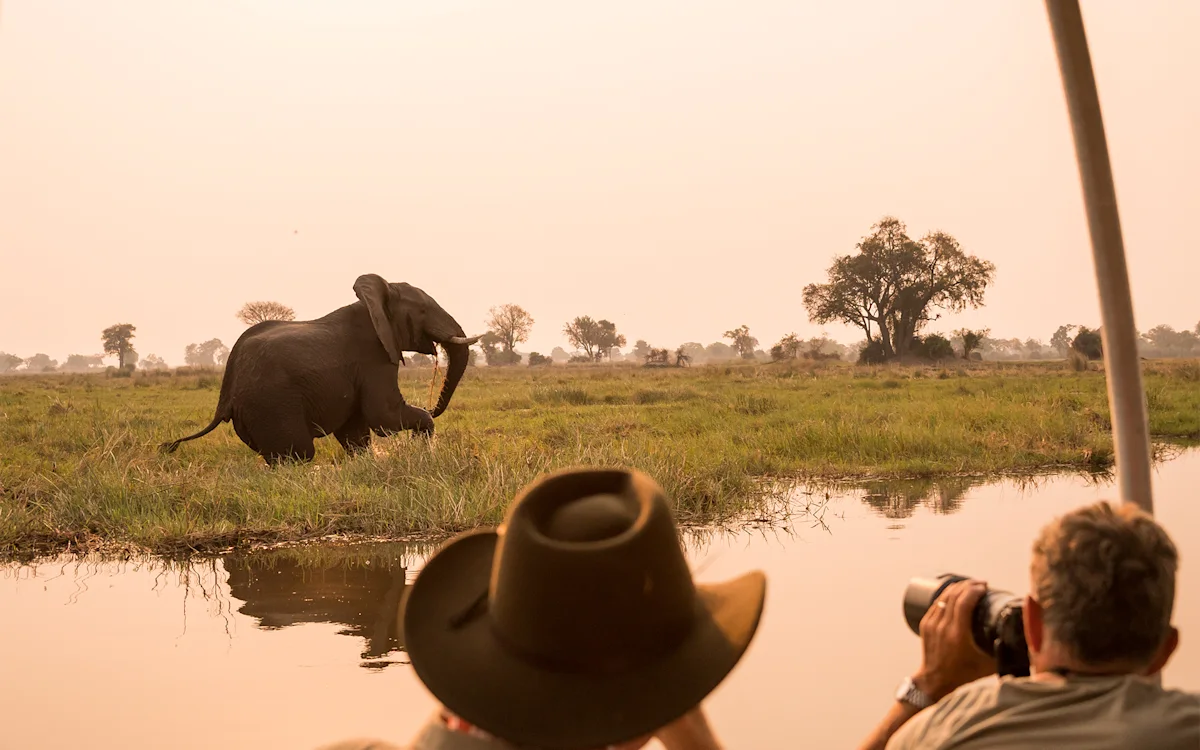
In Botswana’s private Linyanti Reserve, stay at Savuti Camp beside the Savute Channel—a seasonal waterway that attracts some of the largest elephant herds in Africa. The surrounding mopane woodland and floodplains support an abundance of predators, including lion, leopard, cheetah and wild dog, along with antelope like tsessebe, lechwe and sable.
Day and night drives provide different lighting and behavior patterns, offering photographers more chances to capture movement, mood and wildlife interaction.
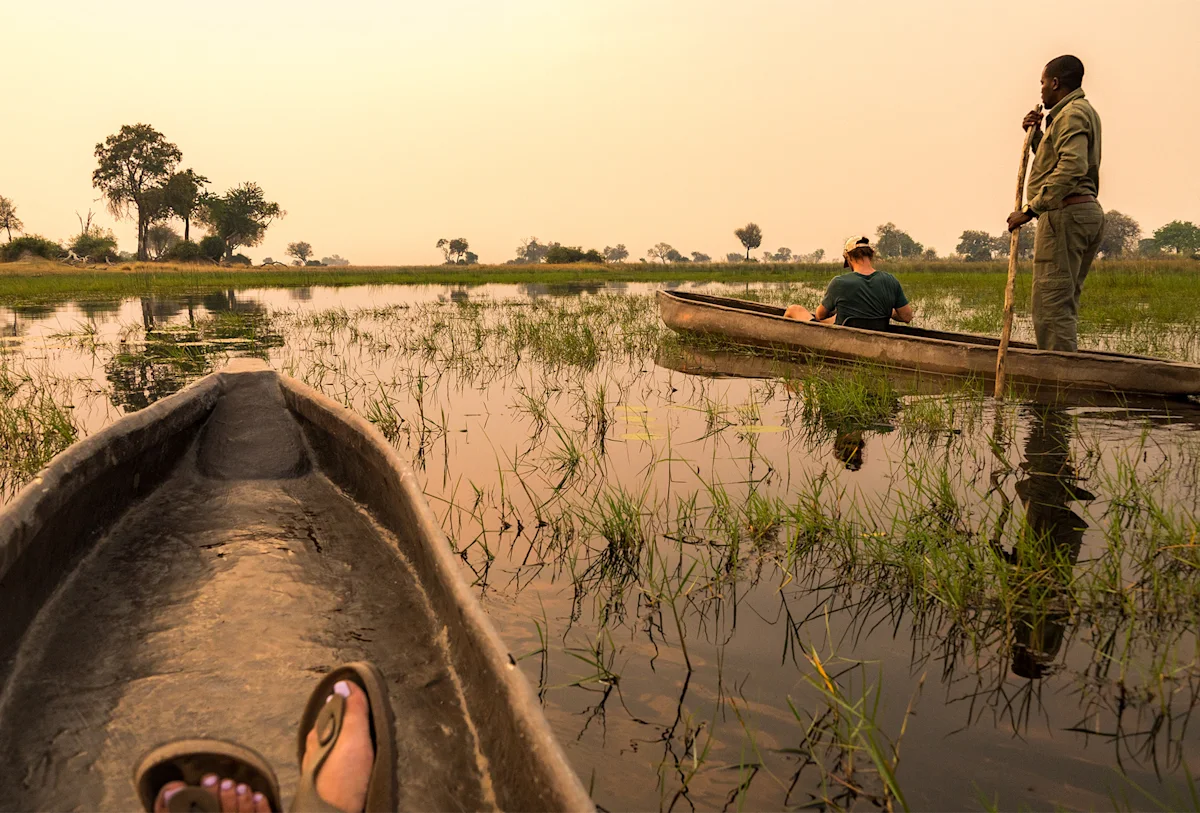
Okavango Delta: Two Perspectives, One Iconic Wetland
Central Delta: Marshland Wildlife by Mokoro
Arrive in the heart of the Okavango Delta by light aircraft, where a maze of reed-fringed channels and wetlands awaits. This UNESCO World Heritage Site is the planet’s largest inland delta, fed by rain flowing from Angola. Glide through the still waters in a mokoro, a traditional dugout canoe, for quiet encounters with hippo, red lechwe and rare birds like the wattled crane and Pel’s fishing owl.
Depending on flood levels, explore by boat, foot or 4×4—all offering different photo opportunities, from eye-level wildlife portraits to expansive landscape shots.
Chitabe Concession: Classic Game Drives in Predator Country
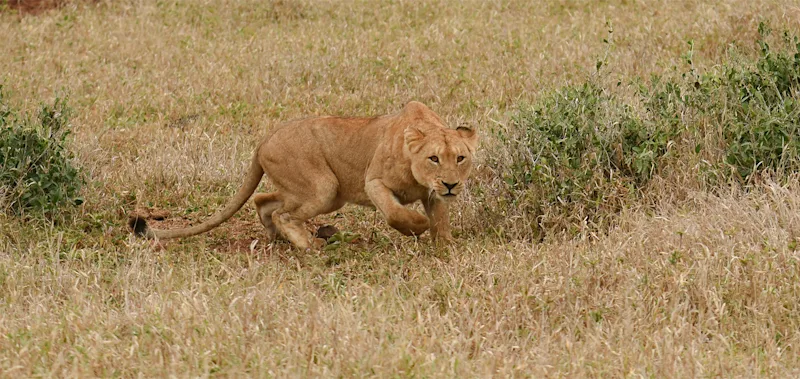
End your journey in the southeastern delta, where the Chitabe Concession offers a drier, wildlife-rich contrast. The diverse habitat of woodlands, open savanna and acacia thickets supports four of the Big Five—lion, leopard, elephant and buffalo—plus cheetah, hyena, wild dog and numerous antelope species.
Game drives here are ideal for capturing action sequences, close encounters and sweeping plains scenes. Evenings around the fire invite reflection and a chance to review your images under the stars.