Taking on the Tolt on an Icelandic Horse

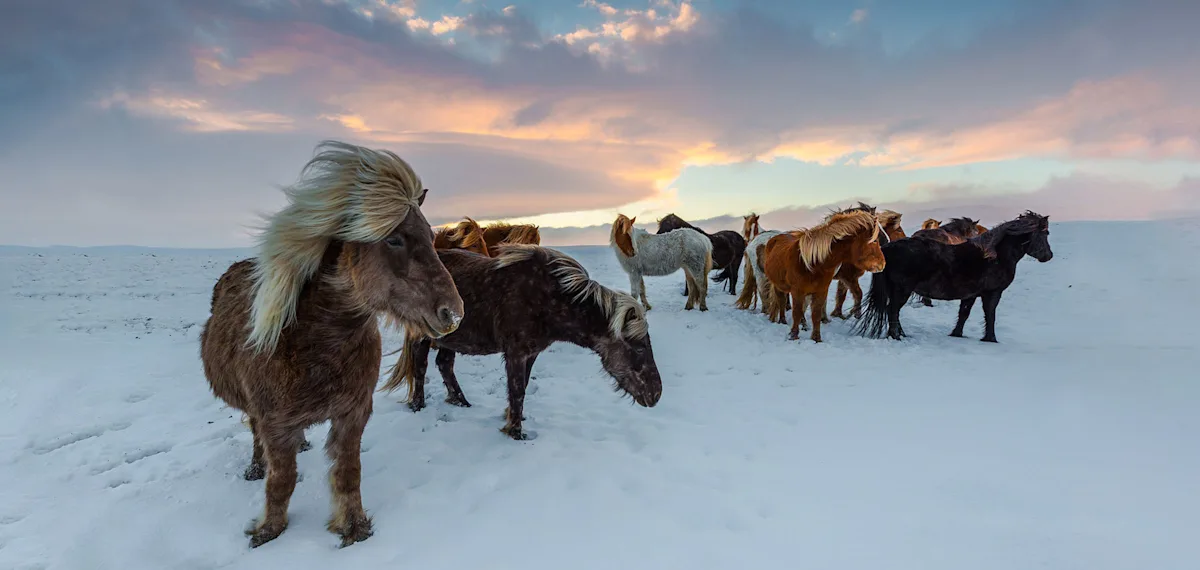
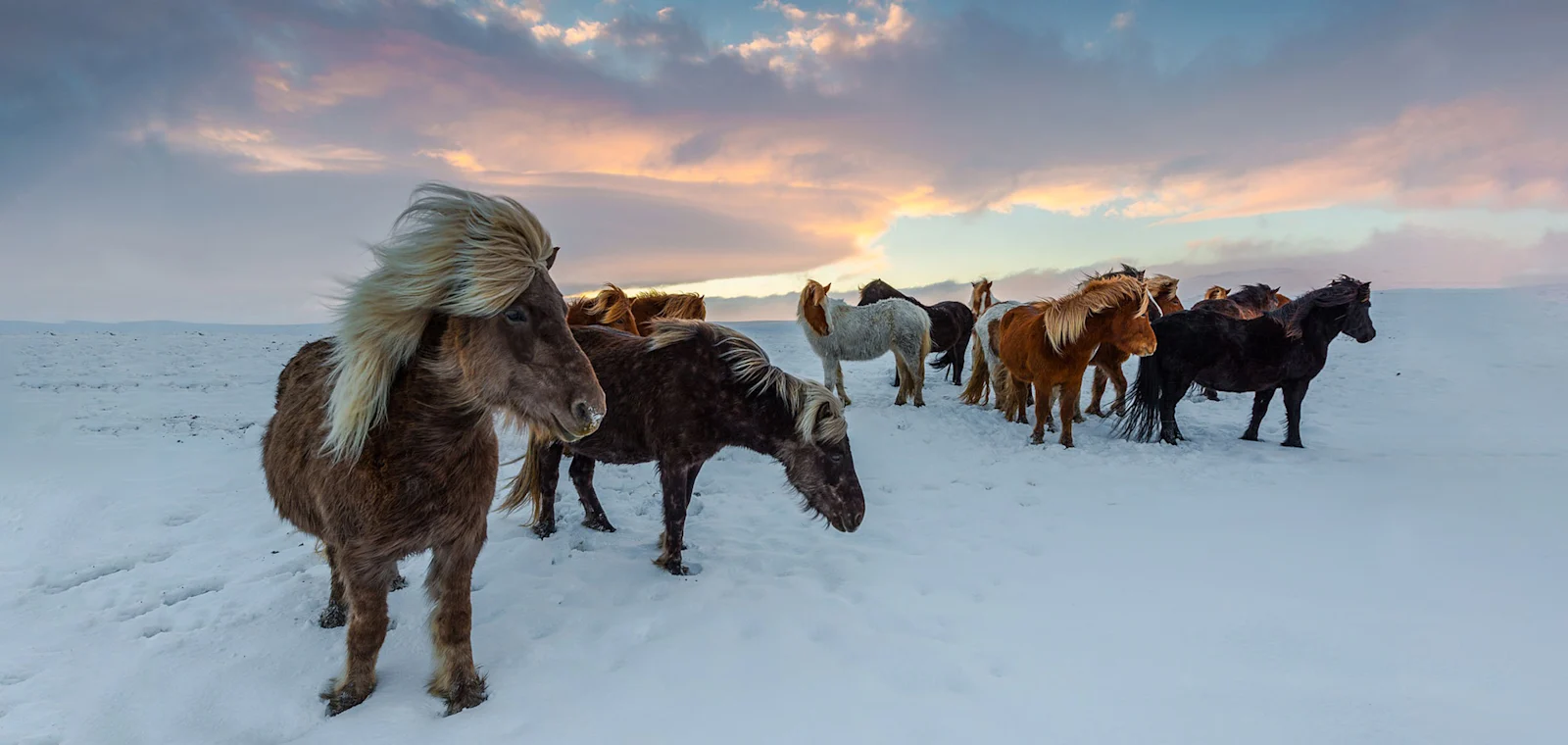
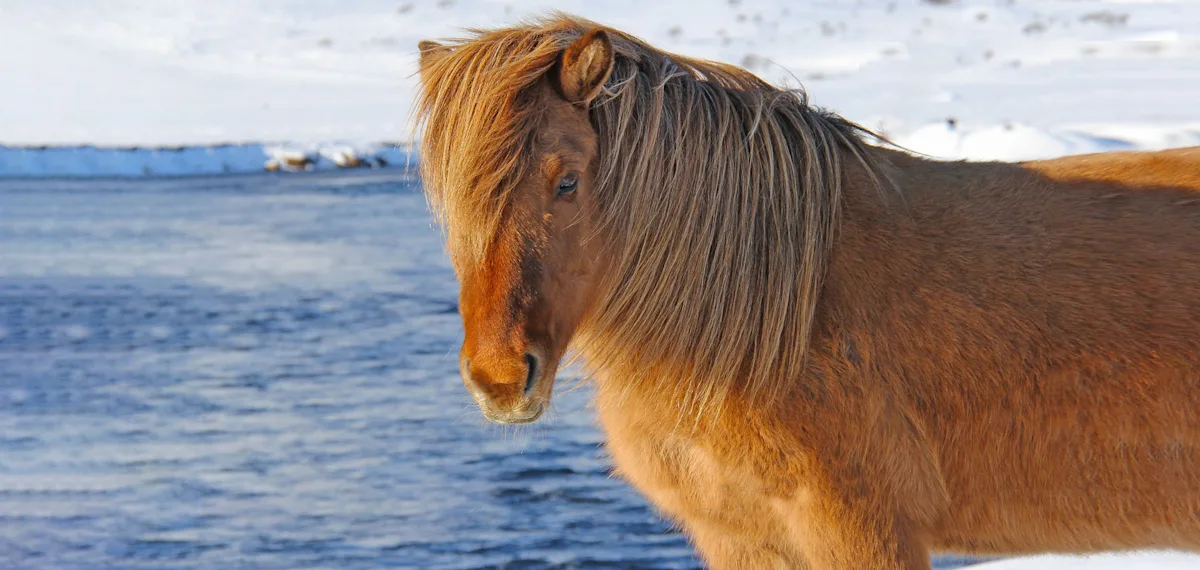
Small but strong, with a thick tail and a gorgeous, flowing mane, an Icelandic horse always inspires dreams of gracefully galloping over an ice- and snow-encrusted landscape on the back of a beautiful and spirited steed.
One of my most cherished dreams has always been to ride an Icelandic horse—in Iceland. It turns out that sitting atop such a remarkable animal is something you can only do in Iceland—unless you happen upon an Icelandic horse that has left its home country and then can never go back.
Of course, in my fantasies, I’m an expert horsewoman on an exquisite equine racing across lava fields in the shadow of glacier-capped volcanos, both human and horse tresses blowing out in luxurious waves behind us.
And while I did get to realize my dream, it wasn’t quite as I pictured it.
Horse history
The ancestors of today’s Icelandic horses first arrived on the island from the British Isles with Viking settlers, between A.D. 860 and 935. As they could only bring a limited number of livestock with them, the Vikings are thought to have chosen their very best animals for the journey. Thus, the Icelandic horse has its origin in a herd of preselected, high-quality individuals who managed to survive the rough trip on a Viking longship, opens in new tab across the Atlantic, before taking on their role as an indispensable partner for the first Icelanders in a vast, wild and entirely unknown country.
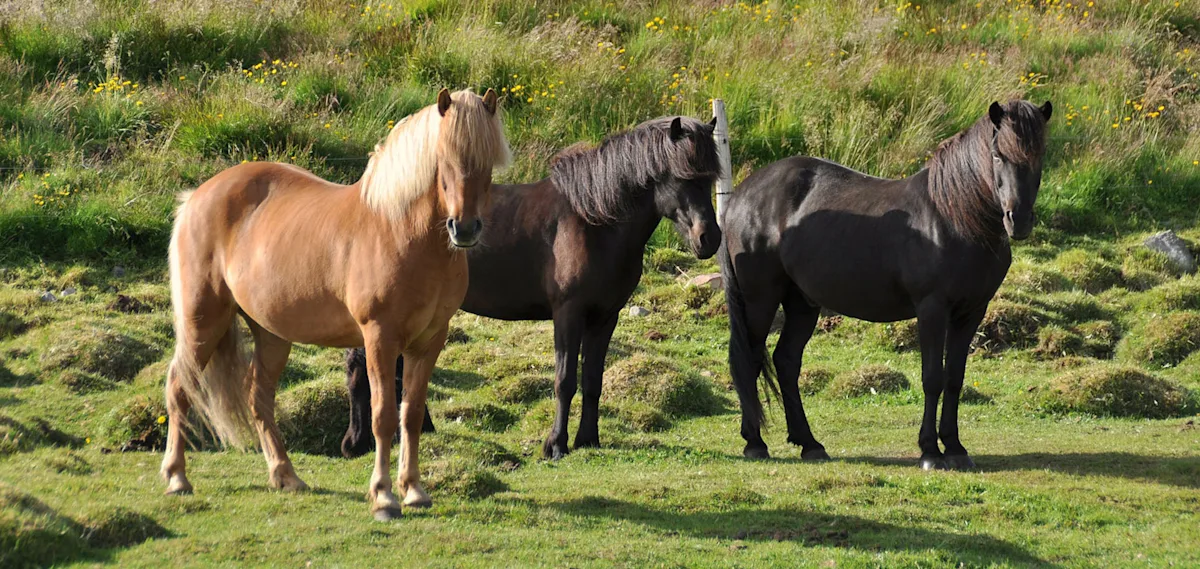
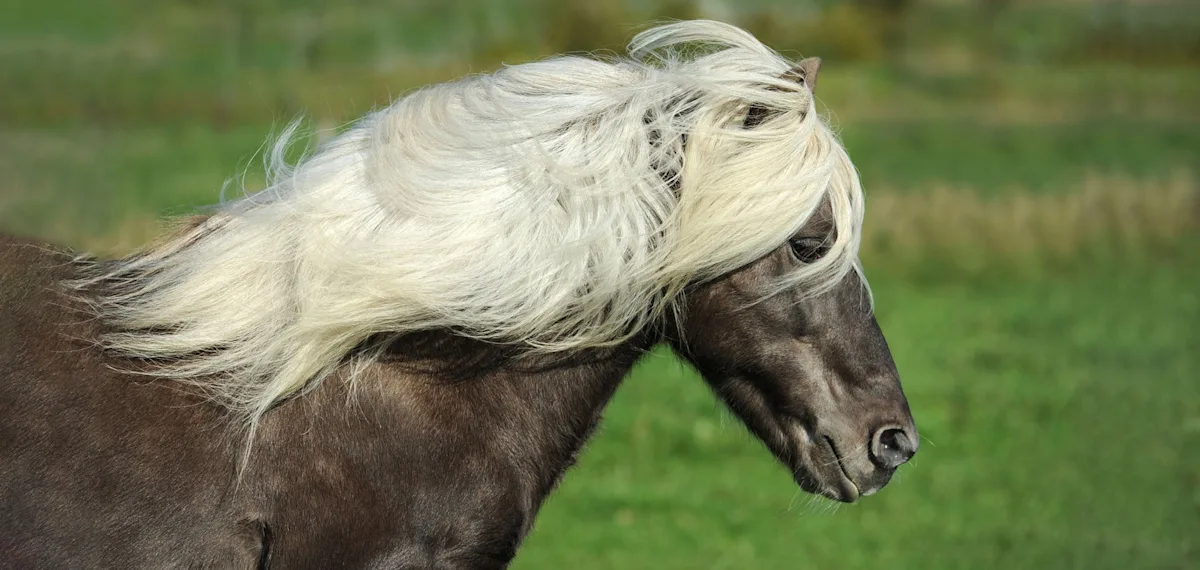
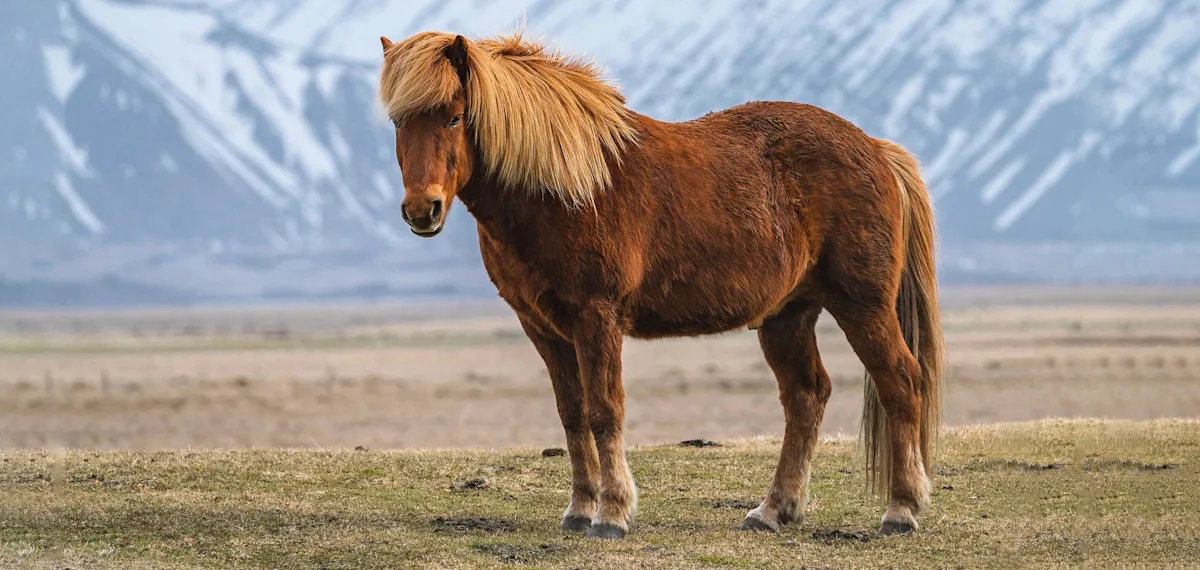
Icelandic horses are smaller than other breeds, weighing between 703 and 840 pounds and standing, on average, 52 to 56 inches high. They come in a vast array of colors, including bay, black, chestnut, dun, gray, palomino, pinto and roan. In fact, in the Icelandic language, there are more than 100 names for the colors and patterns of Icelandic horses. In winter, the horses develop fluffier, double coats to protect them from the cold. In spring, they shed the heavy coats and become sleek like other breeds.
Following an unsatisfying attempt to crossbreed the Icelandic horse with other breeds, the Althing parliament—established by the Vikings and the world’s oldest congress—forbade horse imports to Iceland as far back as A.D. 982 to prevent the degeneration of the stock. As a result, Icelandic horses have been purebred for more than 1,000 years.
Due to the geographical isolation of Iceland, very few horse diseases occur here, and no vaccinations are needed. However, this also means that no horse can enter the country at all. Anybody traveling to Iceland is also asked not to bring any used leather equipment such as chaps, gloves, riding boots or saddles.
On the other side of the equation, once an Icelandic horse leaves the country, it can never return to Iceland. This means that Icelanders going to riding competitions abroad never take their best horses with them, since they will probably be selling them after the competitions. The best horses are kept in Iceland to compete or breed.
Special steps
The sure-footed Icelandic horse is unique in another way:, opens in new tab it is the only horse breed in the world that can perform five gaits. They are the walk, the trot, the canter (a variation of the gallop) and, uniquely, the tolt, opens in new tab and the flying pace. Other horses can only master three or four gaits.
The singular tolt is a sped-up version of walking, but much more impressive. The Icelandic horses lift their front legs up high, and only one foot touches the ground at any time. The four-beat, incredibly smooth gait is useful for the uneven ground of Iceland, providing a steady ride. Still, it can carry you along at up to 20 miles per hour and was presumably especially needed in the past when there weren’t many roads.
When I traveled to Iceland in the winter of 2019, I made it my mission to ride an Icelandic horse and try my luck at learning how to navigate the famous tolt.
Going through the gaits
For me, March 20, 2019, was ride-an-Icelandic-horse day! For six years, I’d been planning for this moment. When I first visited Iceland in 2013, I had scheduled this same outing, but it was canceled due to high winds. On this calm winter day, however, the weather was chilly but calm.
I was picked up at one of Iceland’s bus stops at 8:45 a.m. by my horseback riding tour provider. Begga, the owner of the company and stables, conducted a brief introduction on how to mount the horses, sit in the saddles and place our feet at exactly the right spot in the stirrups with our heels pointing down and toes angled up. There were so many things to remember—such as how to hold the reins tautly but gently and how to cue the horses to go through the different gaits—that I was a bit nervous by the end of the talk.
We then put on our required riding helmets and went out to the stables to meet the horses. The horse assigned to me was a beautiful, fawn-colored mount named Gaukur (almost like my name: Gaukel; a good omen, I thought). I got up in the saddle, and Gaukur and I got to know each other as I applied a little pressure with my legs, and we set off through the snow-powdered lava fields at an easy, walking pace.
The trot came next, and it was a little more difficult. I began to bounce around on the top of Gaukur, which made relaxing my legs and back tricky. Apparently, in my struggles to maintain my posture, I somehow communicated to Gaukur that I wanted to go faster. He proceeded to canter/gallop, whether I was ready or not.
I wasn’t.
Trying the tolt
It was bumpy to say the least, but I managed to stay—somewhat—on top of Gaukur’s back. Then, for some reason and somehow during my rampant feelings of insecurity, Gaukur decided to go into the tolt.
When in the tolt, the Icelandic horse carries its neck a little higher. Ideally, then, you should shorten the reins and sit back a couple of inches. To cue him to speed up, you can give him another gentle squeeze with your legs or an audio cue. Only, I don’t remember squeezing or cuing.
I’m sure Gaukur looked incredibly glamorous—just as I had envisioned so long ago—but I’m also certain I didn’t even come close to that. “Herky-jerky” was probably a better description of my appearance, and Gaukur and I would have been a study in contrasts. Quite frankly, I was scared.
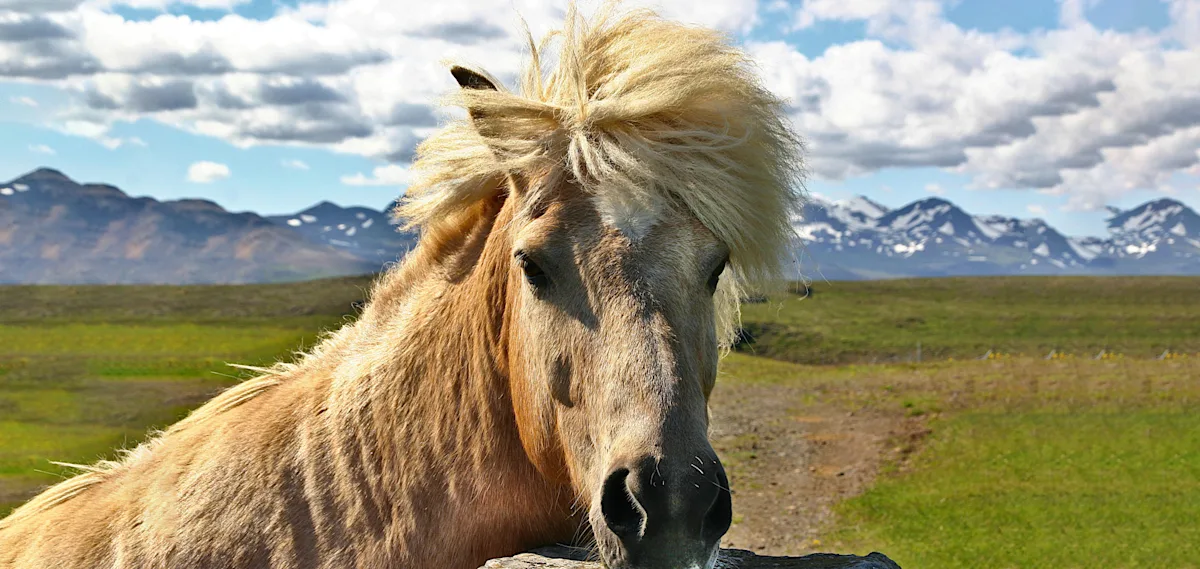
Begga later told me that Gaukur had been a winner in many tolt competitions. He was now 27 years old.
Dream deal
Well, my dream didn’t quite come true in the way I expected. The helmet kept any of my locks from flowing, that’s for sure. And I’m positive I didn’t look like I was “at one with” Gaukur.
But I did ride an Icelandic horse.
In Iceland.
And that’s pretty awesome, too.
Here’s to finding your true places and natural habitats,
Candy