Study: Darwin's Finches and Other Galapagos Birds Have a Unique Taste for Flowers
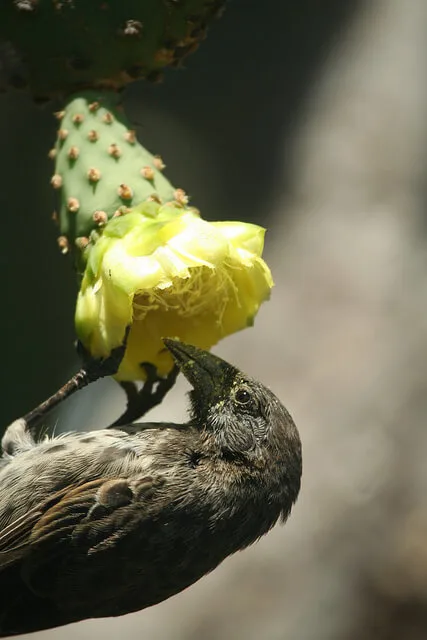
Almost every species of land-dwelling bird in the Galapagos Islands, including Darwin’s finches, feed on flower nectar and pollen, according to a report in the March 10 issue of Nature Communications.
So what’s the big deal? According to Sciencenews.org, opens in new tab, this expansion of diet across so many species has never been observed before in nature. Until now, note the researchers, this phenomenon has only been reported for single species, but never for an entire community.
From 2010 to 2013, Annaa Traveset and her colleagues from the Mediterranean Institute for Advanced Studies visited 12 of the largest islands during the peak flowering season. They recorded all the flowers the birds visited in one square kilometer over a three day-period and mist-netted birds so they could find out which kinds of pollen they were carrying. This data allowed the researchers to determine which species of flower each species of bird eats.
The researchers found that 19 of the islands 23 land bird species were feeding on nectar, transporting pollen or both. Many of these species, including different species of Darwin’s finches, were previously thought to feed almost exclusively on seeds and insects. And few of the birds’ South American ancestors are known to include flowers in their diets.
The researchers postulate that the expansion of the birds’ diets is a natural consequence of island living. Islands typically have fewer species than mainlands, so food shortages are more common. When insects and seeds become scarce, the birds are forced to expand into other dietary niches. In short, island species have to be more creative and more adaptable when it comes to their diets. This new information help broaden our understanding of island biodiversity, as it seems to help explain how a newly arrived species is able to adapt to its new environment.
Another interesting insight that can be drawn from the findings is that the birds are likely hastening the proliferation of harmful invasive species throughout the archipelago. The researchers found that 29 percent of the plant species that the birds are eating, and helping to pollinate, are invasive.