Save vanishing species next time you’re at the post office


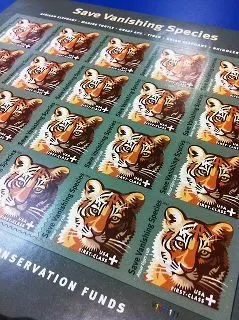
I can’t say I’ve seen any tigers or rhinos lurking around my local post office, but next time I pop in for stamps, I’ll be able to help protect them. That’s because the U.S. Postal Service has issued a new “Save Vanishing Species” stamp, opens in new tab, proceeds from which are dedicated to endangered wildlife conservation.
The new “semi-postal” stamp, for sale at all U.S. post offices and also available online, opens in new tab, features a graphic of an Amur tiger, opens in new tab cub, one of several imperiled animals the stamp is designed to help. Each first-class stamp costs 55 cents, with the additional proceeds above the usual 44-cent rate designated to benefit five key conservation funds.The funds include:
African Elephant Conservation Fund
Asian Elephant Conservation Fund
Great Ape Conservation Fund
Rhinoceros and Tiger Conservation Fund
Marine Turtle Conservation Fund
The funds above are among the Multinational Species Funds established by the U.S. Congress in recognition of an unprecedented international decline of certain charismatic species and are dedicated to saving some of the world’s fastest disappearing and most treasured animals in their natural habitats. The fund are administered through the U.S. Fish and Wildlife Service through the Wildlife Without Borders species programs.
The project is the result of a 10-year effort headed by World Wildlife Fund (WWF), opens in new tab, in partnership with USPS, USFWS, and the international conservation organizations that will put the proceeds to direct use in combating poaching, protecting habitat, preventing disease and educating local communities about the value of protecting wildlife.
As WWF notes, opens in new tab, the stamp is a creative way to raise awareness about endangered wildlife and could generate tremendous support for international wildlife conservation at a time when Congress is making deep funding cuts, including federal funding for the protection of at-risk species around the world.
A Save Vanishing Species note card set, which contains 10 blank cards featuring the image of the stamp, 10 envelopes and 10 stamps, and sells for $15.95, is also available in select post offices and online, opens in new tab.
The Amur tiger, opens in new tabcub pictured in the stamp art is one of five tiger subspecies. When full grown, this cat, the largest in the world, can weigh up to 650 pounds and measure 13 feet from its nose to the tip of its tail. The Amur tiger is also known as the Siberian tiger and is native to far-East Asia, living primarily the birch forests of eastern Russia, but also in China and North Korea. Only a few hundred remain in the wild.
With the holiday season just around the corner, and mailing cards still a cherished tradition, why not make an easy contribution toward saving our planet’s endangered wild animals by purchasing these special stamps?
Here’s to preserving wildlife…and written correspondence,
Wendy