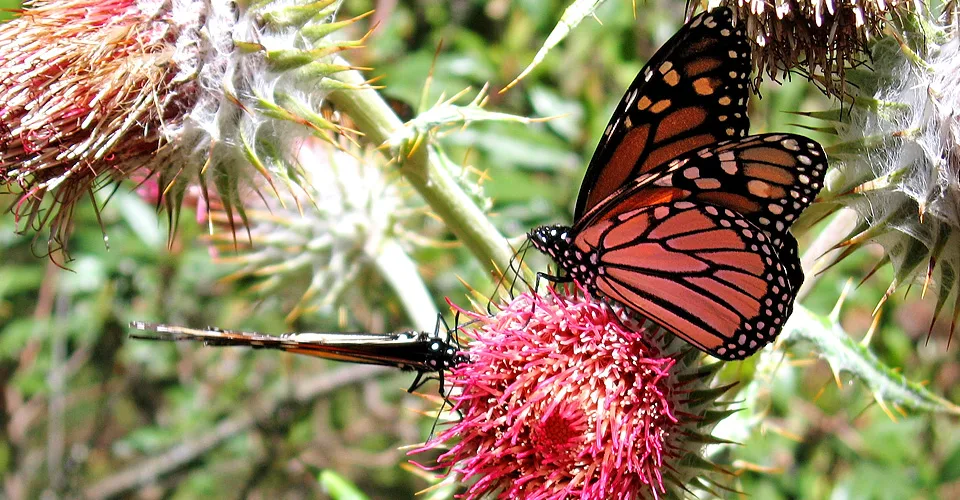
On a Wing and a Prayer: 5 Fascinating Facts about the Monarch Butterfly

Arguably among the most beautiful of all butterfly species, the North American monarch isn’t just another pretty face. It has very interesting characteristics and abilities that none of its butterfly cousins can lay claim to. Here are some amazing facts about this delicate yet incredibly durable and fascinating creature.
1. Frequent flier miles.
In one of the world’s astounding natural animal events each fall, tens of millions of monarch butterflies migrate up to 3000 miles from the Northeastern US and Canada down to their wintering grounds in Central Mexico to escape the frosts of winter. In fact, tagged monarch butterflies have even been found to travel over 250 miles in one day.
The migration is due to the fact that monarchs can’t survive the cold northern winters, unlike other butterflies that can survive as larvae, pupae, or even as adults in some cases. As a result, the monarch is the only butterfly known to make a two-way migration, similar to birds.
2. Radar location?
One of the enigmas around this phenomenon is how millions of infant butterflies that have never been to their ancestral breeding grounds return to the very trees that prior generations roosted in before they were born.
3. Don’t eat me I taste horrible!
The orange of a monarch butterfly’s wings is a warning color, identifying itself to predators that the butterfly will taste bad or may be toxic.
4. But if you try, I will fly!
A monarch butterfly, opens in new tab can flap its wings up to 120 times a minute when trying to escape a predator. Their flight speed has been measured between 4 and 12 miles per hour but can be much faster if a monarch uses available wind currents that will speed it up considerably.
5. How high is high?
Monarchs know when it is time to migrate south for the winter based on the environmental cues associated with seasonal changes. They then get naturally high using air currents and thermals to travel such incredible distances. In fact, the highest monarch was recorded at 11,000 feet by a glider pilot—that’s more than 2 miles up in the air! Just to put this into perspective, most birds fly below 500 feet, hot air balloons only go up about 200 feet, and even songbird migrations occur in the 2,000-4,000-foot-high range. There’s not really much else going on above 11,000 feet other than Mount Everest (29,028 ft) and passenger jets (36,000 ft).
You can experience this astounding natural event up close and personally with Nat Hab and WWF, including our Kingdom of the Monarchs tour.