Meet 5 Fascinating Antarctic Penguins

Long before they captured the hearts of audiences in movies like “March of the Penguins, opens in new tab” and “Happy Feet, opens in new tab”, penguins turned Antarctica’s most barren landscapes into teeming cities.
They number as many as 30 million and are scattered across Antarctica, its surrounding islands and as far north as the equator. Antarctica and its many surrounding islands are home to both common and increasingly scarce penguin populations – each with its own set of quirks.
King Penguins
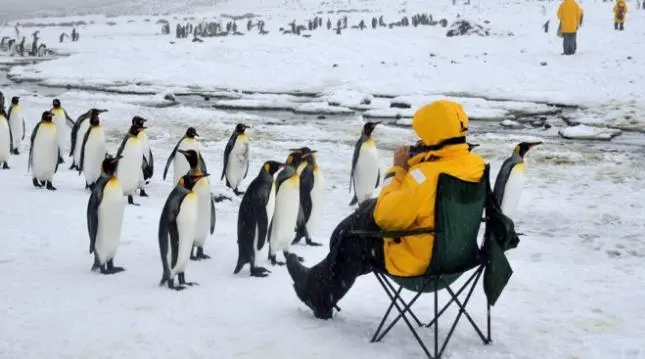
Similar in look and breeding habits to the slightly larger and more popular emperor penguin, king penguins stand as high as three feet tall and proliferate the islands surrounding Antarctica. Some colonies live as far north as Australia and New Zealand.
Like emperor penguins, king penguins incubate their eggs on their feet under a fold of fat, but unlike emperors, king penguin chicks are deep brown. King chicks take an extraordinarily long time to mature, averaging 14-16 months to fledge. As they mature, the chicks grow to be enormous – sometimes almost as large as their parents – while still covered in comical brown fuzz. Congregating year-round in rookeries of more than 100,000 adult pairs, the chicks look like so many small bean bags.
Because the chicks take so long to fledge, these friendly and outgoing penguins only mate on alternating years.
Gentoo Penguins
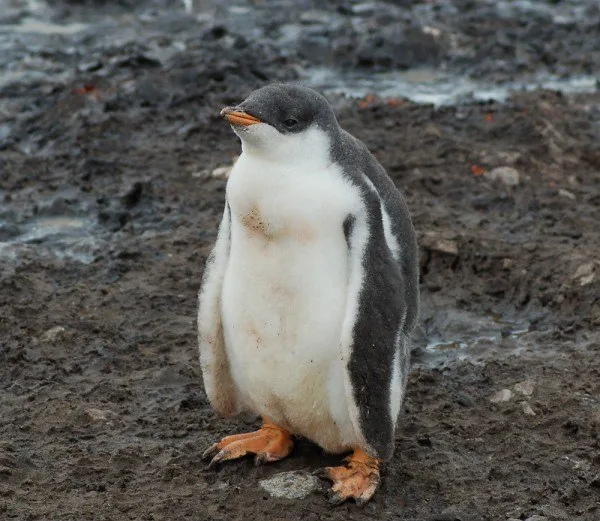
Pouty gentoo chicks like this one can be seen on Natural Habitat’s Antarctica, Falklands & South Georgia cruise.
Gentoo penguins are closely related to chinstrap penguins, though they’re not nearly as numerous. Gentoo populations have declined by two-thirds over the last 25 years due to climate change and oil spills. Despite their sparse numbers, gentoo penguins are the most widely dispersed, being found across Antarctica, its outlying islands and farther north.
These gregarious penguins are happy to cooperate with one another at sea, forming live “sea rafts” in the hundreds to help one another catch prey. Gentoos are fond of trumpeting; their calls are often compared to the sound of a child’s party horn.
Chinstrap Penguins
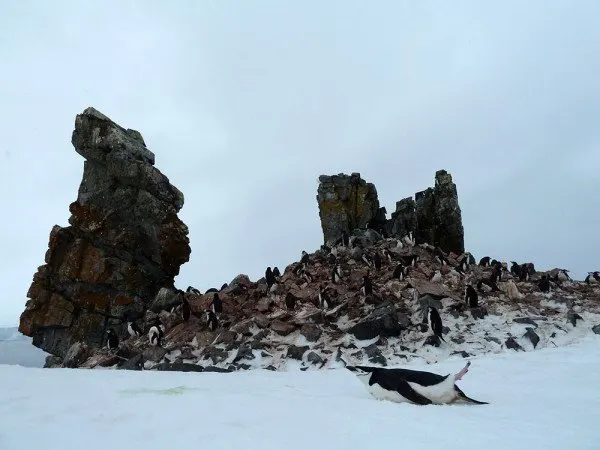
These chinstrap penguins, opens in new tabat play were photographed by Daniel Femke on an Antarctic Voyage in 2013.
Aptly named after the black stripe under their chins, which resembles a bike helmet and strap, chinstrap penguins, opens in new tab are one of the most common penguin species, with populations numbering as high as 15 million. Although barely over two feet high, chinstraps are among the boldest of penguins, preferring icebergs and small, barren islands over more hospitable ground. Chinstrap penguins can commonly be seen hanging out on icebergs and rocky outcroppings across the sub-Antarctic.
Magellanic Penguins
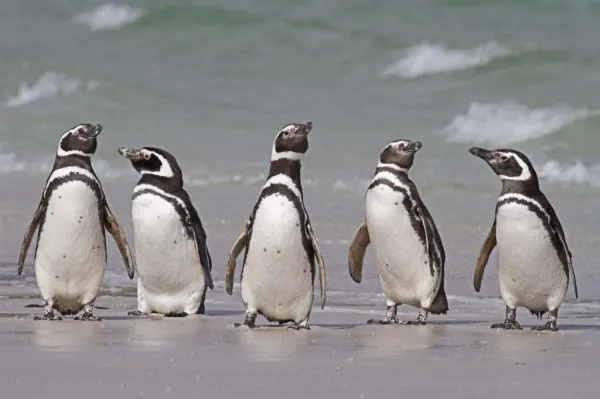
Magellanic penguins, opens in new tab are native to South America, though their colonies are commonly found in the rocky coastal areas Argentina and Chile, as well as the Falkland Islands. These unusual penguins are the only species to venture into warm climates, with some colonies migrating as far north as the balmy waters of Rio de Janeiro.
These small, two-foot penguins can swim as fast as 15 mph. Due to their tendency to migrate to warmer waters, magellanic penguins shed the extra feathers around their eyes while they’re in warm temperatures, then regrow the feathers during colder seasons. In recent years, oil spills along their migration routes have taken a significant toll on their numbers.
Rockhopper Penguins
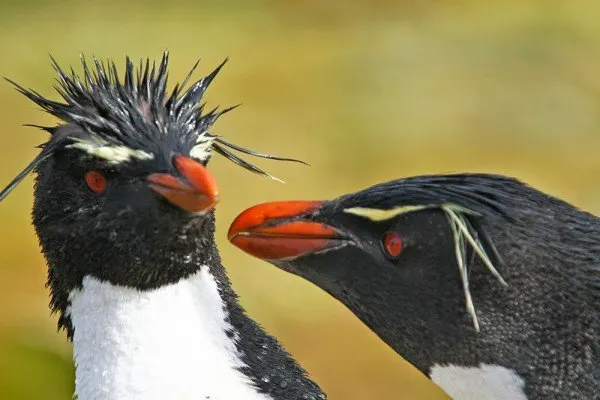
Rockhopper penguins are named after the way they hop from rock to rock in their Sub-Antarctic island colonies. Visitors to the Antarctic may catch a lucky glimpse of these comical penguins on Saunders and the Falkland Islands.
One of the smaller penguin species at not quite two feet tall, rockhoppers, opens in new tab are feisty and sometimes downright aggressive. Their mating routines and calls are particularly gregarious, made especially comical to onlookers by their tufted heads, which give the appearance of angry eyebrows. Rockhopper chicks are equally plucky, taking to the sea at a mere 10 weeks old.
Visitors – Be Respectful, Please!
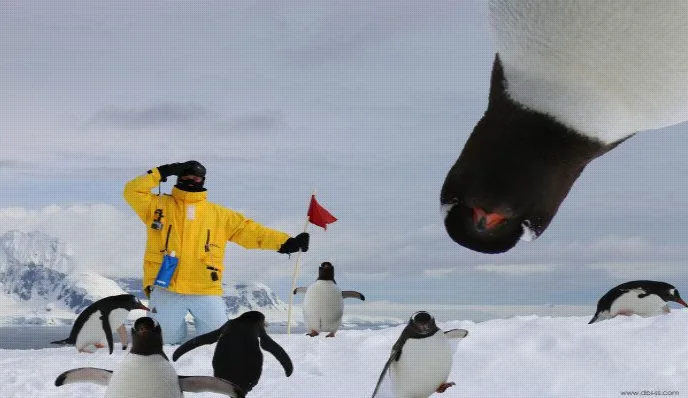
Stumbling across penguin colonies and rookeries is a frequent and pleasant surprise along Natural Habitat’s many Antarctic journeys, although penguin sightings can never be guaranteed. These independent birds roam the sea, islands and continent across Antarctica and it’s not at all uncommon to come across two, three or even four species at one time.
As much fun as it is to interact with these inquisitive, fascinating birds, visitors must always keep their distance. Many species of penguin are listed as threatened and or vulnerable species, including the magellanic and rockhopper penguin.
Ready to get to Antarctica to see penguins in the wild? Check out the special Antarctica offers that are currently being offered on last-minute 2014 cruises. You can save 25% AND get a $1,000 credit toward airfare!
Call our experienced and knowledgeable Adventure Specialists today to find out which of our Antarctica expeditions best suits your wants/needs, budgets and schedule. Make this the year your Antarctic exploration dream comes true!
This post was republished with permission from the Quark travel blog, opens in new tab.