Has Nature Disappeared from Children’s Books?

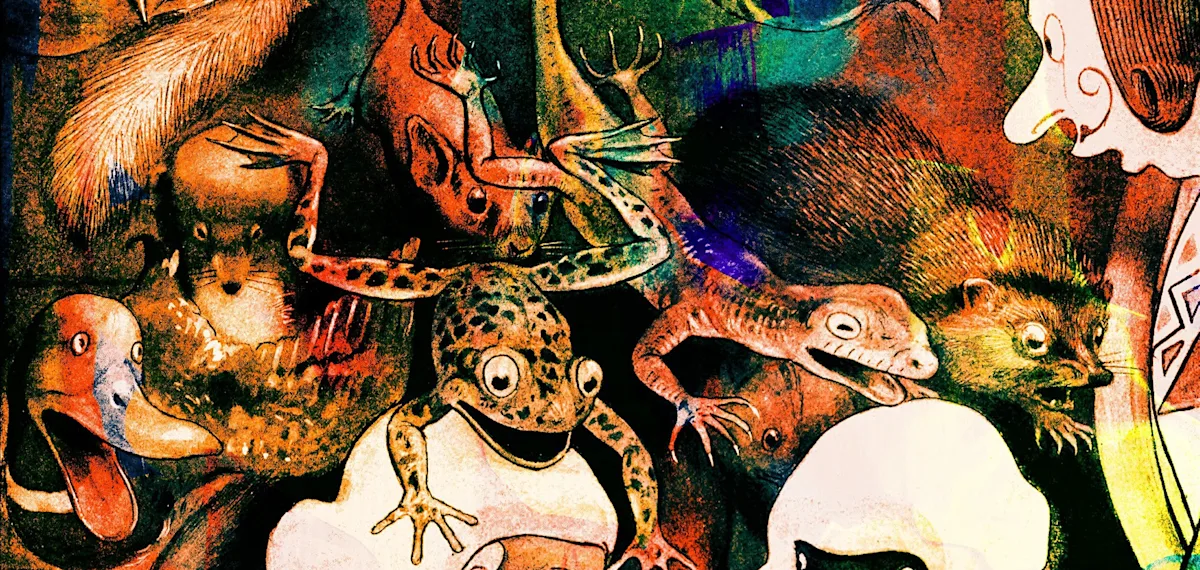
I used to think that some of the world’s best nature and travel books could be found in the children’s section of my local bookstore. On those dedicated shelves were tales of exotic islands (The Swiss Family Robinson by Johann David Wyss); adventure on the seas (Kidnapped by Robert Louis Stevenson); the beneficence of forests (The Giving Tree by Shel Silverstein); the dangers of plucking animals out of the wild—and the faithfulness required of them to successfully bring up young (Horton Hatches the Egg by Dr. Seuss); and, of course, there resided my favorite book of all time: The Little Prince,, opens in new tab the story of a boy who travels to other planets in a struggle to save his own dying world.
I used to think that, that is, until I read about a recent study, opens in new tab conducted by researchers at the University of Nebraska. It seems that the current crop of children’s books shows a remarkable lack of nature as subject matter.
Should we be concerned?
A turn away from nature
In this column in November 2009, I wrote about nature words disappearing from children’s dictionaries. But now, it seems, references to nature are vanishing from contemporary children’s books altogether.
Recently, University of Nebraska-Lincoln researchers, led by sociologist Dr. J. Allen Williams Jr., analyzed 8,000 images from 296 children’s books that received Caldecott awards, opens in new tab—given to American artists for distinguished picture books—from 1938 (the first year the prize was handed out) to 2008. They theorized that there were two possibilities regarding a change in content over time: 1) growing concern about critical environmental problems, such as deforestation and a decline in biodiversity, may have led to an increase in illustrations and stories about wild animals and the natural environment; or 2) the increasing isolation of people from the natural world may have resulted in a decline in the perceived relevance of these environmental issues and resulted in fewer stories and depictions.
Unfortunately, No. 2 seems to be the case. In the last two decades, there have been significant declines in depictions of natural environments, while built environments (such as houses or playgrounds) have become much more common. Representations of wild animals (rather than domesticated or anthropomorphized creatures) also dwindled.
The authors of the study conclude that today’s generation of children are not being socialized—at least through their books—toward an understanding and appreciation of the natural world and the place we humans have in it.
Online sources fill the gap
Some question the validity of the study’s results, however, saying that Williams looked only at books that won prestigious Caldecott awards. But there are, they would argue, a wide variety of other books that contain illustrations with natural landscapes or animals. And, they point out, picture books are not the only genre of children’s literature. There are a number of text-based books, and any of them could have contained an environmental message.
Too, those who question the findings say that perhaps William’s study measured a decrease in natural settings or animals because children are much more plugged into the online world today than decades ago. There are plenty of websites that are devoted to educating children about the environment, such as The Nature Conservancy’s Nature Lab,, opens in new tab Defenders of Wildlife’s Kids’ Planet, or the Corporation for Public Broadcasting’s EekoWorld.
A matter of priorities
Williams, however, believes other indicators back up his study’s findings. In 2009, for example, Gallup conducted a poll regarding Americans’ attitudes toward the environment. The results showed that the environment is “not a high salience issue” and has a “low mind presence” in respect to priorities for the government.
A year later, in 2010, Scholastic reported that some of the most popular trends in children’s literature are: dystopian fiction, mythology-based fantasy, multimedia series, special-needs protagonists and a shift away from picture books. It was stated that publishers are producing 25 to 30 percent fewer picture books than in years past due to parents wanting their children to read more challenging books at younger ages.
It’s a trend that’s still being seen in 2012. Environmentally friendly books for children are still a small subset of the market as a whole. For the month of August, in fact, The New York Times Best Sellers list of children’s picture books, opens in new tab shows that books with environmentalism story lines or natural settings are almost nonexistent. And even as the green movement grows today, it appears that the environment and protection for wildlife is not a high priority for most Americans.

Should this shift away from nature in children’s books be of concern? Or is it merely a reflection of changing technology and the realities of the world our children will have to live in? How many of the picture books on your own children’s shelves are on nature topics?
Here’s to finding your true places and natural habitats,
Candy