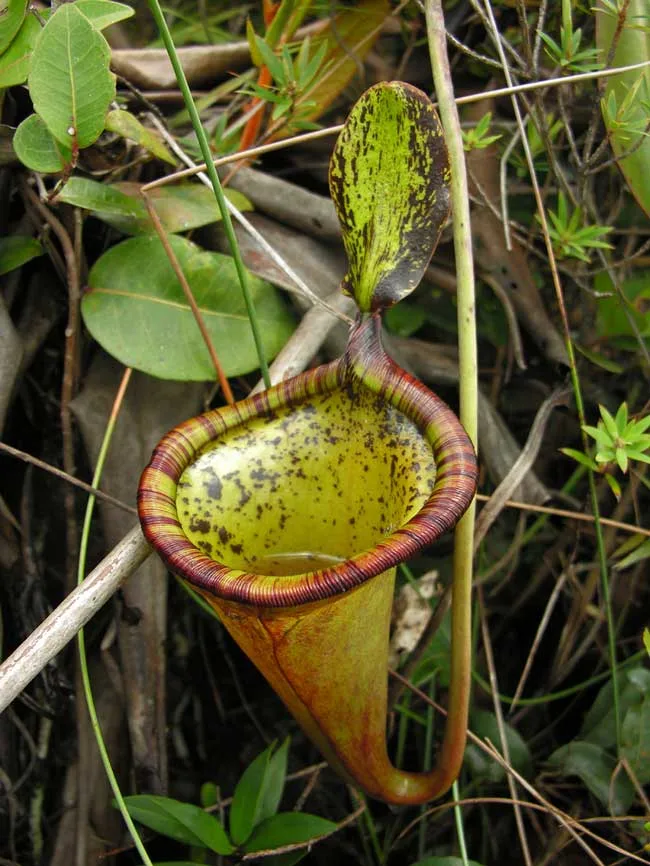
Nepenthes attenboroughii was discovered on a remote mountain in the Philippines. Similar species have been known to devour lizards, frogs and rats. Credit: Redfern Natural History Productions Ltd.

Giant Plant Eats Rodents

From the news of the wild comes this story from the Philippines about a pitcher plant (similar to the infamous Venus Fly Trap) that actually devours small rodents–and any other living thing unfortunate enough to fall into its chlorophyll maw. We’re used to plants giving us the occasional itchy rash or embedding their thorns into our skin but eating us?! Yikes!
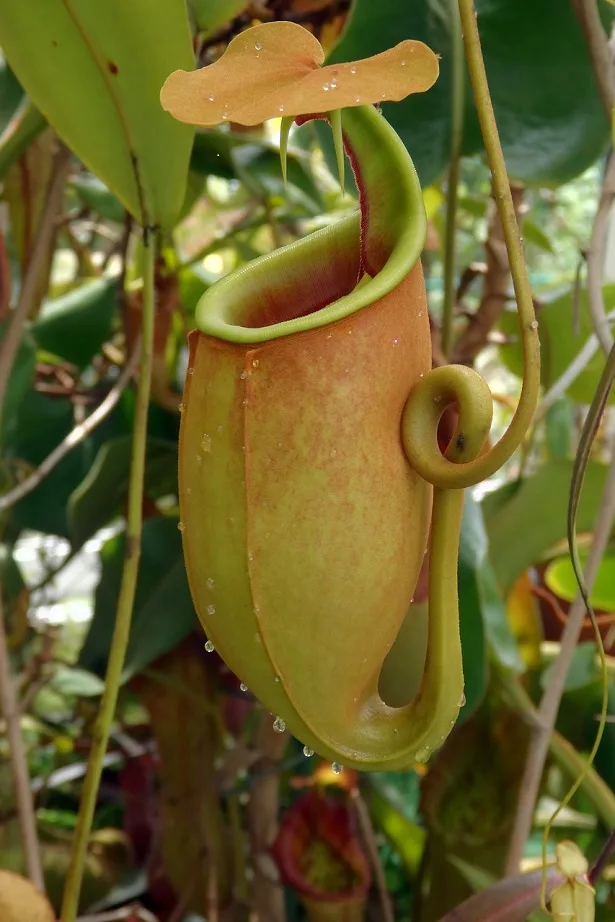
Pitcher plant
Pitcher plant. Photo from pixabay.com

Luckily, as long as you aren’t a small rodent in the Philippines there’s not much to worry about. There’s the old joke “I’m not a vegetarian because I love animals, it’s because I hate plants.” Better hope that this humble pitcher plant doesn’t have a big brother with an equally voracious appetite! You can read more about it here at LiveScience, opens in new tab.
Tagged

More from Nature & Wildlife

All Nature & Wildlife stories
  • Asia & The Pacific

    Discover Southern Australia’s Kangaroo Island

    Nov 17, 2026 · Cathy Brown

    Any adventure from abroad to Australia feels like a journey to the ends of the Earth. But just imagine the sensation of awe and wildness that awaits when going even more “down under” than mainland Down Under.

  • Asia & The Pacific

    10 Unique Species You Can See in Southern Australia

    Nov 16, 2026 · Emily Goodheart

    Australia’s southern coast is home to an array of intriguing wildlife. The fascinating animals found here are specially adapted for their environment, their unique traits and behaviors a result of 30 million years of geographical isolation.

  • Nature & Wildlife

    Our Beautiful, Singular, Habitable World

    Nov 10, 2026 · Candice Gaukel Andrews

    The question of whether Earth is alone in harboring life has captivated humanity for millennia. Likewise, other planets that could support human communities have stoked our imaginations for decades, resulting in books, films and other artworks that show us thriving on distant celestial bodies.