Galapagos Pink Iguanas Dodge Existential Bullet/Rivers of Molten Lava
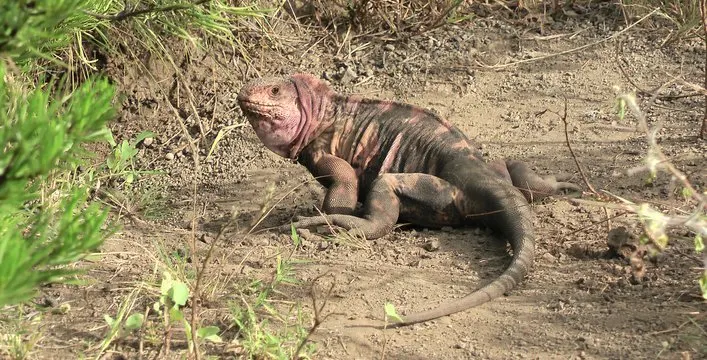
Conservationists are breathing a collective sigh of relief this week in response to the news that the Galapagos pink land iguana, one of the world’s rarest and most endangered reptiles, seems to have survived the recent violent eruptions of Wolf Volcano on Isabela Island.
Scientists believe that there are only 192 healthy adult pink iguanas in the wild. The species’ entire range consists of a tiny area on the northeastern flank of the volcano. The eruption, which sent smoke and debris thousands of feet into the air and streams of lava down the volcano’s slopes, sparked fears that the species could be wiped out entirely.
When Wolf volcano last erupted 33 years ago the pink iguana had yet to be discovered. A park ranger stumbled upon one of the animals in 1986, but it was assumed to be a yellow land iguana suffering from a skin condition. In 2009, after more individuals were discovered and genetic analysis was carried out, scientists declared the pink iguana to be a new and distinct species.
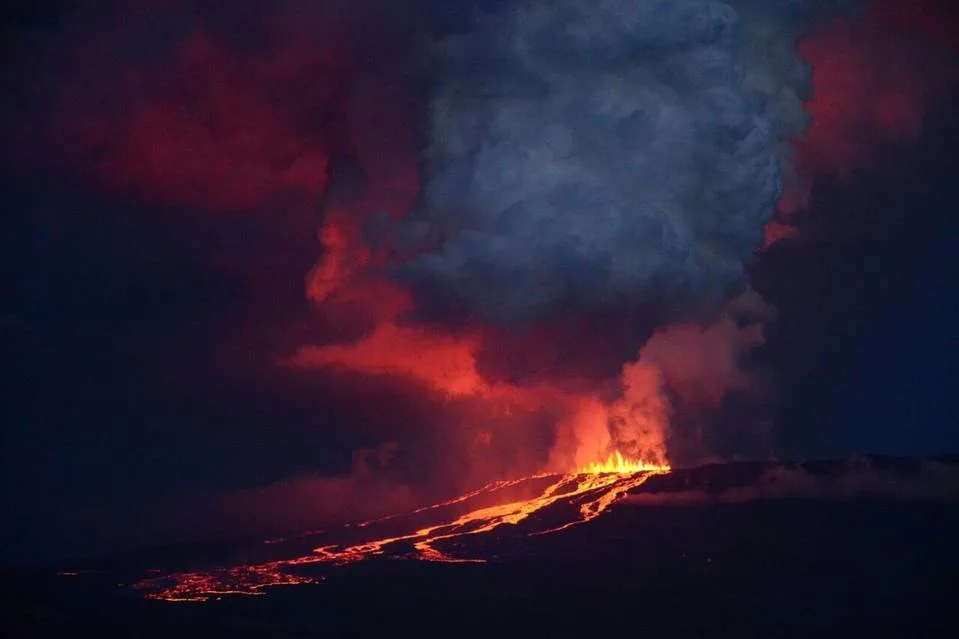
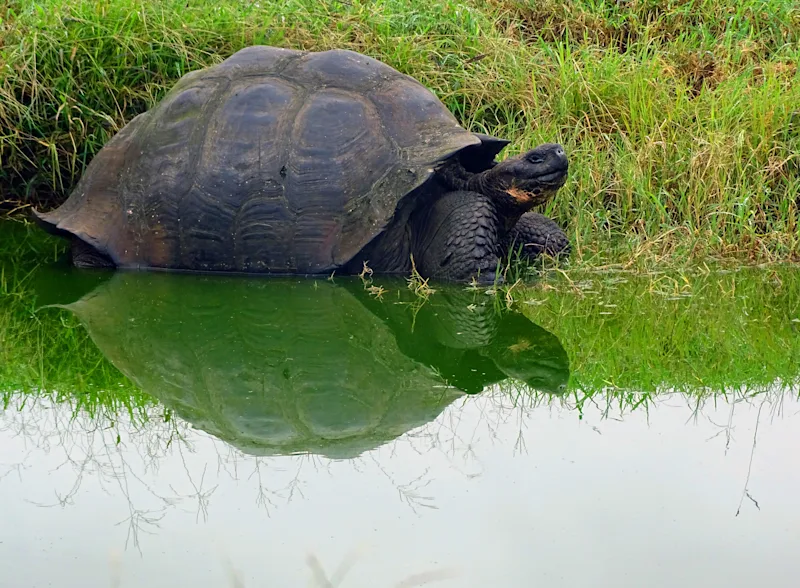
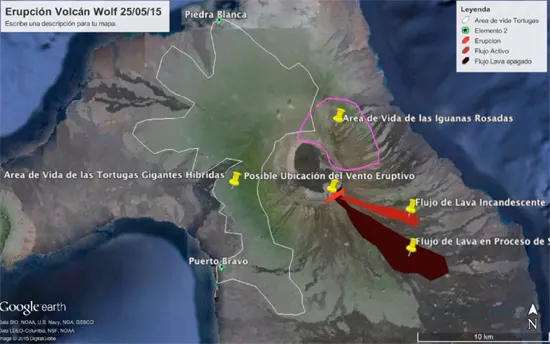
Last week the Galapagos National Park Directorate conducted a fly over to assess the danger to the pink iguana and giant tortoises that live on the volcano’s slopes. Wacho Tapia, who directs the Giant Tortoise Restoration Initiative, was on board and was able to create a map using his knowledge of the normal range of the tortoises and iguanas on the volcano and the location of the new lava flows.
The map (below) indicates that the lava flows did not breach the species’ range. That said, it is possible, according to a blog posting Tapia wrote for Galapagos Conservancy, opens in new tab, that a few individual migrating tortoises or iguanas may have perished. Still, the larger populations do not appear to be in danger.
The pink iguana lives under the constant threat of volcanic annihilation. And if that weren’t enough, it must also contend with wit the threat of feral cats and introduced parasites.