Galapagos Islands—Geography & Geology
[Excerpts from Adventure Guide to Ecuador & the Galapagos Islands, by Peter D. Krahenbuhl]
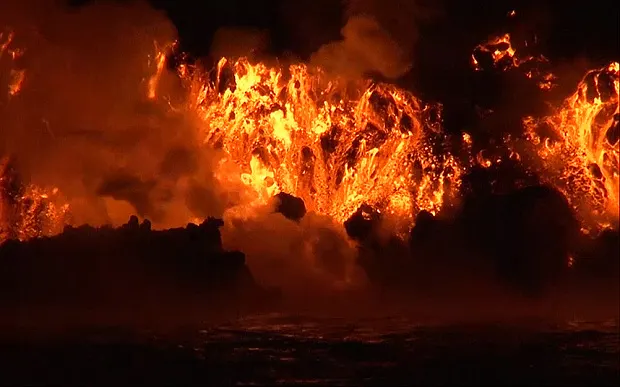
Set far off the coast of northwestern South America in the Pacific Ocean, the Galápagos Islands are often called the “Islands Born of Fire” due to their volcanic origin. The oldest of these world famous islands are approximately 4 to 5 million years old, created by underwater volcanoes that are still active today. As a result, the archipelago is relatively young and continues to grow and evolve.
Currently there are nearly 60 exposed landmasses named in the Galapagos, some of the most interesting of which you can experience on an epic Galapagos Adventure. Thirteen are large islands, six are considered small islands, and more than 40 are islets. The largest of the islands is the 80 mile/128-kilometer-long Isabela Island, with over half the archipelago’s total land area. All told, the islands are more than 267 miles/430 kilometers in length – it would take quite some time to visit them all.
Geologically, the Galapagos Islands were formed as a result of the same process that created the Andes. In fact, the islands (and the Andes) are still being built, as plate tectonics dictate land formation here. The enormous underwater Nazca plate, as it moves slowly east toward the South American plate, passes over a “hot spot” in the earth’s crust. Magma continues to rise from the core of the earth through the crust and creates volcanic islands. Currently the islands are heading southeast toward South America at a couple of inches per year. Thus, the oldest of the Galapagos, Isla Española (over 4 million years old), is also the most southeastern in the archipelago. Ultimately the current Galapagos formations may join South America, but neither the currently exposed islands nor human beings are likely to be around to witness the meeting.
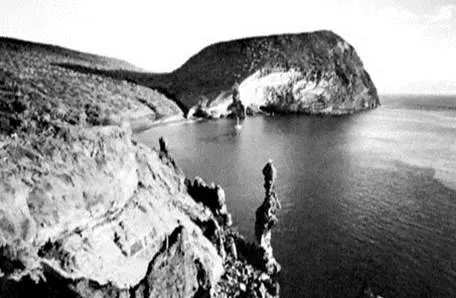
The majority of the Galapagos landmass lies well below the surface of the ocean and spreads east toward the mainland. There are additional underwater volcanic formations that were most likely exposed islands at one time, but which now lie deep underwater. Some are as old as 9 million years and stretch well beyond the Galapagos toward the mainland.
Isla Fernandina and Isabela are the two youngest islands in the Galapagos chain, dating back only 750,000 years. In fact, much of the Galapagos chain is still being formed, and the region is considered to be one of the most volcanically active areas in the world. The land itself, formed from the volcanic basalt, consists of rounded cones and gentle slopes – very different from the jagged peaks of the Andes on the mainland.
Experience the Galapagos Island’s fascinating geography, while learning about its natural history and geography first hand on a Natural Habitat Galapagos Adventure.