Discover elephant seals and more on California’s wild central coast
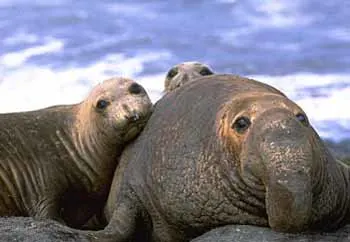
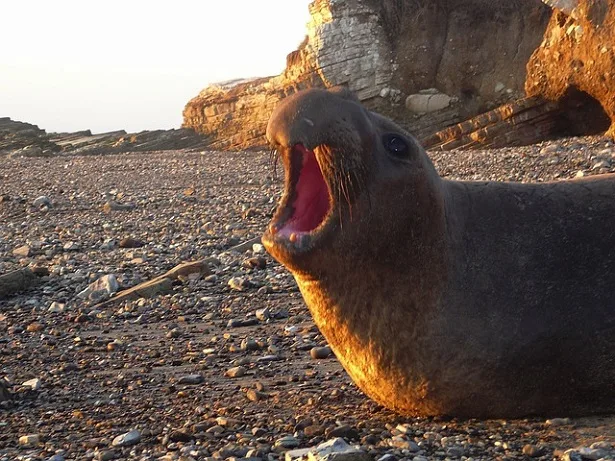
A male elephant seal might be one of the funniest-looking animals on the planet. Unlike their conventional cousins, elephant seals are distinguished by their giant, bulbous nose, a pendulous schnozz that inflates with air to make a thunderous drumming noise used to intimidate other males during mating season. These guys are big to begin with, up to 15 feet long and a whopping 4,500 pounds, three times larger than their less imposing – and, let’s face it — prettier female counterparts. Even if the coastal fog of summer obscures their hulking forms hauled out on the rocks, their baritone bellow belies their presence from far away.
Last weekend I met a few elephant seals face-to-funny-face when I discovered an unexpected slice of the California coast on an impromptu drive. In Half Moon Bay (40 minutes from SFO) for a conference, I had a few hours to go exploring. As I was cruising down Highway 1, the coast-hugging route that winds among headlands and beaches for the length of California, I never anticipated finding this bucolic stretch due west of Silicon Valley. I also realized, when I passed the sign forCostanoa Lodge, opens in new tab, a coastal eco-adventure resort, that this is the very region featured on Nat Hab’s new trip, Winter Yosemite and the California Coast, which stays at Costanoa.
Small farms eventually gave way to grassy marshes and crumbling bluffs, with a fickle fog layer over the ocean gliding in and back out again, like the waves. The rugged coastline is punctuated by crescents of sand, most of which are protected as state beaches. The most impressive of these was Ano Nuevo State Park, opens in new tab in San Mateo County, about 20 miles north of Santa Cruz — – site of the largest northern elephant seal rookery on the Pacific Coast. Here, a 2-mile trail from the parking lot leads to the coast, where elephant seals are found year-round on the rocky shores.
Only scruffy males were hanging out while I was there, trundling ashore for their annual “catastrophic molt,” in which they lose their hair and upper layer of skin all at once, replacing it with new fur. In winter, however, the point at Ano Nuevo is thronging with seals of both sexes who arrive here to breed and bear their young. It’s a rare occasion on land for the northern elephant seal, which spends 90 percent of its life at sea.
Elephant seals make one of the longest migrations of any marine mammal, swimming 11,000-13,000 miles semi-annually from as far as Baja California to the Aleutian Islands and back. They come ashore only to breed and molt; juveniles and adult females molt in late spring before the males take over during the summer. The rest of the time they live 5,000 miles offshore, where they subsist on deep-water and bottom-dwelling marine animals such as squid, skates, rays, sharks, eels and rockfish. Elephant seals dive to 4,000 feet and may spend over an hour underwater, emerging only briefly between dives.
Although their only natural predators are white sharks and orcas, elephant seals were nearly extinct at the start of the 20th century, hunted by humans who prized for their oil-rich blubber for lamp fuel. A small colony of less than 100 remaining in the Guadalupe Islands off Baja California was granted protection by Mexico in 1922. The U.S. followed their lead, creating a conservation triumph that has enabled the elephant seal population on the Pacific coast of North America to rebound to about 160,000 today, roughly its original numbers. In addition to Ano Nuevo, elephant seals are also found in California at Chimney Rock in Point Reyes National Seashore and in the Farallon Islands.
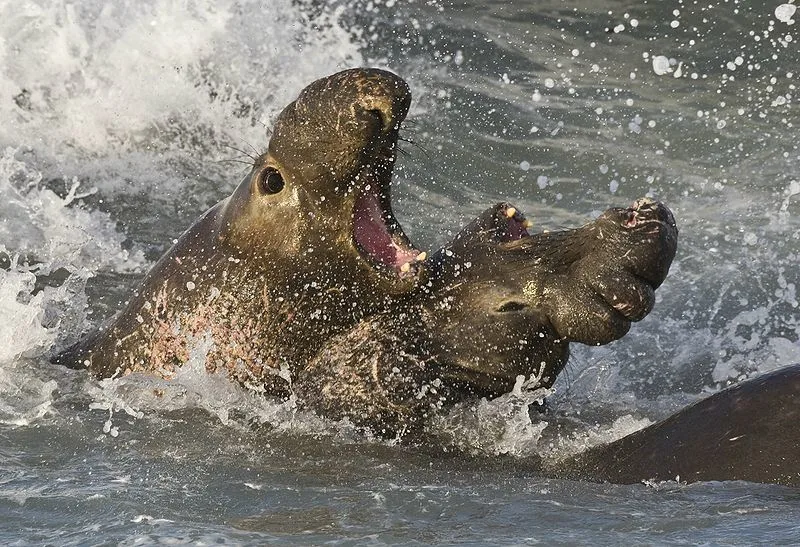
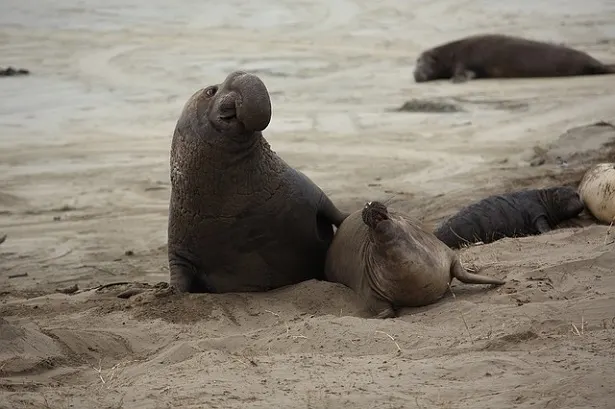
While my brief August visit to Ano Nuevo was exciting – and absolutely breathtaking – I want to return in winter, when the wind-battered rocks are covered in seals, bawling, brawling, breeding and birthing. By late December the females arrive, giving birth a few days later to the pups they have been carrying all year. The babies weigh 75 pounds at birth and nurse for about a month, gaining 10 pounds a day. Once a mother weans her pup, she is ready to mate with one of the dominant males before returning to the sea, leaving her now-independent offspring – called a “weaner” – to fend for itself on the rookery beaches. The juveniles stay together, venturing into the water to learn to swim and feed upon squid, fish and small sharks.
Occasionally a pup is washed away during a winter storm, leaving it stranded on a far-distant beach or rocky shoreline. Without aid, these orphans quickly lose weight or become diseased and die. Fortunately, however, through the diligent efforts of the Marine Mammal Center, opens in new tab.
From mid-February through the end of June, many elephant and harbor seal orphans are rescued and rehabilitated till they are strong enough to be returned to the wild.