Conservation Win for Whales in Antarctica

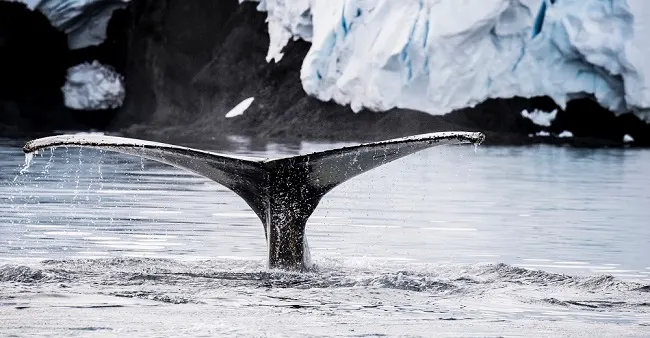
Good news for whales in Antarctica! On Monday, the International Court of Justice (ICJ) officially ruled that Japan must halt its annual whale hunt in Antarctica’s Southern Ocean. In a resounding 12-4 vote, The ICJ—the United Nations’ highest judicial body—determined that Japan’s JARPA II whaling program is really a commercial operation disguised as “scientific research.”
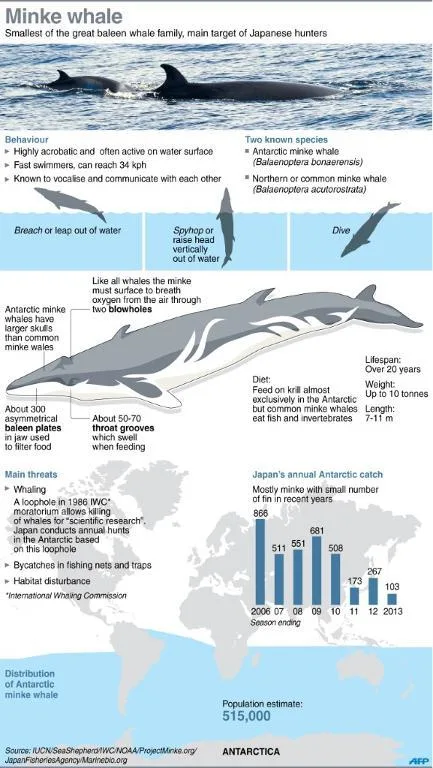
In 1986 the International Whaling Commission (IWC) declared a worldwide moratorium on whaling, but Japan has continued its whaling practices by exploiting a legal loophole in the law that allows whaling for the purpose of scientific research. However, hundreds (if not thousands) of the whales slaughtered under the pretense of “scientific research” end up in Japanese restaurants and markets.
“This sends a clear message to governments around the world that the exploitation of animals will no longer be tolerated and animals must be protected at the highest level,” said Claire Bass of the World Society for the Protection of Animals.”
This verdict is a huge win for conservation organizations like the Sea Shepherd Conservation Society, opens in new tab and Greenpeace, who try to disrupt the hunting operations by actively confronting Japanese whaling ships in the Southern Ocean Whaling Sanctuary off the coast of Antarctica. You may have seen some of these missions on the Animal Planet program “Whale Wars, opens in new tab,” a reality show that follows the Sea Shepherd Conservation Society’s voyages.
Captain Alex Cornelissen of Sea Shepherd Global says: “With today’s ruling, the ICJ has taken a fair and just stance on the right side of history by protecting the whales of the Southern Ocean Whale Sanctuary and the vital marine ecosystem of Antarctica, a decision that impacts the international community and future generations.”
This victory for whales in the Southern Ocean is just the beginning. Japan issues another 500 permits per year to kill whales in the North Pacific Ocean, also under the guise of “scientific research,” and countries alike Iceland and Norway still hunt whales commercially.
Visit www.worldwildlife.org/species/whale, opens in new tab to learn what WWF is doing to help and how you can get involved too.