Caribou vs. Reindeer: Is There a Difference?

Many of us are familiar with the tale of Santa Claus and his travels across the world yearly on Christmas Eve, bestowing gifts to every expecting child. His sleigh, elevated into the sky by nine reindeer is a fantasy to some and a lasting tale of wonder for generations of children. Reindeer have played a major role in cultures around the world, especially in the subarctic landscapes of Norway, Russia and Finland.
Wild reindeer still roam the Arctic Circle, seasonally migrating through tundra, mountains and woodland habitats of northern Europe and Russia.
> Read: Caribou Grounds Predate Santa’s Workshop
So, are reindeer related to caribou? You may be surprised to learn that they are in fact the same animal: Rangifer tarandus, a member of the deer family. The only difference is that in North America, wild reindeer are referred to as caribou, and domesticated reindeer are referred to as, well, reindeer. There are about 3.5 million caribou in North America and 1 million wild reindeer in northern Europe and Russia.
More than Imagination: Reindeer’s Cultural Legacy Through Time
Reindeer have been a fundamental feature of many communities and cultures for over 2,000 years—a history long enough to inspire a long-lasting presence in our holiday music, books and movies. In fact, ancient rocks have been found in parts of northern Europe and elsewhere depicting humans’ long-standing relationships with reindeer.
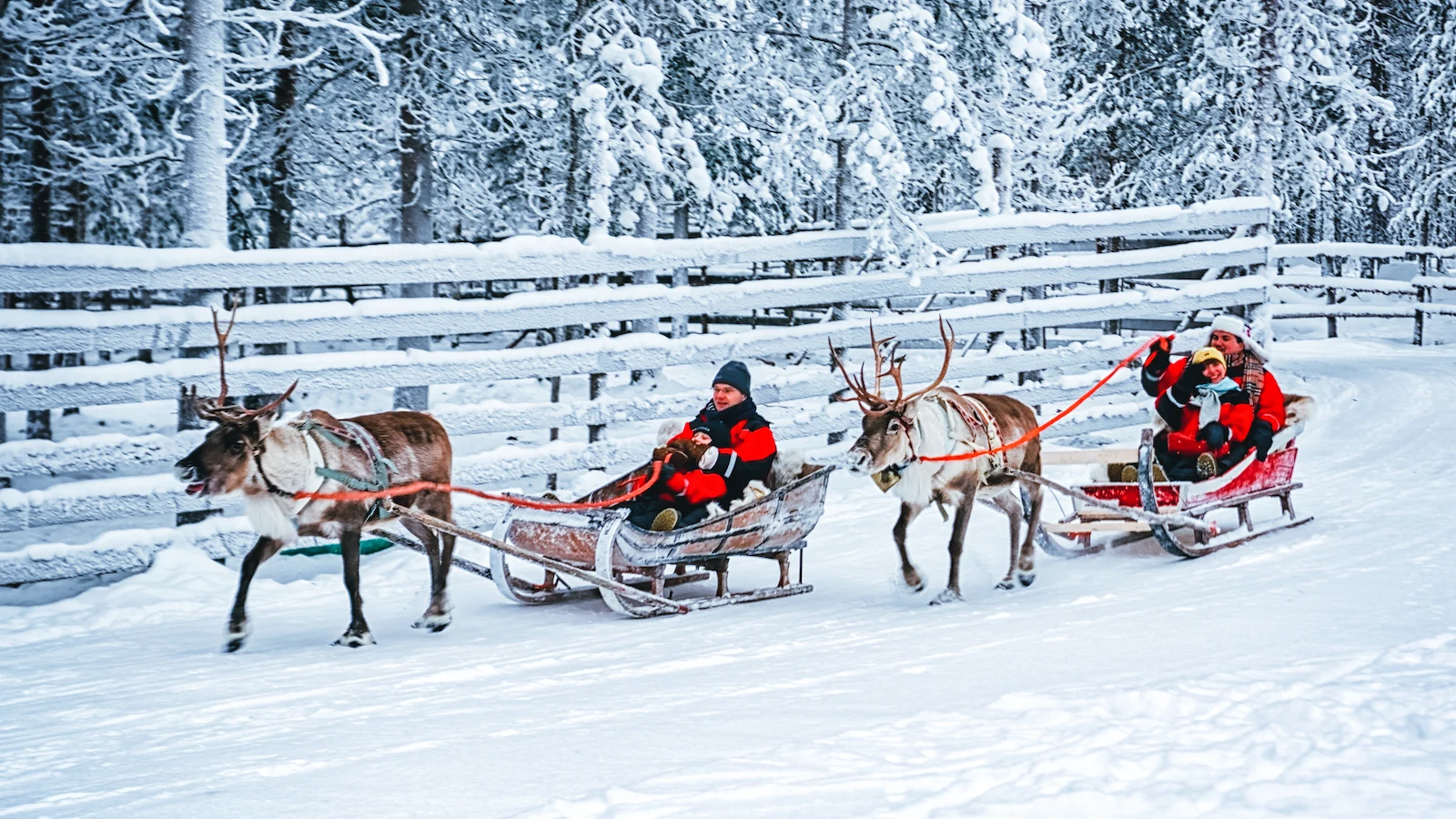
Reindeer first became domesticated in Europe and Russia thousands of years ago by Europe’s only Indigenous people, the Sami people. The Sami are the descendants of nomadic peoples who inhabited northern Scandinavia for thousands of years. They have existed for generations in a region known to many as Lapland. To the Sami people, Lapland, the region of northern Europe that stretches across northern Norway, Sweden, and Finland and into the Kola Peninsula of Russia, is referred to as Sápmi. Reindeer herding is integral to the Sami people and their culture and today, there are nearly 3 million domestic reindeer living in northern Europe.
Reindeer don’t exist in the U.K. anymore, but archeological evidence has proven that they once did. Climate change and hunting are likely to blame for their slow disappearance. Even so, reindeer remain a staple in English celebrations. In Abbots Bromley, a village in Staffordshire, England, a yearly folk dance known as the Abbots Bromley Horn Dance has reindeer at the center of the celebration. During this ritual, dancers carry six sets of 1,000-year-old reindeer antlers. Believed to have started in 1226, it is one of England’s longest-standing medieval rituals.
The longstanding relevance of reindeer across cultures is what lends to the animals’ continued prominence in popular culture. Equally relevant are the cultures and habitats that have maintained reindeer populations across the world.
Caribou: “Deer of the North”
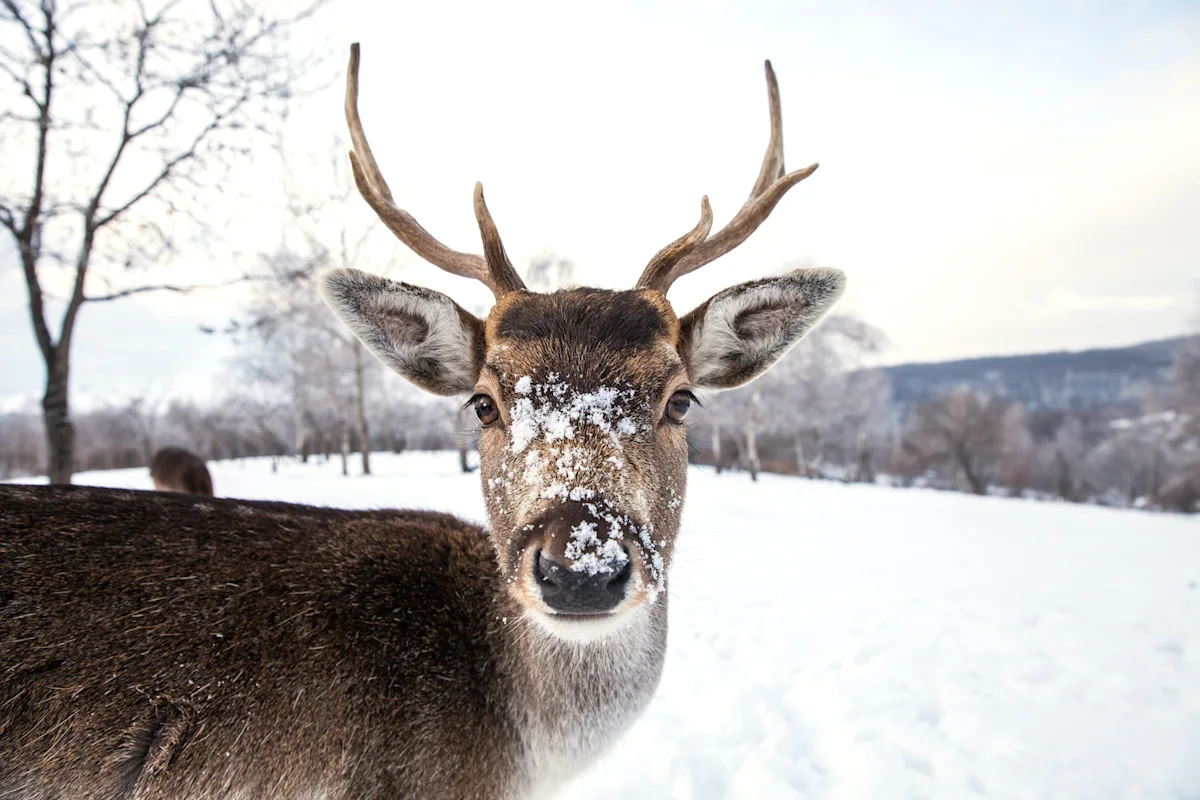
Indigenous cultures have relied on the “deer of the North” for food and clothing for thousands of years. When caribou were plentiful, the people would celebrate and feast. On the other hand, scarcity meant famine and hardship. An iconic symbol of the North, caribou—social herd animals equally comfortable on the frosty tundra and in the boreal forest—make more extensive migrations and occur in larger herd numbers than any other land mammal in North America.
Arctic Adaptations
Reindeer and caribou have adapted quite well to their Arctic climates, opens in new tab. Temperatures regularly plunge below freezing, and the land is blanketed with snow and ice for a large portion of the year. Their eyes have developed to be sensitive to ultraviolet light, helping them navigate the dark, cold winters, and their noses are designed to warm the air before it gets into their lungs. As the animal exhales, the breath is cooled so that water vapor stays within the body.
A double layer of insulating fur keeps body heat trapped, preserving vital energy needed to survive. In the summer, the hooves of reindeer expand as the ground becomes softer and, in the winter, they shrink and harden. The sturdier hooves help them pierce and dig through the snow for food. As herbivores, reindeer and caribou feed mostly on lichen, a nutritious mix of algae and fungi, which constitutes the majority of their diet.
Rangifer tarandus is the only species in the deer family where both the males and females carry antlers. Antlers, unlike horns, are shed each year, and male reindeer shed their antlers in late autumn. Females, however, retain their antlers until the spring, needing them to dig up the snow and ice, uncovering food that will help them sustain their winter pregnancies. Because of this, scientists believe that the reindeer that carried Father Christmas’s sleigh were all female.
Where to See Caribou and Reindeer
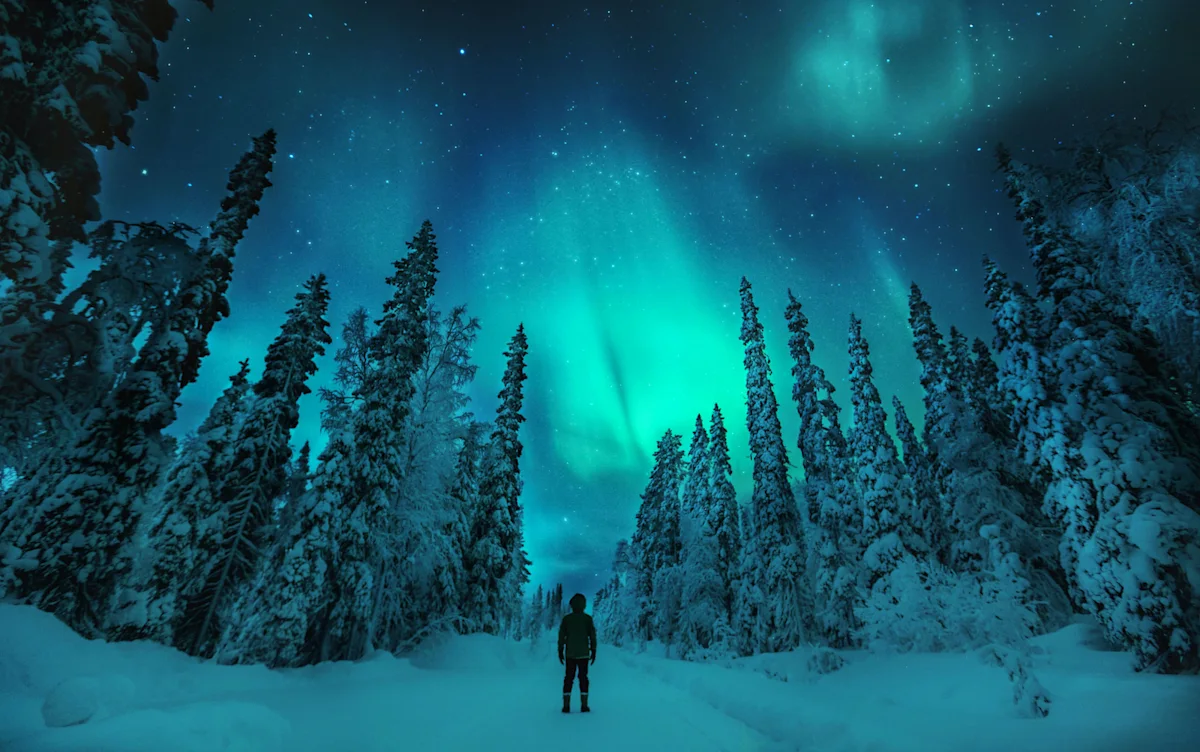
Though reindeer and caribou have had to adapt to the snowy climates they roam, explorers can explore these chilly environs in relatively cozy conditions. The colder weather comes with some magical winter excursions that are too unique to miss.
You can search for caribou on Nat Hab’s Alaska and Churchill adventures. Although they can be unpredictable in their migration patterns, caribou tend to head to the coast during the summer, where tidal flats offer a respite from the black flies that plague them in the interior. Because of this, you’re most likely to spot them by helicopter on our summer Churchill adventures and early-season polar bear tours. You may also encounter caribou on our Alaska expeditions. (They’re even considered one of Alaska’s “Big Five”!)
To scout for reindeer, embark on one of Lindblad Expeditions’ Norway adventures, such as the 10-day Land of the Ice Bears: An In-Depth Exploration Of Arctic Svalbard or the 16-day Norway’s Fjords & Arctic Svalbard.