Beyond the Stripes

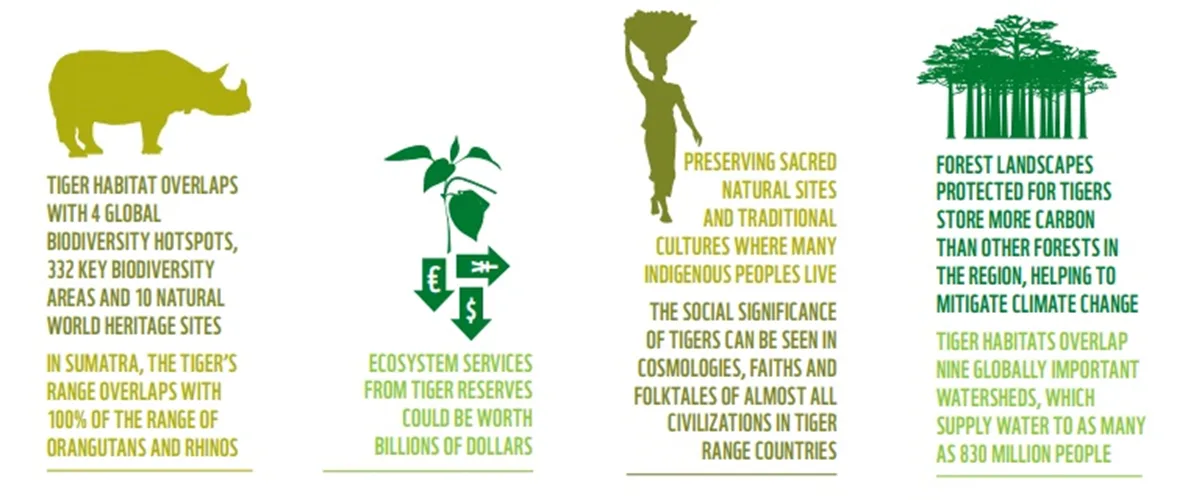
Tigers are inspirational. Their extraordinary nature and symbolism moves people to act and make bold commitments. In 2010, leaders of the 13 countries that are home to tigers agreed on an ambitious conservation goal: to double the number of tigers in the wild by 2022. This is the TX2 Goal, opens in new tab. These leaders have recognized that taking bold action for tigers will have a much wider impact than just for one species because a win for tigers can also be a win for other biodiversity and humans too.
A recent WWF report, Beyond the Stripes: Save Tigers, Save so much more, opens in new tab, presents some preliminary evidence showing that by protecting the wild places where tigers roam, we can save so much more. Tigers are an “umbrella species” – meaning their conservation also conserves many other species in the same area. Tigers are also a touchstone for many other benefits provided by the ecosystems in which they live, which have positive impacts on human well-being, economy and culture.
The report demonstrates that tiger conservation efforts are helping to secure the economic and environmental value required to underpin economic expansion for the Asia region. This means that the protection of this species is of critical importance to the millions of people reliant on the values they provide.
Tiger-related tourism can provide local communities with sustainable sources of income and employment. It has been estimated that globally protected areas generate over US$600 billion per annum in revenue from visitors, and the role of tigers in tourism is important across the tiger range.
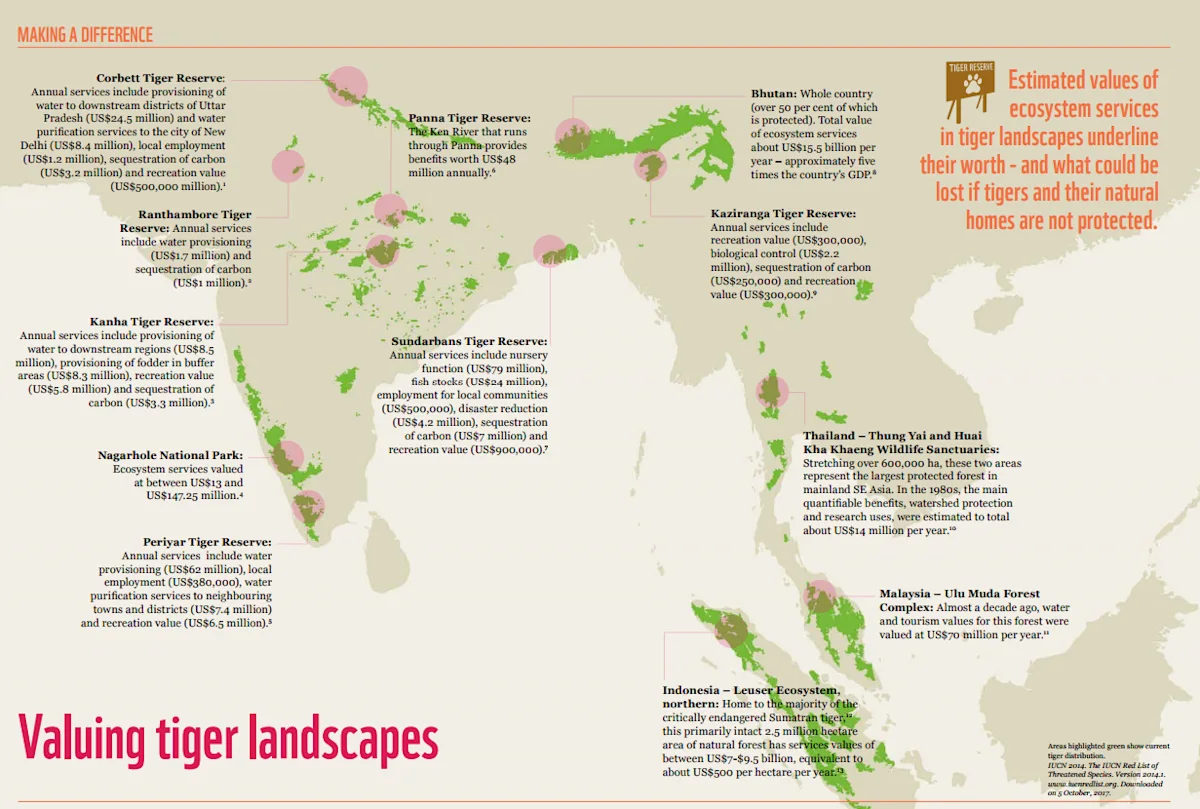
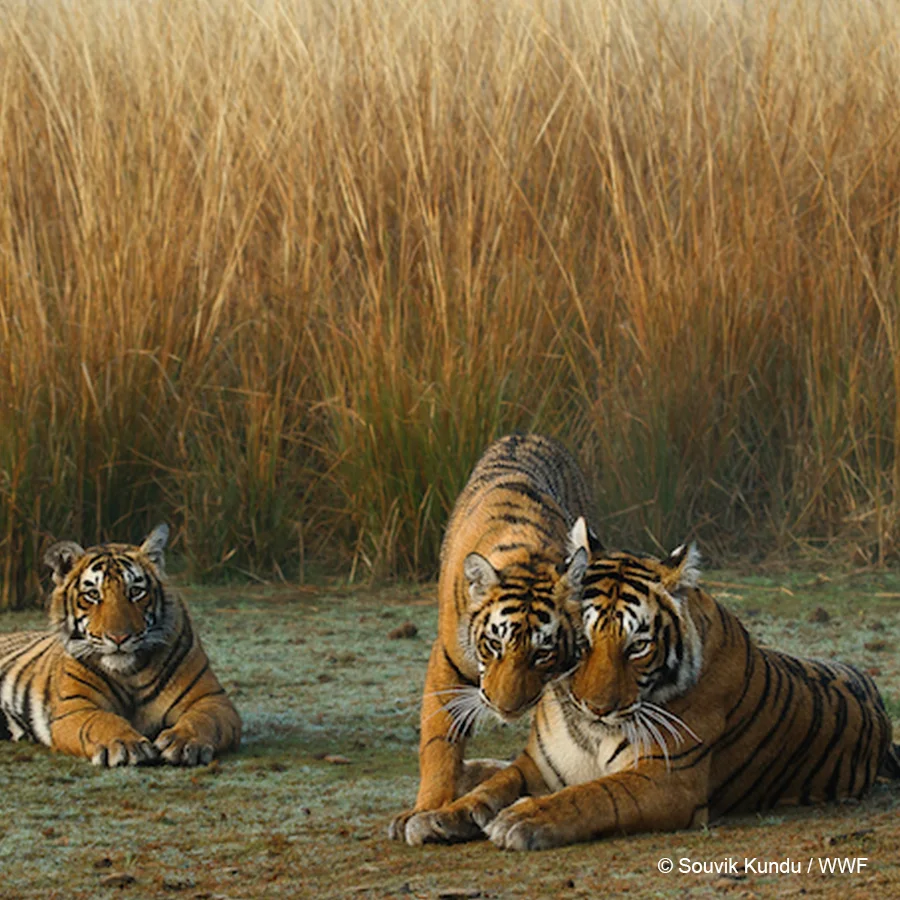
Ranthambore National Park was the first designated tiger reserve in India, and the surrounding area supports 3,000 tourist beds and tourism revenues of over US$0.5 million per year. A single well-known tigress in Ranthambore Tiger Reserve, India, was responsible for revenues of over US $103 million in the first decade of her life, through park fees, lodging, taxes and services fees and is reported to have employed more than 3,000 local people in the tourism industry.
A single well-known tigress in Ranthambore Tiger Reserve, India, was responsible for revenues of over US $103 million in the first decade of her life.
Tigers are one of the most iconic species in the world and after a century of constant decline, wild tiger populations are rising, opens in new tab, and by protecting this majestic species, thousands of other animals and millions of people are benefitting.