Adventure in the Ellipses: Elk

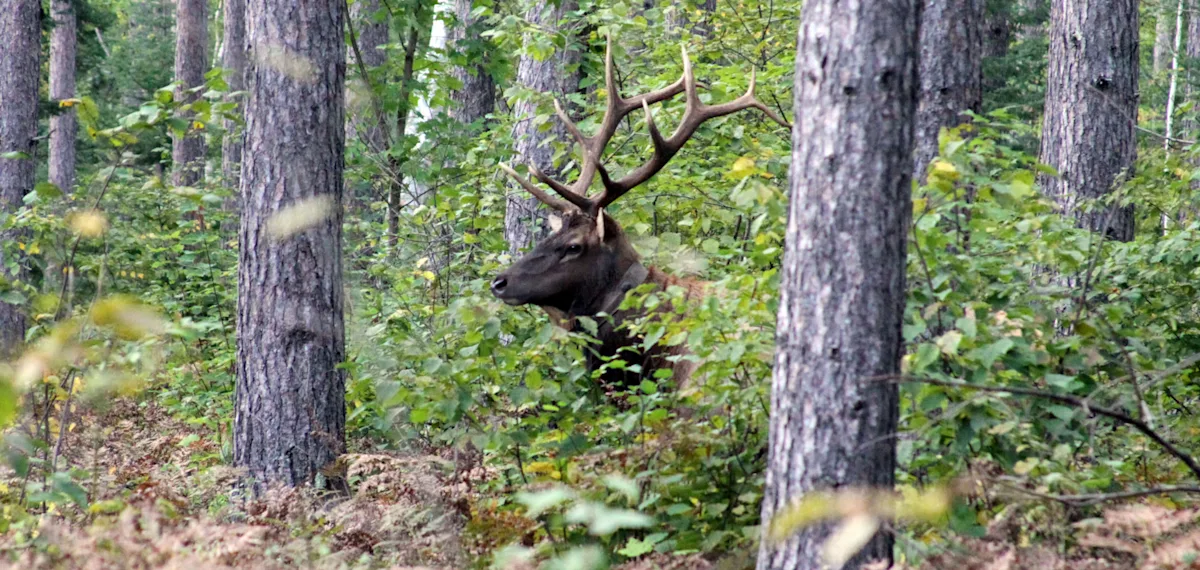
Ever since elk were reintroduced to Wisconsin’s Chequamegon-Nicolet National Forest, opens in new tab in 1995, I’ve wanted to see them roaming freely in my home state. Last month, my dream was realized—twice.
In September, I was fortunate enough to be invited to attend the Bugle Days Rendezvous in Clam Lake, Wisconsin, a two-day festivity sponsored by the Rocky Mountain Elk Foundation, opens in new tab and the Wisconsin Department of Natural Resources. The annual event is a get-together for foundation and WDNR volunteers and employees.
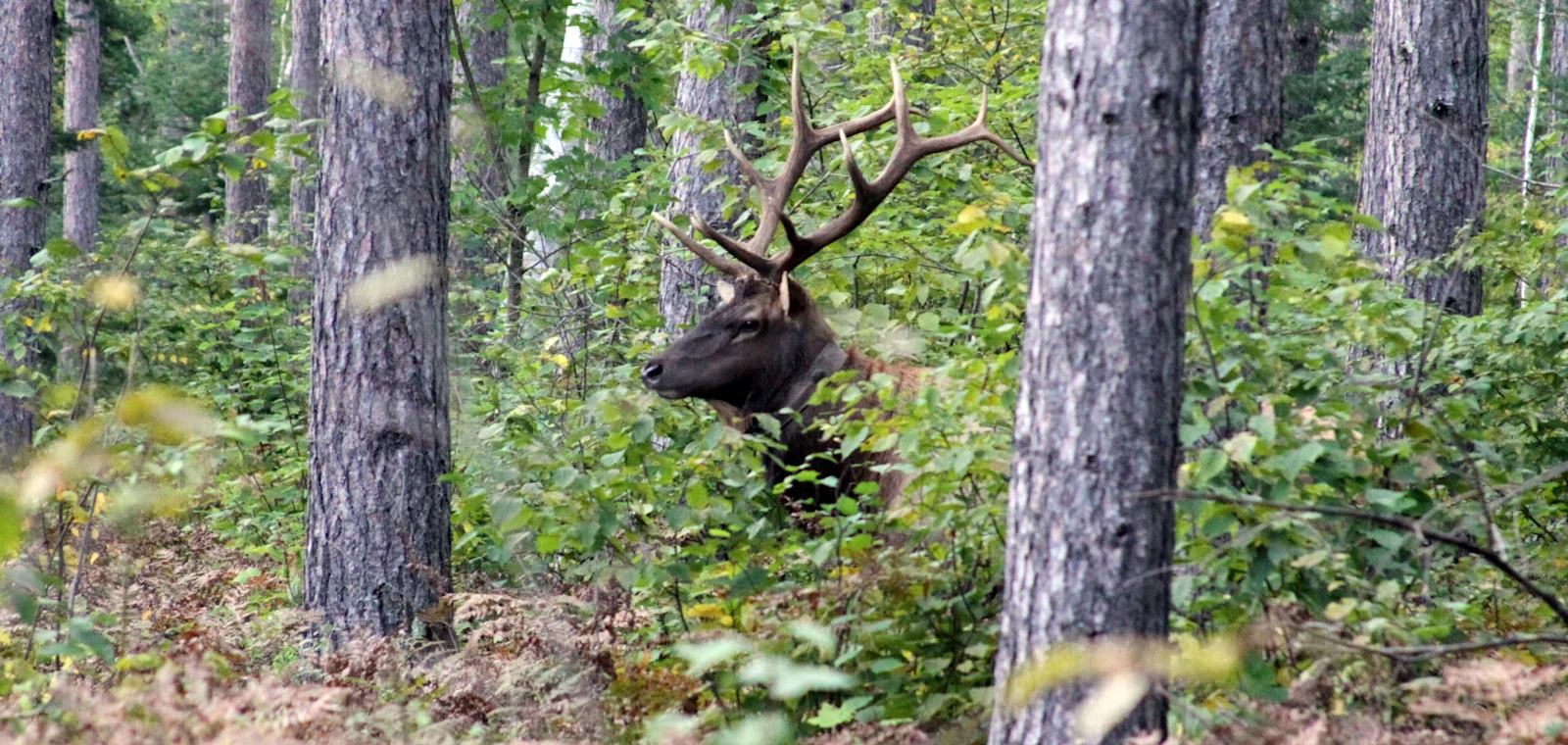
On Saturday evening, after a talk by the state’s leading elk biologist and a tip from some locals on where the elk usually hang out, my husband and I slowly drove the forest roads at dusk in hopes of spotting one. Soon, three elk crossed the pavement ahead of us. We pulled off to the side and, using our car as a blind, watched as a bull, a cow and a calf stood in a small opening in a stand of trees and munched. Since hunting them is not allowed here yet, Wisconsin’s elk are not spooked much by automobiles and humans. So this little family group was content to let us peek in at their world for a while.
The experience was worth the 15-year wait. Anyone who has ever seen the wolves of Yellowstone National Park knows the sound of that little voice inside when you finally gaze upon a long-gone species back in its homeland again. It whispers, Yes, this is now put back right. We have undone a wrong; restored a bit of nature we once lost.
Tuning in the radio
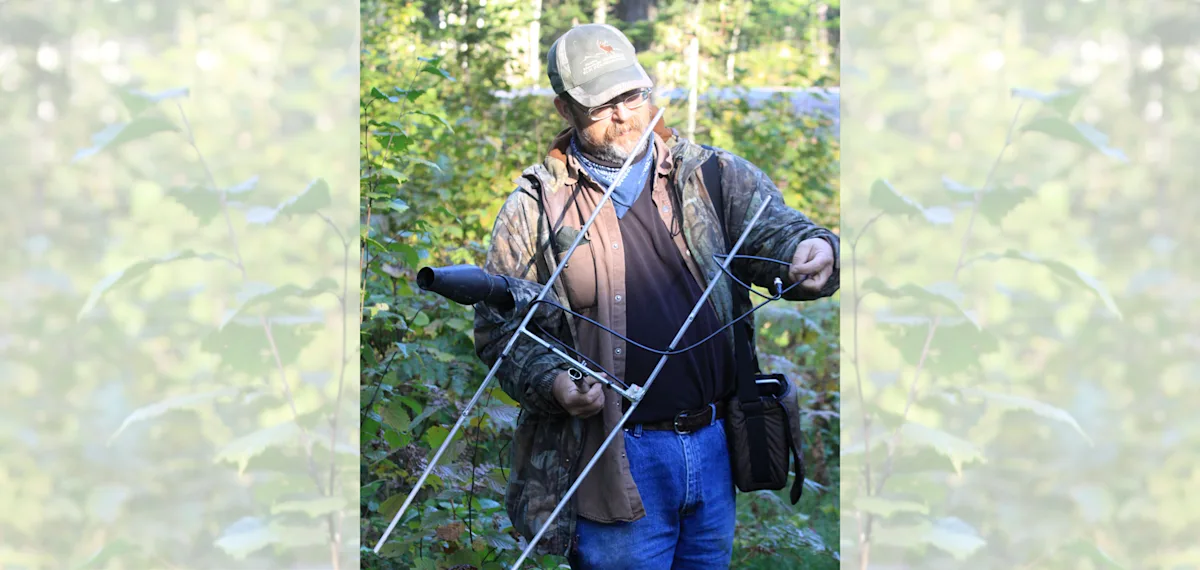
The next morning, a small group of us met at one of the forest’s ranger stations at 5:30 a.m.—with steaming cups of coffee in hand—to form a caravan in search of elk by a more scientific means. I rode with the elk biologist in his truck, equipped with radio telemetry for tracking collared elk.
With the help of the equipment, the biologist located several elk for us. We scrambled up a ridge and were able to closely approach one bull who was foraging in the brush. But somehow, the sight of this elk wasn’t as satisfying as seeing the family that my husband and I happened upon the previous night.
Now, I think I know why. Finding elk by using radio collars seemed so, well, scientific. Some of the adventure of having our paths cross had been lost.
Turning to the quiet
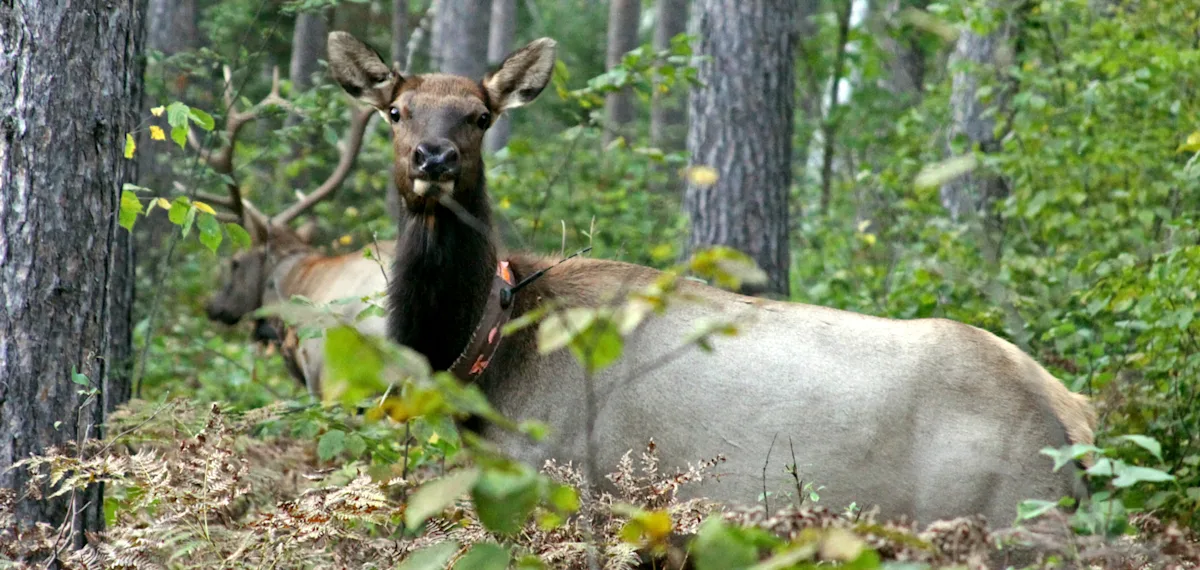
I certainly do understand the need for technology such as radio telemetry when it comes to reintroduced species. When a particular population is precarious and so few individuals are released into the wild (such as the original 25 elk released in Wisconsin in 1995), it’s important to know where they’re thriving and where and why they’re not. And in areas of thick vegetation, as in the Wisconsin Northwoods, or where the animals are only active at night, relying on visual observations alone won’t work.
But I think outdoor author Ted Kerosote, opens in new tab has a point when he writes about that hard-to-describe something that is lost when our adventures depend on technology:
“There are processes that science cannot verify with its instruments. We have continued that disparagement, doubting a Bushman who can predict the appearance of an eland or an elephant from over the horizon, because we still have no way to measure what the Bushman does. Only recently as our recording devices have become more sophisticated—enabling us to hear the long-distance communication of elephants, for instance, have these nomadic people’s keenness of observation and their enormous knowledge of the natural world been seen as rivaling or exceeding that of the most experienced field biologist and been given the respect they deserve. But the question remains, How did they learn so much without radio telemetry, time-lapse photography, sensitive microphones—without even a ruler? The answer is hard for us to embrace. Such cultures differ from ours not in their lack of technology but in their immersion in quiet—a quiet that permits them to hear subtler voices than those which come to our ears. They live among ellipses—a state we consider full of omission, a leaving out, and that they see and hear as gravid with information.”
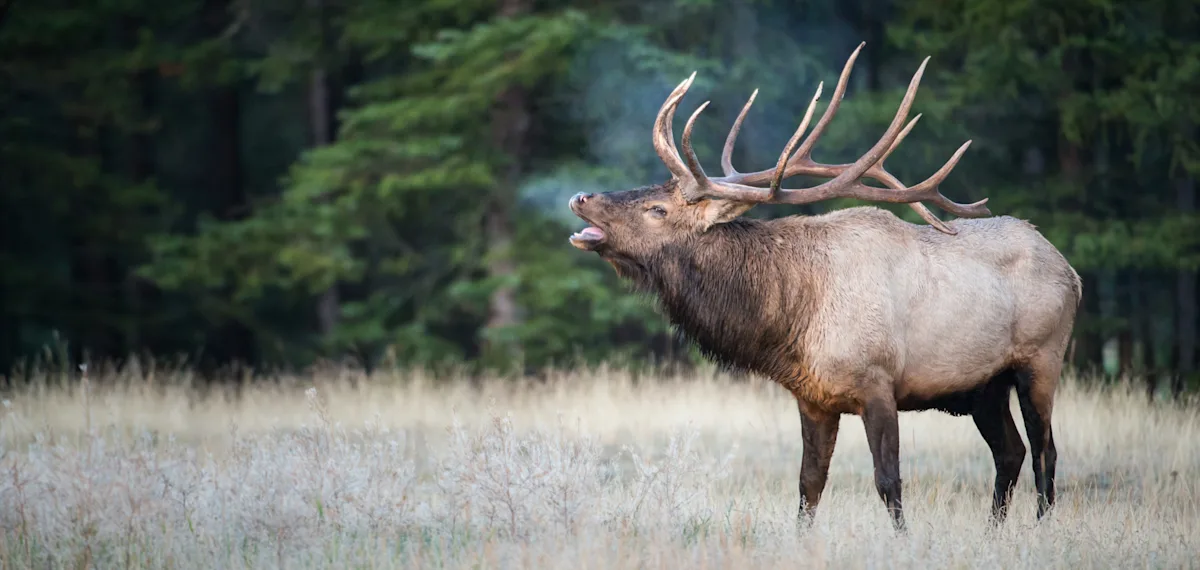
It seemed that evening that we spotted the elk family—without tracking equipment, relying on the advice of people who were accustomed to living in proximity to them—that we had stumbled upon one of those “ellipses” states, making the adventure all the more sweeter.
Here’s to finding your true places and natural habitats,
Candy