10 Interesting Facts about Orangutans
1. Where do orangutans live?
Orangutans are found only in the rain forests of the Southeast Asian islands of Borneo and Sumatra. They spend nearly their entire lives in trees—swinging in tree tops and building nests for sleep.
2. Do the two species of orangutans look different from one another?
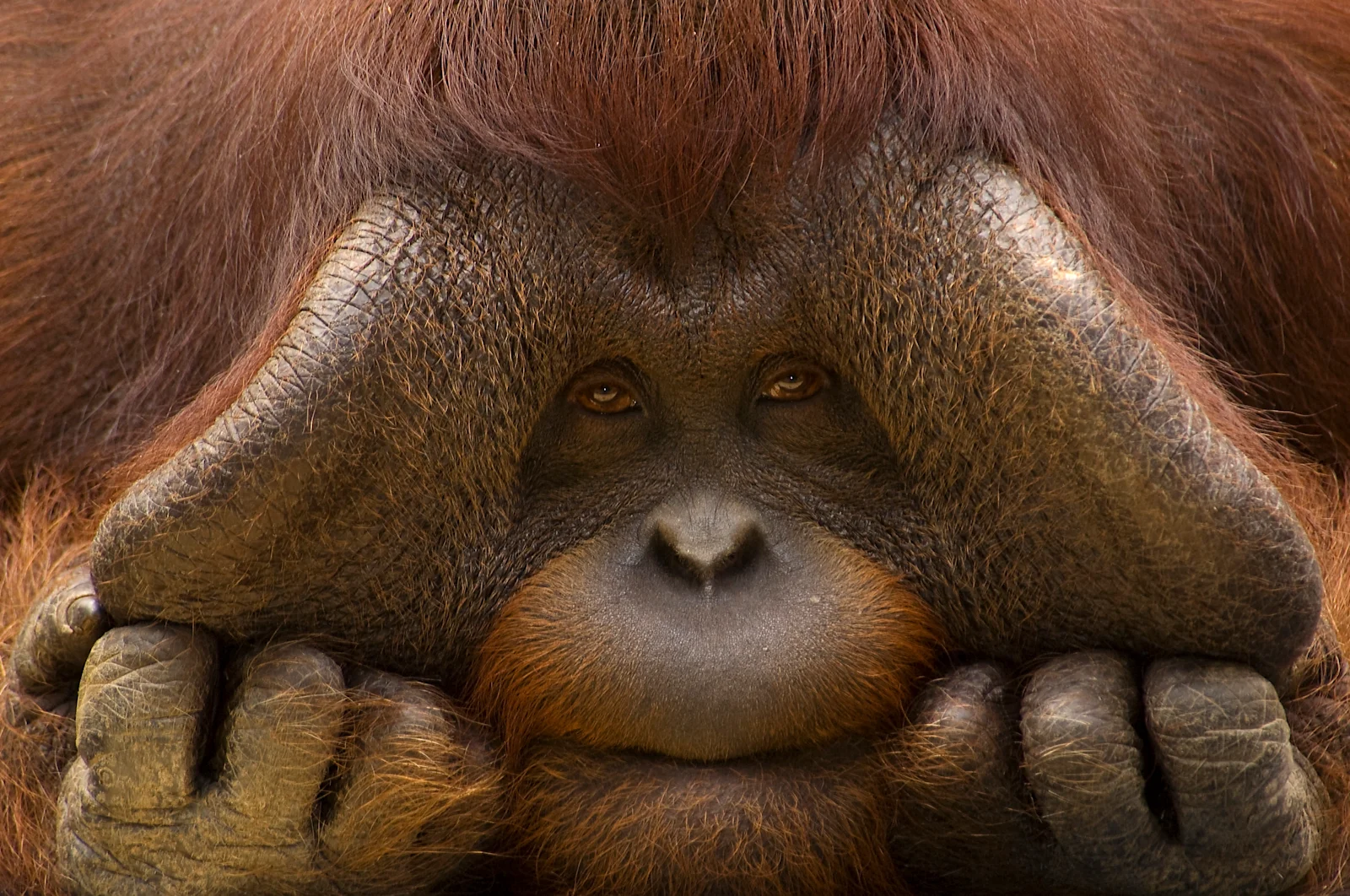
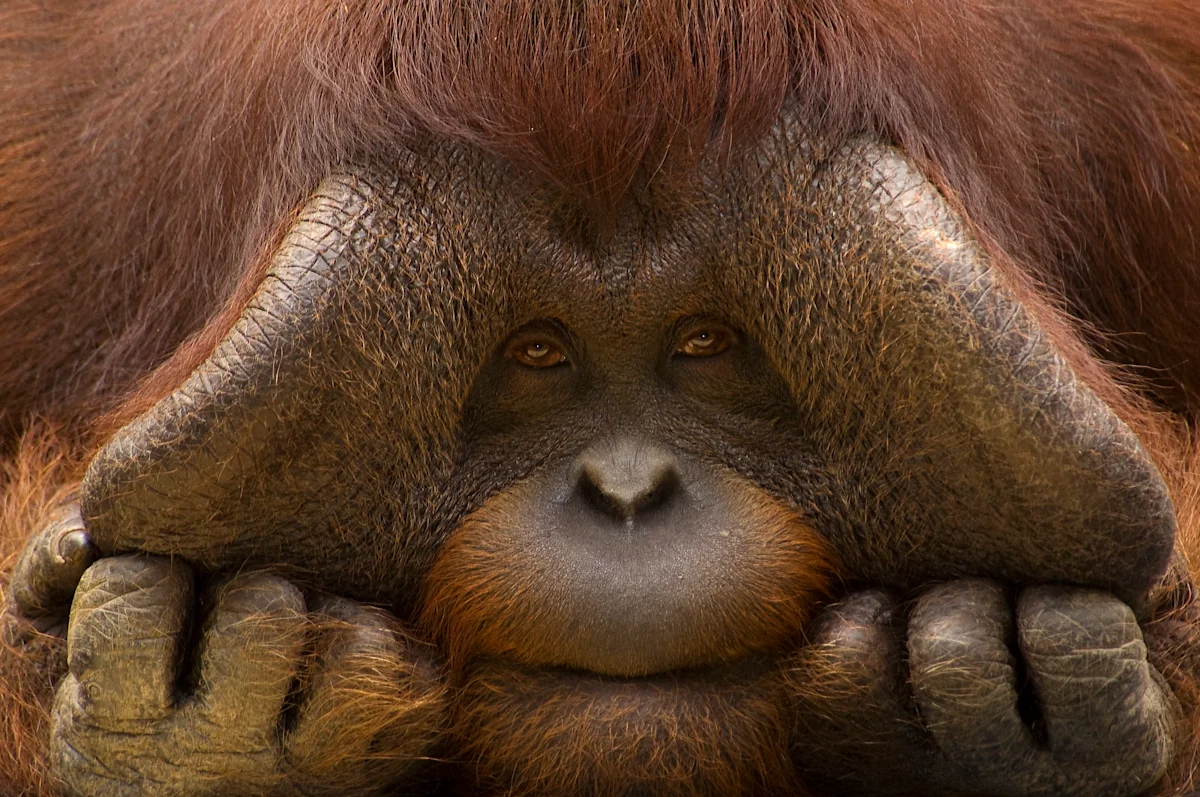
The two species of orangutan, Bornean and Sumatran, differ slightly in appearance and behavior. While both have shaggy reddish fur, Sumatran orangutans have longer facial hair and seem to have closer social bonds than their Bornean cousins. Bornean orangutans are more likely to descend from trees on occasion and move around on the ground.
3. What threats do orangutans face?
Asia’s only great apes are threatened by rapid deforestation and devastation of their habitat, mainly due to palm and other agricultural plantations. Young orangutans, in particular, are also imperiled by the illegal pet trade and mothers often killed as poachers snatch their young.
4. How many orangutans are left in the wild?
The Bornean orangutan is listed as Endangered and numbers approximately 41,000, while the Sumatran orangutan is considered Critically Endangered with an estimated population of 7,500. A century ago, more than 230,000 orangutans likely roamed in the wild.
5. Do orangutans stick by their young?
Adult orangutans are solitary by nature but mothers stay with their young for up to eight years—longer than any other great ape.
6. What do orangutans eat?
Fruit makes up about 60% of the orangutan’s diet, including lychees, mangosteens, mangoes and figs. They also eat young leaves and shoots, insects, soil, tree bark, and occasionally eggs and small vertebrates. Water comes from fruit as well as tree holes.
7. How does WWF help orangutans?
WWF has been working on orangutan conservation since the 1970s. Today, we are focused on securing landscapes for major orangutan habitats, promoting sustainable forestry and stopping illegal wildlife trade.
8. Where does the word ‘orangutan’ come from?
The name orangutan translates to ‘man of the forest’ in the Malay language.
9. Do orangutans climb trees?
Orangutans are distinguished by their long, muscular arms and gripping hands and feet which allow the world’s largest tree-dwelling mammal to sway branch to branch.
10. How does WWF help prevent destruction of orangutan habitat?
WWF helped launch a sustainable honey business on the island of Borneo, where orangutans and people depend on the same forests. The prized, forest-grown product provides income and deters destruction of orangutan habitat.